
Unbiased headlines. Facts, not spin.
Unbiased Headlines is an independently owned news organization. We bring you the facts, not opinions, written fresh from 110+ named sources. Sources linked so you can verify it yourself.
 tech
Notable (6/10)
Blue Origin Unveils Northstar Engine and GS3 Third Stage for New Glenn, Says Engine Will Cost One-Quarter of BE-4
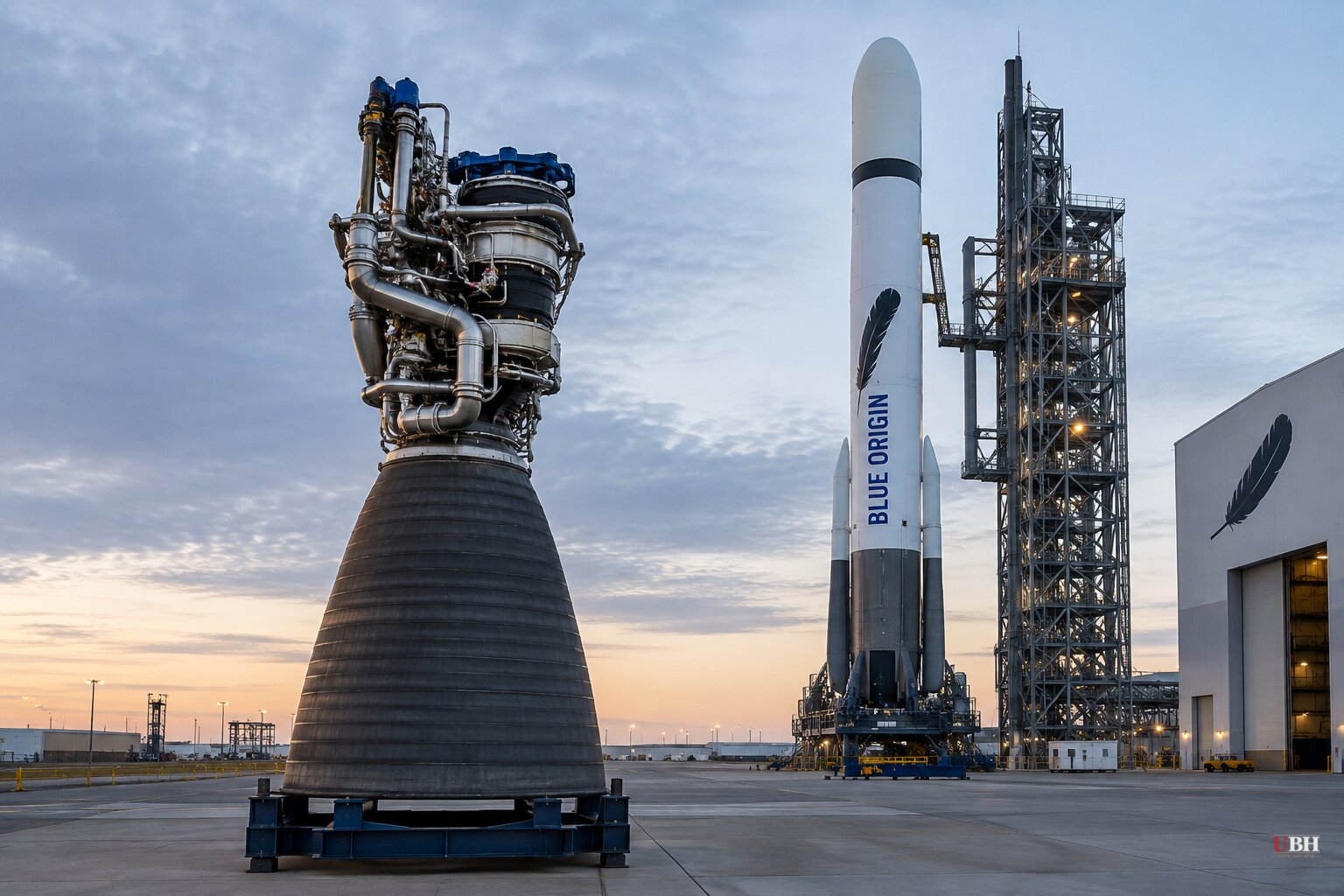
Blue Origin used its UP.Summit event at Kennedy Space Center's Shuttle Landing Facility today, Nov. 5, to announce two major changes to New Glenn: a new first-stage engine called Northstar and a third stage called GS3.
CEO Dave Limp said the company's aim is to eventually position the rocket for more than 1,000 launches a year. "There has never been higher demand for launch, ever," he said.
Northstar: more thrust, fewer parts
Northstar is meant to replace the BE-4 that powers New Glenn's first stage. Limp described it as a simplified, more powerful version of that engine.
According to the company, Northstar has half as many parts as the BE-4 and 30 percent less mass. About 65 percent of it can be 3D-printed.
Thrust is the headline performance number. The BE-4 produces 640,000 pounds. Northstar will start at 715,000 pounds.
Like the BE-4, it burns methane and liquid oxygen in an oxygen-rich staged combustion cycle with a single-shaft turbopump.
The cost claim is Blue Origin's own projection. The company says it believes it can build Northstar at 25 percent of the cost of a BE-4, and eventually assemble one in less than a day. No independent figure backs that up yet.
Blue Origin says it moved from program approval to development testing in 11 months, and a test-firing campaign has already begun. Limp said the company will keep building BE-4s for United Launch Alliance, whose Vulcan rocket uses two per vehicle.
"To get access to space at a lower cost, we have to look at every part of the vehicle," Limp said. "This is going to be a game-changer."
GS3: a hydrogen kick stage
GS3, short for Glenn Stage 3, is built for direct injection of payloads into geostationary orbit and Earth-escape trajectories. It sits inside an interstage, so customers keep the full fairing volume and the same payload adapters.
It is powered by one BE-7 engine, the hydrogen-oxygen engine already developed for Blue Origin's Blue Moon lunar landers.
Blue Origin's published performance figures:
- New Glenn 7×2: 8 metric tons direct to geostationary orbit, 10 metric tons to trans-lunar injection.
- New Glenn 9×4: 14 metric tons to geostationary orbit, 20 metric tons to trans-lunar injection.
The 9×4 is the larger variant the company announced last year. It has not flown. New Glenn's three flights so far have all been the 7×2.
The company says Blue Moon landing missions will not need GS3. It says the stage could support "sustained operations around the Moon."
The composite tank risk
The hard part is the tank. GS3 is meant to carry the first composite liquid-hydrogen tank flown in space, a choice made to keep the stage light.
Limp was open about the risk. He said the company was unsure it could build a 5.5-meter composite tank that holds hydrogen at high pressure. Hydrogen's small atoms leak, and thermal cycling and mechanical strain can crack composites.
Blue Origin says a test at Launch Site One in Texas gave it the confidence to proceed. The tank was held at 100 percent of maximum expected operating pressure for 2.5 hours, then at 150 percent for 10 minutes.
The stage is targeted to debut in 2028 for a government customer. Blue Origin has not named the mission beyond saying it is bound for cislunar space. "We have one customer signed up for cislunar space in 2028," Limp said. "We are open for business."
A grounded rocket
All of this is hardware on a test stand, not on a launch pad.
New Glenn debuted in January 2025 and flew again in November 2025. On April 19 of this year, it put AST SpaceMobile's BlueBird 7 satellite into the wrong orbit, and the spacecraft was lost.
On May 28, New Glenn exploded on the pad at Cape Canaveral Space Force Station during a routine engine test. Blue Origin has been rebuilding the pad since.
The fourth flight had been expected late this year. Reports from CNBC and the Financial Times, citing a memo from Limp to staff, say the next launch will not happen until January 2027. Blue Origin has not detailed that schedule at today's event.
The company is also competing for crewed lunar work. NASA picked Blue Moon and SpaceX's Starship as the two private crewed landers for Artemis, and both rely on rockets that must first fly reliably.
The next verifiable milestone is New Glenn's fourth flight from the rebuilt pad. Northstar's cost and thrust numbers get a real test only when the engine finishes its test campaign and reaches flight.
Sources used for this briefing
6 links from 6 independent newsrooms (syndicated copies of the same report count once)
These are the sources it draws on, linked so you can verify.


