
Unbiased headlines. Facts, not spin.
Unbiased Headlines is an independently owned news organization. We bring you the facts, not opinions, written fresh from 110+ named sources. Sources linked so you can verify it yourself.
 tech
Major Story (8/10)
Event date: November 4, 2026 ·
Meta's $95 Billion and Oracle's $20 Billion Data Center Raises Now Face a Democratic Congress That Takes Over in 2027
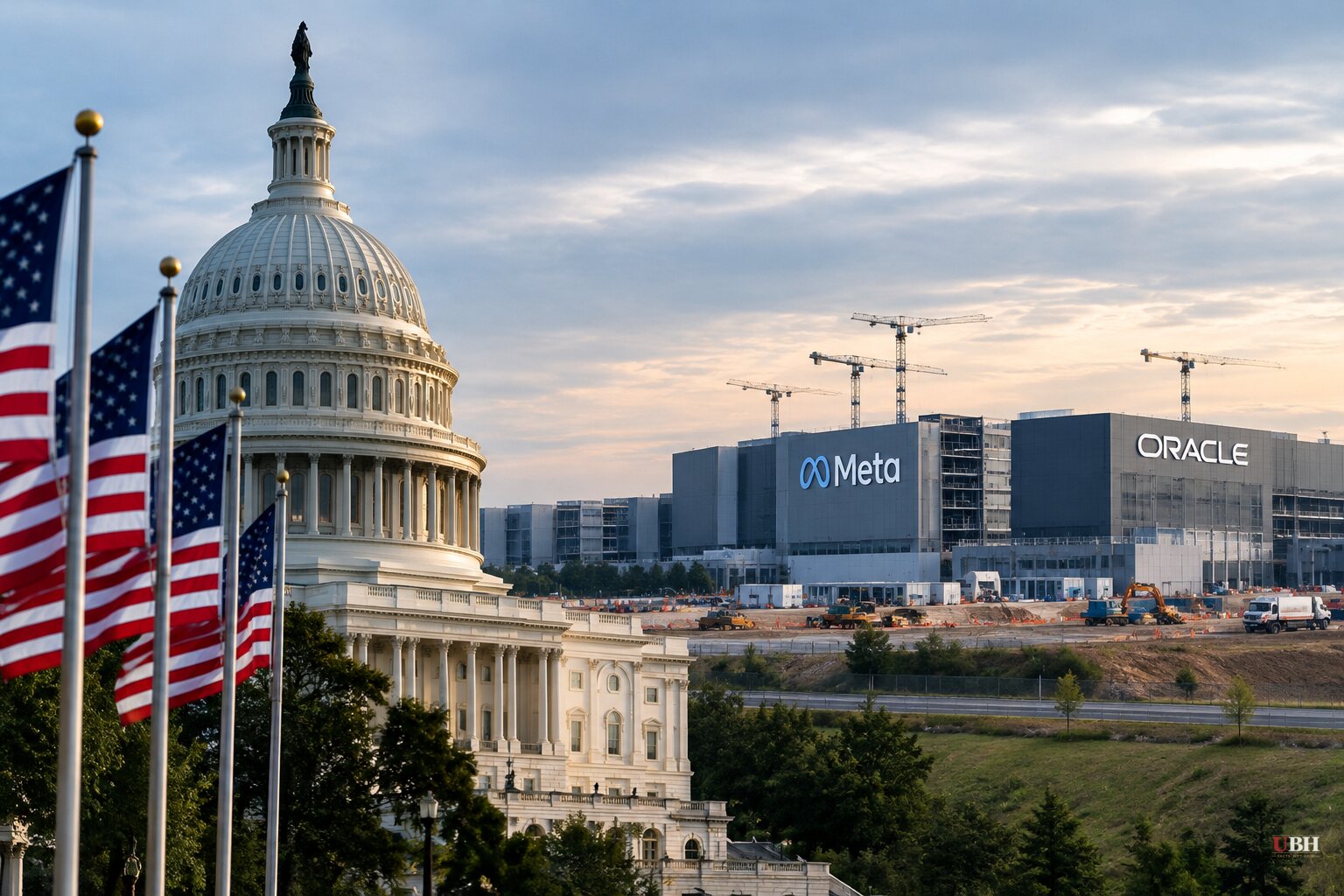
Since Democrats won both chambers of Congress on Nov. 3 on a campaign that leaned hard on data center restrictions, the debate has moved from the vote count to the mechanics: what can a Democratic Congress actually do while Donald Trump holds the veto pen?
The answer starts with the calendar. Committee control does not shift until 2027. When it does, Democrats gain subpoena power, hearing agendas and markup authority, according to the International Association of Privacy Professionals. Some House and Senate races were still being tallied as of Wednesday.
What the new committees could take up
The IAPP's Jedidiah Bracy lists the likely targets. The Senate Commerce Committee could take up AI accountability, federal privacy legislation, children's online safety and FTC oversight. The Senate Judiciary Committee could look at surveillance and law enforcement access to data. In the House, Energy and Commerce could push privacy legislation, and Oversight and Government Reform could dig into federal technology procurement and Elon Musk's Department of Government Efficiency.
Omer Tene, a Goodwin partner and IAPP Westin Emeritus Fellow, said to "expect the blue wave that swept through the states to ripple through Washington." He pointed to AI rules emerging in California, Colorado, Illinois and New York as likely models.
The party is not unified. Sen. Bernie Sanders and Rep. Greg Casar, who chairs the Congressional Progressive Caucus, want a moratorium on new data centers and limits on "super intelligence" development. Sanders posted on X: "National data center moratorium now." Rep. Yassamin Ansari, D-Ariz., wrote that pausing AI development should be a Day 1 priority for the House majority. Casar replied, "Yes!"
The voter message
The CNBC Voter Poll found 56% of voters called AI and data centers a crucial or major factor in their vote. Of those, 65% backed a Democrat for Congress. The poll shows correlation. It does not say data centers drove the outcome.
Several winners ran on the issue directly. Annie Andrews, who flipped a South Carolina Senate seat, ran a campaign website branding her opponent "data center Darline" and said voters chose communities run by "the people who live in our communities, not the billionaires or data center companies." Ohio's Sherrod Brown, who beat Sen. Jon Husted, said, "I do not work for data centers." Pennsylvania Gov. Josh Shapiro, who signed an August executive order to slow data center development, said "the folks in our local communities get the final say."
The resistance is not strictly partisan. MarketWatch reported before the election that local opposition to data centers has emerged as a rare bipartisan concern, including organized resistance in Texas.
Texas matters most. Wells Fargo puts 27% of planned U.S. data center capacity there. Gov.-elect Gina Hinojosa campaigned on keeping a moratorium on new construction until the state addresses power and water demands.
Markets: calm on process, split on substance
Futures initially fell overnight, then recovered after Trump said he would accept the results. Daniela Hathorn, a senior market analyst at Capital.com, said that eased concerns about "prolonged political confrontation and legislative gridlock," though she added that significant policy disagreements would likely remain.
Deborah Cunningham of Federated Hermes said divided government could create a "blockade against new legislation." Kenny Polcari predicted the S&P 500 will be higher in 12 months, citing a pattern he says has held in every midterm cycle since World War II.
On Wednesday, Nov. 4, Amazon ended 6.1% higher after jumping as much as 8.3%. Microsoft gained nearly 6.7%. Alphabet and Google's other share class rose about 3.1% and 1.4%. Nvidia and Intel each lost more than 3%, Broadcom fell 2% and SK hynix dropped more than 5%. AMD finished about 1% higher.
Analysts offered two explanations. Robert Pavlik of Dakota Wealth Management said investors believe a slowdown could help the spenders' finances. Amazon, Meta and Google have gone cash-flow negative in recent months, and Google's latest report missed the consensus cash-flow estimate by about $6.4 billion. Needham & Co., B. Riley Wealth and analyst Ben Thompson argued that tighter limits would make computing capacity scarcer and raise the value of data centers that already exist.
Thompson added that neocloud firms with permits in hand could gain, though they may struggle to finance new sites. He also said stricter rules could boost space-based data centers. Musk joked on X that "data centers in space looking pretty appealing right now."
Before the election, Ben McMillan of IDX Advisors called the anti-data-center push "a very real risk for the AI trade," and said he expected semiconductor stocks to fall further if Democrats won.
The financing question
Meta announced last month it plans to sell up to $95 billion in shares to fund data centers. Oracle filed Monday to issue $20 billion in bonds and shares for its own AI buildout. How the midterm results affect those raises, and the projects they pay for, is not yet clear.
The near-term federal ceiling is also uncertain. Evercore ISI strategists wrote before the vote that with Trump in office, Democrats probably could not make much immediate progress on AI regulation, unless a major AI safety incident changed that. They added that a bigger-than-expected Democratic majority could bring 2028 policy risk into focus sooner.
Sources used for this briefing
6 links from 6 independent newsrooms (syndicated copies of the same report count once)
These are the sources it draws on, linked so you can verify.


