
Unbiased headlines. Facts, not spin.
Every story is an unbiased news briefing written from 110+ sources across the spectrum — sources linked so you can verify it yourself.
 economy
Major Story (7/10)
September 19, 2026 at 07:08 PM
economy
Major Story (7/10)
September 19, 2026 at 07:08 PM
US Lets 2021 Eritrea Sanctions Expire, Citing Red Sea Strategy as Houthis Seize Yemen's Coast
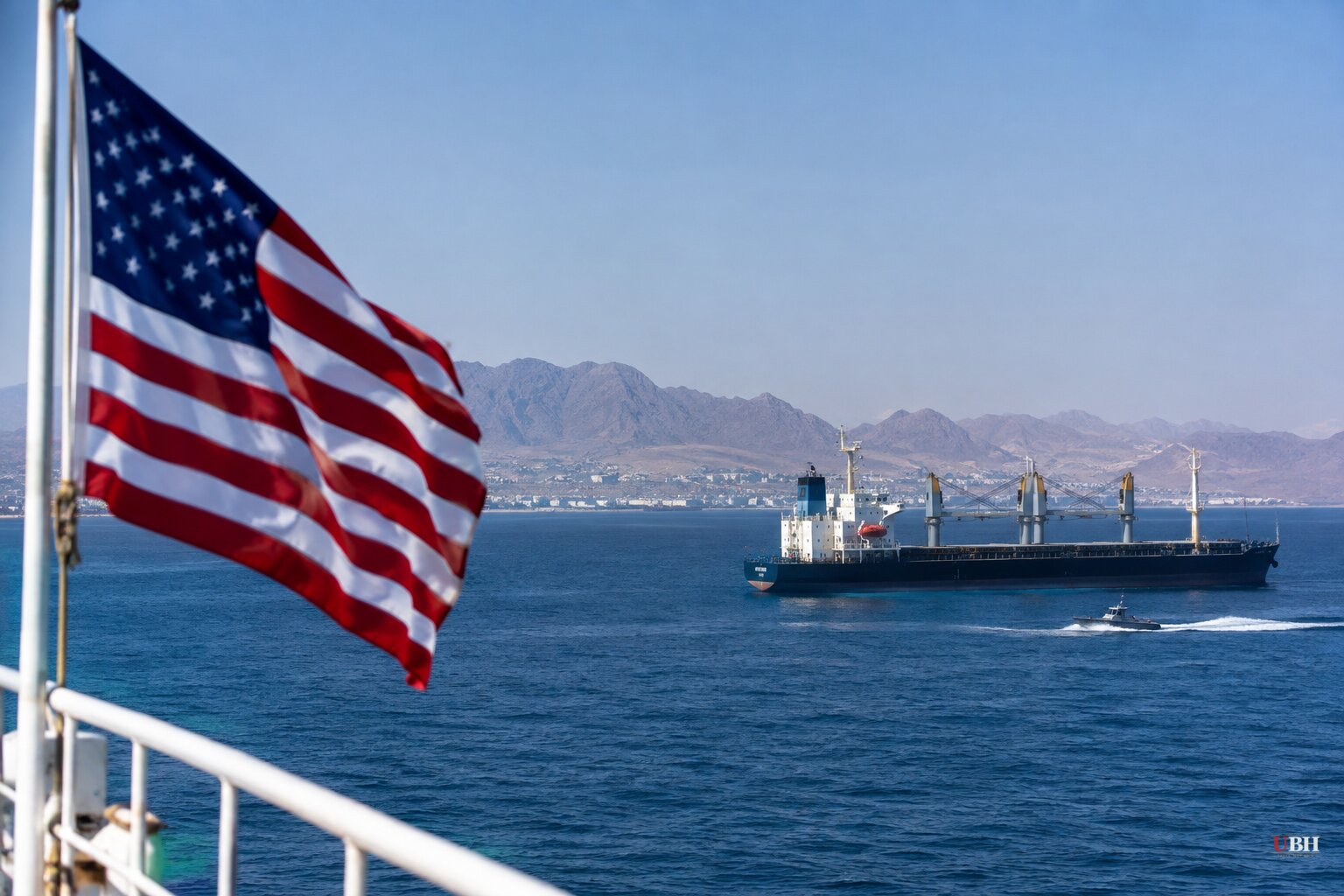
The US Treasury Department announced Friday, September 19, that it is lifting sanctions on Eritrea's ruling party, its military, and several linked individuals and companies, five years after the Biden administration imposed them over Eritrea's role in Ethiopia's Tigray war.
According to the Treasury Department's Office of Foreign Assets Control, the delisted entities include the Eritrean Defense Forces, President Isaias Afwerki's People's Front for Democracy and Justice, the Red Sea Trading Corporation, and Hagos Gebrehiwet, described by Middle East Eye as a key economic advisor to Afwerki. Treasury's notice framed the move technically as an expiration: the underlying national emergency declaration, renewed annually since November 2021 including once already under Trump, was simply not renewed this year.
But the State Department cast it as a deliberate policy shift, not a bureaucratic lapse. A spokesperson told AFP that while implementation of the 2022 Ethiopia-Tigray peace deal has been "uneven," it's "time to adapt our foreign policy to current realities and collaboratively engage with both countries to advance US interests."
Why Eritrea, why now
Eritrea sits on more than 1,000 kilometers of Red Sea coastline, and at its narrowest point the water separating it from Yemen is about 20 nautical miles, according to Middle East Eye. That geography has taken on new weight as Houthi forces in Yemen expand their reach.
The Iran-aligned Houthi movement, a US-designated foreign terrorist organization, captured the southern port city of Mokha and the outlying Perim Island in a rapid offensive earlier this month, according to The Epoch Times. Michael Horton, a fellow at the Jamestown Foundation, told the outlet he expected the campaign to take weeks or months, not four days. Brent Sadler of the Heritage Foundation told The Epoch Times the shift is "a remarkable change of the frontlines in Yemen" but doesn't significantly alter the existing threat to shipping, since Houthi forces could already strike targets at the Red Sea's northern end.
Al Jazeera and ua.news both note the sanctions relief comes as Houthi pressure on the Bab el-Mandeb Strait grows, and as the ongoing US-Israel war on Iran has made the Red Sea a more critical oil shipping route with the Strait of Hormuz effectively blocked. Wire reports from AFP on September 19 also describe Houthi claims of strikes near Riyadh's airport and against Aramco facilities in Yanbu, underscoring how contested the broader region has become.
Eritrea's reaction, and the regional chessboard
Eritrea's Information Minister Yemane Gebremeskel told Reuters the sanctions "were not warranted by any metrics" and welcomed what he called the Trump administration's "remedial measures."
Eritrea's government has also positioned itself as a counterweight to the United Arab Emirates in the region. Foreign Minister Osman Saleh told Middle East Eye the UAE is pursuing "port imperialism" across Africa and seeking a Red Sea naval base for joint use with Israel. Eritrea backs Sudan's army alongside Egypt, Turkey, and Saudi Arabia, while Ethiopia, once Eritrea's wartime ally, has moved closer to the UAE and reportedly helps arm the UAE-backed Rapid Support Forces in Sudan's civil war, per Middle East Eye's reporting.
One detail largely absent from the Al Jazeera, Middle East Eye, and Ground News coverage: News of Bahrain reported that this action only lifts sanctions tied to the specific Ethiopia-related national emergency. It does not necessarily remove every other US restriction that may apply to Eritrea, a distinction that matters for judging how much this actually changes on the ground.
The human rights question that doesn't go away
The African Union estimates the Tigray war killed up to 600,000 people, with hundreds of thousands still displaced, according to Al Jazeera and Ground News. Eritrean forces were accused of committing atrocities while backing Ethiopia's federal army during that conflict. Those allegations were never resolved through prosecution, and the State Department's own spokesperson acknowledged that implementation of the peace deal has been "uneven" even as Washington moves to normalize ties.
A reasonable critic of this decision would argue that lifting sanctions on a government accused of mass atrocities, without any accountability mechanism completed, sends the signal that strategic location buys a pass on human rights conduct. That's a legitimate concern, and no source here shows the atrocity allegations were ever independently adjudicated or that Eritrea admitted wrongdoing. At the same time, sanctions had been in place for five years without producing a resolution to Eritrea's human rights record or documented behavior change, and the administration's stated calculus is a live regional security threat, not an endorsement of Tigray-era conduct.
What's not yet clear from any source is what, if anything, Washington is asking of Eritrea in exchange for the sanctions relief, or whether this opens the door to renewed US access to Eritrean ports like Assab as Houthi control tightens around the strait. That remains an open question as the Yemen conflict continues to reshape the security map on both sides of the Red Sea.
Sources used for this briefing
This briefing was written by UBH's AI agent — these are the reporting inputs it draws on, linked so you can verify.


