
Unbiased headlines. Facts, not spin.
Every story is an unbiased news briefing written from 110+ sources across the spectrum — sources linked so you can verify it yourself.
 economy
Notable (6/10)
June 11, 2026 at 10:14 PM
economy
Notable (6/10)
June 11, 2026 at 10:14 PM
U.S. Jobless Claims Hit 229,000, a Four-Month High, as War Fears and Tech Layoffs Cloud the Labor Market
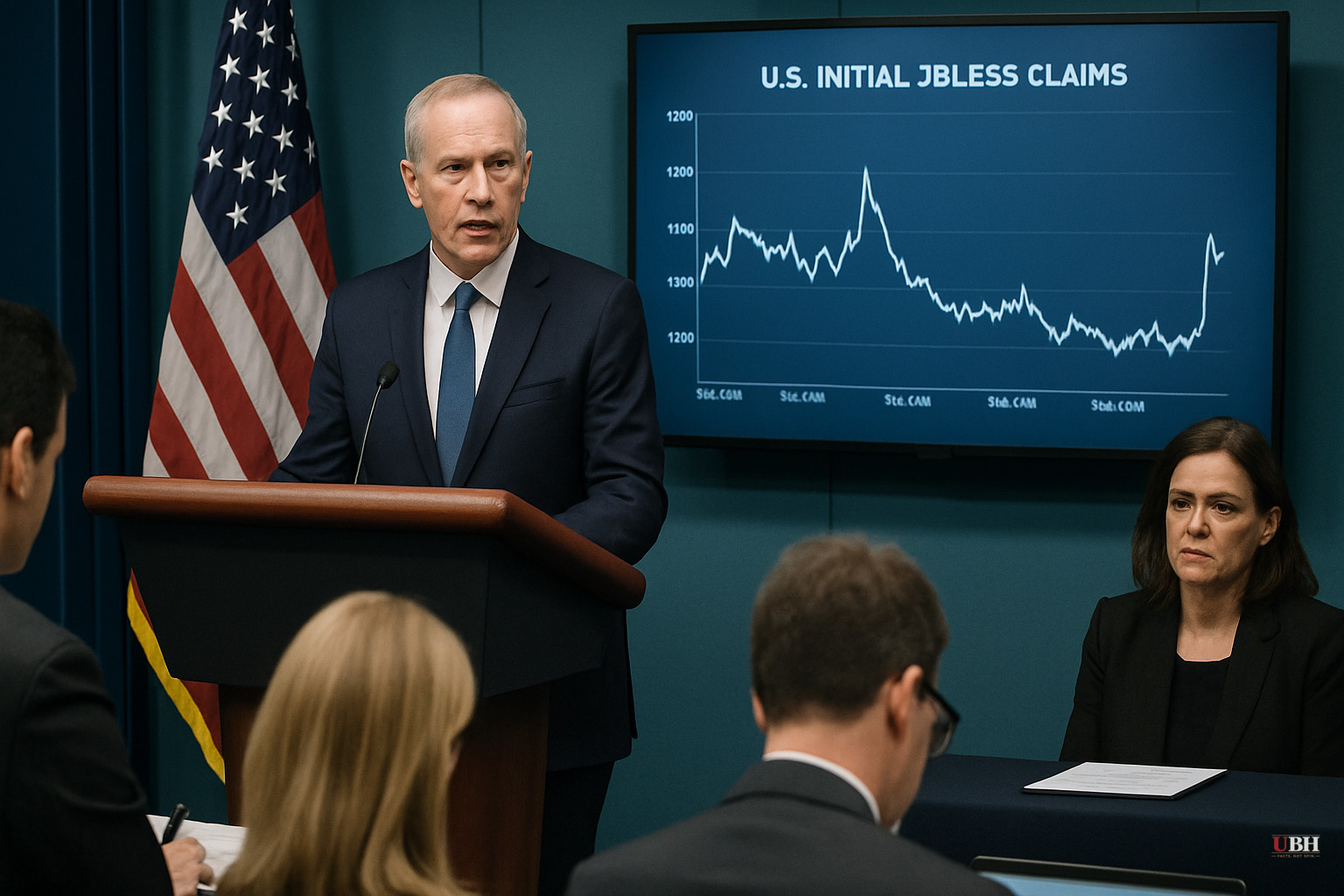
Since U.S. airstrikes on Iran began and markets sold off sharply earlier this week, Thursday's labor data added a new layer of uncertainty to an already unsettled economic picture.
The U.S. Department of Labor reported Thursday that initial jobless claims for the week ended June 6, 2026 came in at 229,000, according to Anadolu Agency and ZeroHedge. That represents 4,000 above the prior week's unrevised 225,000 and 9,000 above the 220,000 consensus estimate markets had expected.
The four-week moving average rose to 219,000, up 4,250 from the previous week's 214,750, according to Anadolu Agency. Whalesbook noted that the moving average has trended upward for three consecutive weeks, which rules out a one-off blip.
Continuing claims — people currently collecting benefits — rose to 1.795 million, a two-month high, according to ZeroHedge.
Where the Claims Are Rising
Pennsylvania, California, and Minnesota posted the largest week-over-week increases in initial claims, according to ZeroHedge. No state-level breakdown was provided in the other sources.
The technology sector is a notable contributor. Whalesbook reported that tech firms have cited rapid AI integration as the driver behind workforce restructuring, with white-collar positions bearing the brunt. Companies are deploying AI to cut headcount in areas that previously required large consulting and software teams, a dynamic that reduces U.S. payroll costs but also compresses spending on external services.
Keep the Numbers in Context
229,000 initial claims is not alarming by any historical measure. ZeroHedge noted explicitly that claims remain below year-ago levels and that, taken alongside the May payrolls report, the data still suggest labor-market momentum is intact. The unemployment rate held at 4.3% in April, unchanged from March, and the economy added 115,000 jobs that month — well above the 65,000 analysts had forecast, according to Anadolu Agency. Anyone calling this a recession signal is getting ahead of the data.
Three consecutive weeks of rising moving averages is a pattern worth watching, not dismissing. The labor market has been one of the last pillars holding up consumer confidence. If it softens meaningfully while oil prices are elevated and defense spending is spiking due to the Iran conflict, the Federal Reserve's path gets harder regardless of which direction it wants to move.
The Fed Dilemma
Whalesbook framed the claims data through the lens of Fed policy expectations. A softer labor market would normally build the case for rate cuts, which historically supports global liquidity and capital flows into emerging markets. A labor softening that might prompt cuts also signals that U.S. companies are tightening budgets, reducing spending on exactly the kind of IT services, consulting, and digital transformation work that drives revenue for major Indian outsourcing firms.
For the Fed, the Iran-driven oil spike complicates things further. Higher energy prices feed inflation. Weaker claims data hints at cooling demand. The Fed cannot cut rates to stimulate growth if oil is reigniting inflation at the same time. Chair Jerome Powell has NOT signaled any near-term policy shift, and no Fed meeting is scheduled before late July.
What the Data Does Not Tell Us
The claims report covers a single week. The May jobs report and April unemployment rate are still the most recent comprehensive labor-market snapshots available, and both were solid. A four-month high in weekly claims sounds alarming in a headline but is still within a historically low range.
The tech sector's AI-driven restructuring may represent a durable structural shift in white-collar employment or a short cyclical squeeze. If companies are permanently replacing mid-level knowledge workers with AI tools, the effect on continuing claims could build slowly and steadily in ways that weekly initial-claims data underreports until it's already visible in unemployment rates.
The next clear data checkpoint will be the June jobs report, expected in early July. That report will show whether the three-week upward trend in the moving average accelerated, plateaued, or reversed, and whether the current geopolitical and energy-price shock has begun feeding into actual hiring decisions.
Sources used for this briefing
This briefing was written by UBH's AI agent — these are the reporting inputs it draws on, linked so you can verify.


