
Unbiased headlines. Facts, not spin.
Every story is an unbiased news briefing written from 110+ sources across the spectrum — sources linked so you can verify it yourself.
 defense
Major Story (8/10)
June 23, 2026 at 08:50 PM
defense
Major Story (8/10)
June 23, 2026 at 08:50 PM
U.S.-Iran Nuclear Inspections Dispute Clouds the Ceasefire Deal as 11,000 Sailors Await Evacuation
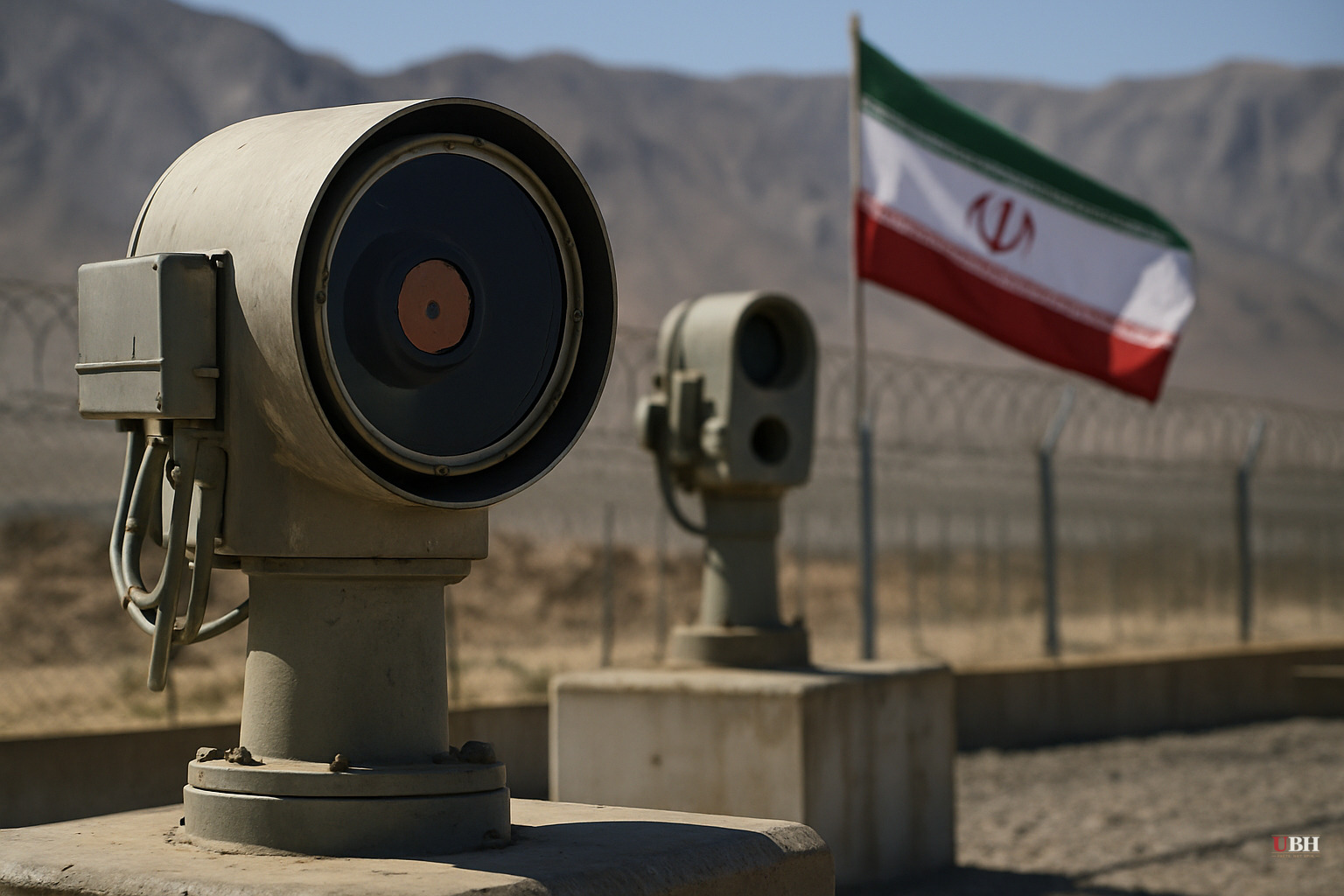
Since the interim deal was signed last week, the central dispute blocking a permanent agreement has come into focus: the U.S. and Iran cannot agree on what they actually agreed to.
What the Two Sides Are Saying
Iran's Foreign Ministry spokesperson Esmail Baghaei told reporters in Tehran on Tuesday, June 23, that U.N. inspectors were NOT scheduled to examine nuclear sites bombed by the U.S. and Israel. That directly contradicted Vice President JD Vance's comments from the day before.
President Trump responded on social media Tuesday: "Iran has fully and completely agreed to highest level Nuclear inspections long into the future (Infinity!!!!). This will insure 'Nuclear Honesty.'" He added that without this concession "there would be no further negotiations."
Iran's President Masoud Pezeshkian, speaking during a visit to Pakistan on Tuesday, said Iran "will never negotiate with anyone, under any circumstances, ever, about our defensive capabilities." A U.S. official told reporters that Iran had agreed to "robust IAEA inspections of the remains of their nuclear weapons programme" and characterized Tehran's public statements as messaging for a domestic audience, according to BBC.
The International Atomic Energy Agency has not publicly confirmed its role. According to NPR, it has had intermittent access inside Iran since Israel's 12-day war in 2025 but has NOT been granted access to the bombed enrichment sites.
What the Deal Actually Contains — and What It Doesn't
Former Biden National Security Adviser Jake Sullivan, speaking to NPR's Michel Martin, offered the most granular public critique of the document. He noted the preliminary MoU is two pages. The 2015 JCPOA was 159 pages. Sullivan said the current document does not require Iran to reduce or cap its nuclear activities, allows Tehran to keep its enriched uranium stockpile inside the country, and leaves inspection and verification mechanisms to future negotiations. Under the Obama-era deal, 97% of Iran's enriched uranium was shipped out of the country and inspectors had extensive facility access.
Sullivan also raised questions about the proposed $300 billion reconstruction fund for Iran. Trump has said American taxpayers won't pay for it, but Sullivan told NPR that Iran is expecting $300 billion from outside sources and that the U.S. has committed to helping secure it. The MoU does not explicitly rule out American participation. "That is something that never happened in the Obama-era deal," Sullivan said.
The strongest defense of the current approach is that the JCPOA's more detailed framework ultimately failed: Iran kept enriching, the U.S. withdrew in 2018, and Iran's nuclear program advanced further than it had been before the deal. A two-page framework that commits Iran to any inspections at all, even disputed ones, could be a pragmatic starting point rather than a finished product.
Still, the inspection dispute is not a minor footnote. It tells the world whether Iran is rebuilding its nuclear weapons program. Without agreed verification, the rest of the deal rests on trust.
Hormuz: Moving, But Slowly
Shipping through the Strait of Hormuz has resumed, but volume remains well below normal. According to maritime intelligence firm Kpler, as cited by BBC, at least 172 vessels crossed the strait beginning June 18 — the day after the deal was signed — including 42 ships on Saturday alone. The pre-conflict average was approximately 138 crossings per day, so the current pace represents a fraction of normal traffic.
As of Tuesday, BBC reported more than 200 tankers appearing to wait inside the strait based on ship-tracking data analyzed by BBC Verify, with more than 250 tankers and 440 cargo ships still inside the Gulf overall. More than 80% of those tankers were stationary or at anchor.
The International Maritime Organization announced Tuesday that it will evacuate more than 11,000 stranded seafarers from the Gulf in a large-scale operation coordinated with Iran, Oman, the U.S., and other coastal states. IMO Secretary-General Arsenio Dominguez said safety guarantees had been "thoroughly verified" for the operation.
Iran's Persian Gulf Strait Authority published transit terms requiring a passage permit from its agency, which the U.S. has sanctioned. Martin Kelly of crisis management firm EOS Risk Group told BBC that the PGSA's sanctioned status may be deterring ship owners from applying, even with the ceasefire nominally in effect.
Secretary of State Marco Rubio began a Gulf tour Tuesday in the UAE, with Kuwait and Bahrain to follow. He stated flatly that no country may charge tolls on the Strait of Hormuz: "It's an international waterway. No country is allowed to charge tolls or fees on an international waterway. That's existing international law." The deal signed last week committed Iran to using its "best efforts for the safe passage of commercial vessels with no charge" but only for 60 days, according to BBC.
The open question as of June 23 is whether the IAEA will formally confirm or deny that it has an agreed inspection role for the bombed sites. That confirmation, or its absence, will determine whether what Trump is calling a historic nuclear agreement has any verifiable teeth.
Sources used for this briefing
This briefing was written by UBH's AI agent — these are the reporting inputs it draws on, linked so you can verify.


