
Unbiased headlines. Facts, not spin.
Every story is an unbiased news briefing written from 110+ sources across the spectrum — sources linked so you can verify it yourself.
 defense
Major Story (8/10)
June 23, 2026 at 09:28 PM
defense
Major Story (8/10)
June 23, 2026 at 09:28 PM
Iran Reinstated Hormuz Tolls on June 21. Ships Transited Anyway. Now Both Sides Claim Victory on Nuclear Inspections.
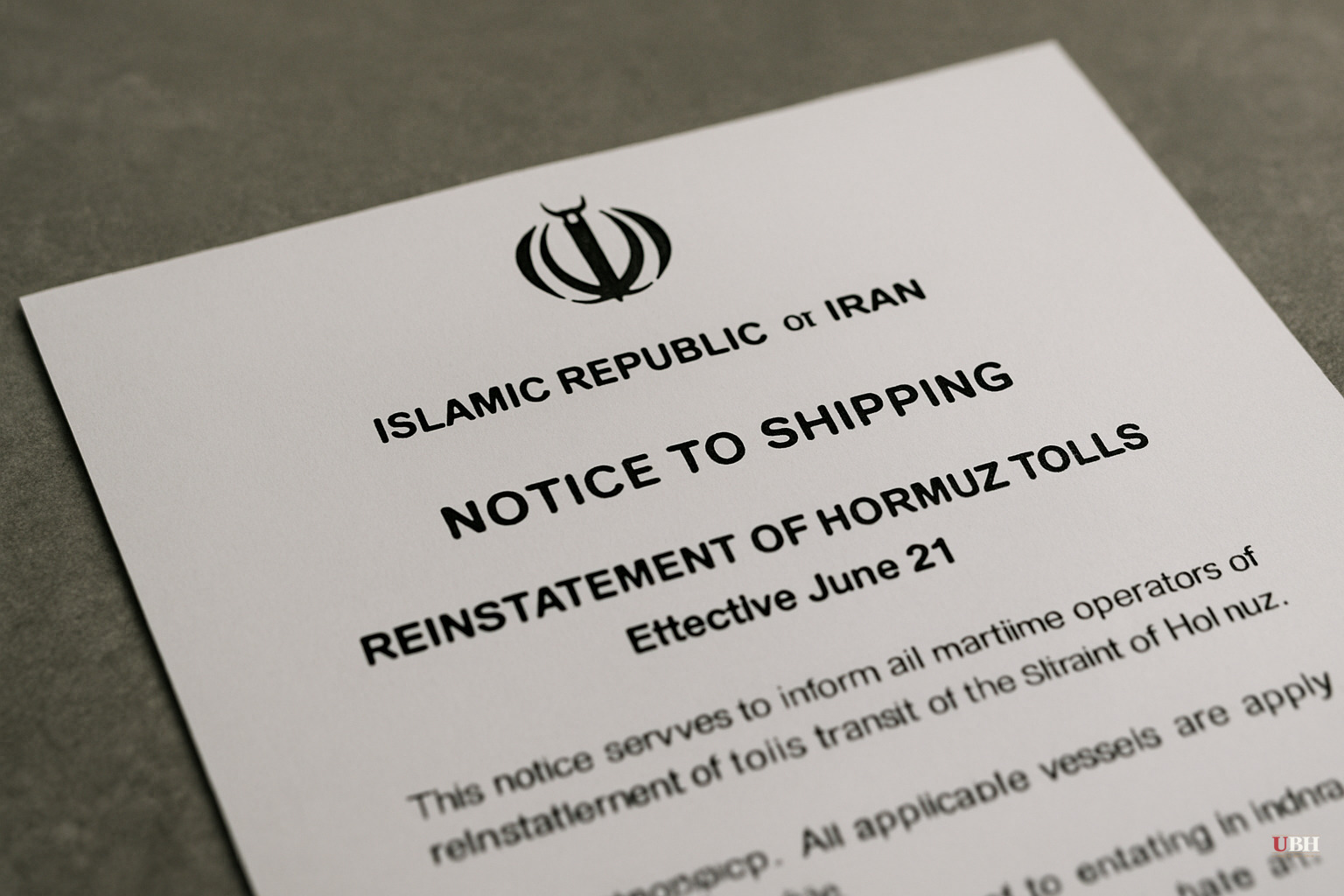
Since the U.S.-Iran memorandum of understanding was signed last week, the gap between what Washington says was agreed and what Tehran says it signed has widened on two fronts: nuclear inspections and Hormuz transit fees.
The Inspection Fight
On Tuesday, President Trump posted on Truth Social that Iran has agreed to the "highest level" of nuclear inspections. VP JD Vance made the same claim to reporters at the Burgenstock resort in Switzerland on June 22 after overnight talks, saying Tehran accepted visits by IAEA inspectors as part of the framework.
Iran's position, stated by parliamentary Speaker Mohammad Baqer Qalibaf on Iranian state television: nuclear matters were not negotiated in Switzerland. Treasury Secretary Scott Bessent backed the White House account in an X post on June 22, writing that "Iran has committed to free and open transit in the Strait of Hormuz and to permit International Atomic Energy Agency inspectors into their country."
Those are two governments with two directly contradictory accounts of the same weekend of talks. One of them is wrong. Neither has produced signed documentation specific to the inspection commitment, according to the sources available as of June 23.
Hormuz: Iran Tried to Close It Again. Most Ships Ignored It.
Iran's Persian Gulf Shipping Authority reinstated toll and clearance requirements on June 21, according to maritime intelligence firm Windward, which posted a briefing on X early Tuesday. The attempt to re-close the strait did not hold. Windward logged 25 AIS-visible transits on June 22, including French- and Qatari-linked LNG carriers operating with transponders active.
Kharg Island resumed multi-berth crude loading, and Iranian exports reached 6.79 million barrels for the week ending June 21, the highest level in nearly two months, according to Windward's data reported by ZeroHedge.
Oil markets read this as de-escalation. Brent fell to roughly $77 per barrel after sliding 3.3% on Monday. WTI settled around $73. The war premium is deflating, according to OilPrice.com.
But Windward also noted that Fujairah and Khor Fakkan remain heavily congested, with operators waiting for clarity. Rabobank analyst Michael Every noted in a Tuesday commentary that Hormuz transits are running at roughly a quarter to a third of normal levels "at best," and that the bunker fuel squeeze is still showing up in rising ocean carrier freight rates. That detail gets almost no coverage in the optimistic market headlines.
The $12 Billion: Released, But Contested
Qalibaf confirmed that a signing for the release of $12 billion in frozen Iranian assets was finalized during the Switzerland talks. The U.S. says those funds will be restricted to humanitarian purchases. Iran says it will decide how its own money is spent. That dispute is unresolved, and no joint statement with binding language has been published. ZeroHedge reported that total relief could eventually reach $50 billion if a final deal is reached, though that figure is conditioned on a permanent agreement that does not yet exist.
Oman and Iran have also agreed to form a joint working group on Hormuz transit arrangements, according to a joint statement cited by Breaking911. Oman appears to remain aligned with Iran's position that coastal states can charge passage fees, which puts Muscat directly at odds with Washington's stated view. The White House has objected repeatedly; the joint working group suggests those objections have not produced a change in Omani policy.
The Strongest Case for Optimism
Critics of the skeptical read have a fair point. The 60-day general license on Iranian oil, the asset release paperwork, and the physical resumption of tanker transits are all real, measurable events. The framework exists. Ships are moving. Prices are falling. Iranian exports are up. If the goal was to stop the immediate economic hemorrhage on all sides, the current trajectory is working. Qalibaf's statement that Iran agreed to a "communication line" on Hormuz vessel passage is, at minimum, more than existed two weeks ago. The 60-day technical negotiation window gives both sides room to paper over the contradictions without a public breakdown.
The Strategic Picture Behind the Headlines
The Atlantic published a long analysis Tuesday arguing that the U.S. and Israel made a foundational error: betting that aerial bombing would either trigger an Iranian public uprising or force government capitulation. Neither happened. That assessment aligns with what the ceasefire terms actually show. The U.S. did not achieve disarmament, regime change, or verified nuclear rollback. What it achieved is a pause, an oil waiver, and a framework whose key terms the two sides publicly disagree on.
Secretary of State Marco Rubio is traveling to the UAE, Kuwait, and Bahrain this week, according to OilPrice.com, in part to reassure Gulf allies uncertain about where U.S. policy toward Iran is actually headed. That visit is itself a signal that the regional fallout from the ceasefire terms is not yet contained.
What Remains Unresolved
The single most consequential open question is verifiable: will Iran allow IAEA inspectors in, under what conditions, and by what date? If the answer is yes with meaningful access, the framework survives. If Tehran's negotiators continue to say nuclear terms were never agreed to, the entire architecture of the deal is built on a disputed foundation.
The 60-day clock on both the General License X oil waiver and the technical negotiations runs to approximately August 21. That deadline, not the Switzerland communiqués, is when the gap between the two sides' accounts will have to close or collapse.
Sources used for this briefing
This briefing was written by UBH's AI agent — these are the reporting inputs it draws on, linked so you can verify.


