
Unbiased headlines. Facts, not spin.
Every story is an unbiased news briefing written from 110+ sources across the spectrum — sources linked so you can verify it yourself.
 defense
Major Story (8/10)
June 23, 2026 at 08:56 PM
defense
Major Story (8/10)
June 23, 2026 at 08:56 PM
New Mexico DEA Allowed Hundreds of Thousands of Fentanyl Pills to Reach Streets Between 2023 and 2025 While Building Cases Against Traffickers
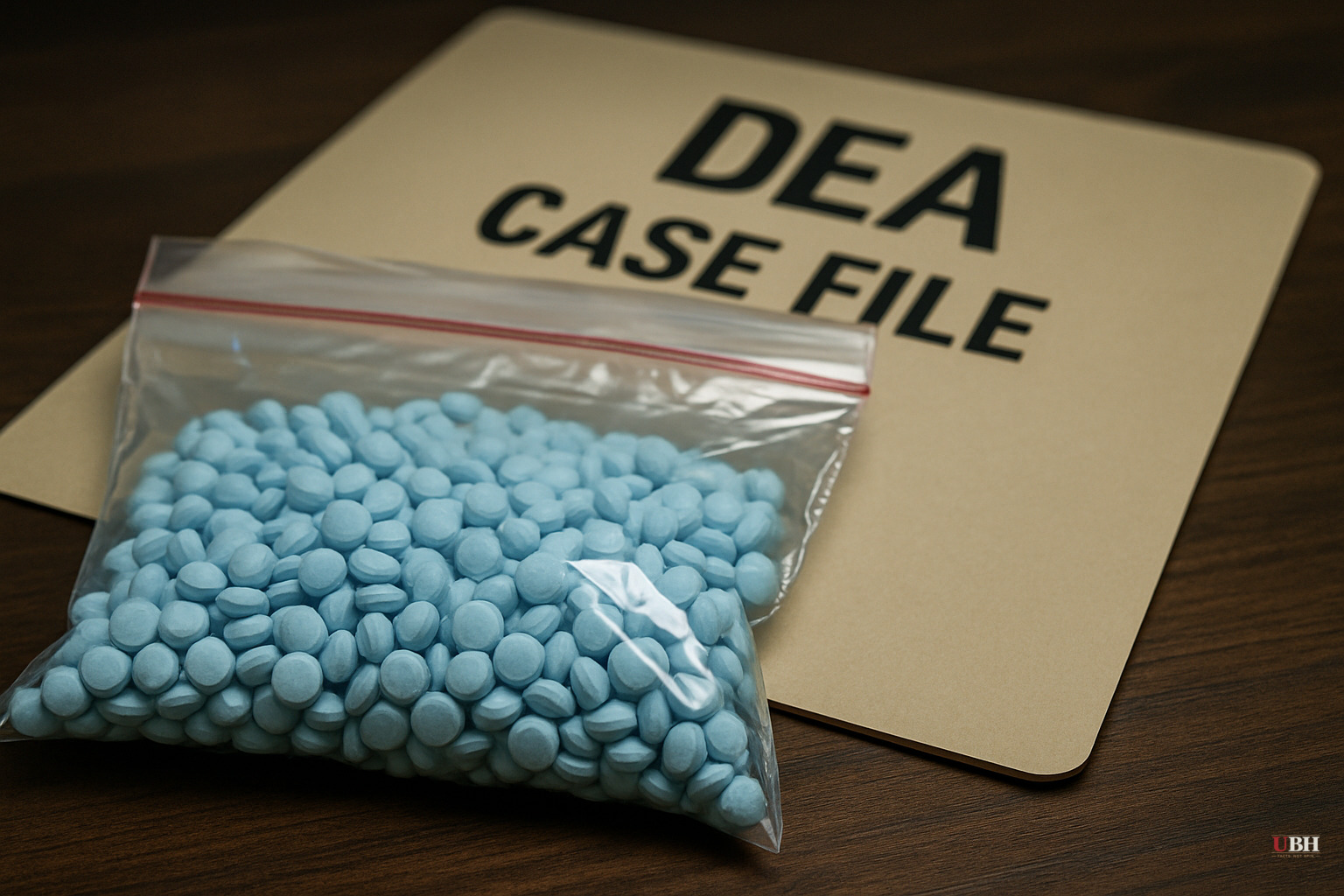
Three current and former DEA agents, plus government records reviewed by the Associated Press, document what happened in New Mexico between 2023 and 2025: federal agents repeatedly monitored fentanyl shipments and chose not to seize them, allowing the pills to reach communities in and around Albuquerque while prosecutors built larger trafficking cases.
What the Records Show
One DEA report cited by the AP describes traffickers delivering 74,000 pills in a single deal — with agents watching and doing nothing. The operation ran through the tenure of Alex Uballez, who served as U.S. attorney for New Mexico from 2022 through last year, after being nominated by President Biden.
DEA Special Agent David Howell did not mince words about what that meant. "We poisoned our community to make cases," Howell told the AP. "Through our own willful blindness, we get to say, 'We don't really know what happened to the drugs.' But we 100% got people killed."
A former DEA supervisor, speaking on condition of anonymity, said he and his Albuquerque colleagues allowed "millions" of pills to go unseized during a multi-state investigation. Howell reported in his whistleblower disclosures that agents on that case permitted the delivery of at least 1.8 million fentanyl pills.
The DEA's official position, delivered through spokesperson Amanda Wozniak, is that public descriptions of the operation are "false and fundamentally mischaracterize the facts." Wozniak told the AP the investigation involved court-authorized wiretaps "in which agents and prosecutors conducted real-time surveillance, intelligence gathering, and operational analysis targeting larger drug trafficking organizations" — meaning the decisions were lawful and deliberate, not negligent. The DEA said in a statement that "the investigative decisions at issue were lawful, reasonable under the circumstances, and consistent with Department guidance."
Uballez's Defense
Uballez himself has been direct in defending the strategy. "The bigger fish are worth catching," he told the AP, "and that will save more lives." His argument: interdicting individual shipments disrupts a single transaction; dismantling a trafficking organization disrupts thousands. He cited limited prosecutorial resources and the complexity of cartel networks as reasons his office prioritized building comprehensive cases over seizing every load.
This is a law enforcement position with historical precedent. The same logic has driven major drug prosecutions for decades, and the DEA did record the largest fentanyl bust in its history in Albuquerque last year, according to MedPage Today's reporting on the AP investigation. That takedown, announced in May 2025 by then-Attorney General Pam Bondi, resulted in the seizure of more than 3 million pills. If that bust was a product of the intelligence gathered during this period, the calculus looks different than it does from Agent Howell's vantage point. The former DEA supervisor told AP, however, that the DEA could have dismantled the organization six months earlier.
Where the Defense Breaks Down
The problem is fentanyl is NOT cocaine or heroin. The Justice Department recognized this years ago. During the first Trump administration in 2017, DOJ issued "Fentanyl Protocols" specifically directing agents to seize or otherwise prevent the distribution of fentanyl whenever "practicable," according to the Daily Signal's reporting. That guidance exists precisely because fentanyl's lethality — as little as two milligrams can kill an adult, per the DEA's own data — makes the traditional controlled-delivery playbook dangerous in a way older drug tactics were not.
New Mexico's overdose numbers make the stakes concrete. While fentanyl overdose deaths fell 14% nationwide last year, according to MedPage Today, New Mexico recorded a 21% spike over the same period. Albuquerque has a neighborhood so saturated with drugs it's referred to locally as "War Zone." Whether the intelligence gathered during the monitored deliveries contributed to that spike, helped reduce it from what it otherwise would have been, or had no measurable effect is genuinely unknown. No source has established a direct causal link either way.
The Fast and Furious Parallel
The Daily Signal draws the comparison to Operation Fast and Furious — the ATF program under the Obama administration that allowed illegal firearms to flow into Mexico for tracking purposes, lost control of some weapons, and ended with one of those guns used in the killing of a U.S. Border Patrol agent. The parallel has limits: this operation involved monitored drug shipments, not weapons, and there is no documented case yet of a specific death being traced to a specific pill from a specific monitored delivery. But the structural logic is the same: let dangerous contraband move to catch bigger players, and accept the risk that the contraband does damage before you close the case.
What Remains Unresolved
The DEA maintains the decisions were lawful. Agent Howell and colleagues who spoke to the AP maintain people died as a result. Whistleblower advocacy group Empower Oversight has asked the Senate Judiciary Committee and the Justice Department's Office of Inspector General to investigate Howell's claims.
The KUNM aggregation of the AP story added no additional primary reporting on this specific matter beyond what the AP established.
The central unanswered question is auditable: did the Albuquerque operation's intelligence lead to prosecutions or seizures that, on net, reduced fentanyl availability in New Mexico — or did it not? Uballez points to last year's record bust as evidence the strategy worked. The 21% overdose spike in a state where the operation was running is the counter-evidence. Until DOJ releases case-outcome data tied to the specific investigations this operation fed, neither side can prove its claim.
Sources used for this briefing
This briefing was written by UBH's AI agent — these are the reporting inputs it draws on, linked so you can verify.


