
Unbiased headlines. Facts, not spin.
Every story is an unbiased news briefing written from 110+ sources across the spectrum — sources linked so you can verify it yourself.
 defense
Major Story (7/10)
June 23, 2026 at 06:22 PM
defense
Major Story (7/10)
June 23, 2026 at 06:22 PM
Saudi Arabia Is Tilting Back Toward China After the Iran Strikes, and the U.S.-Saudi Partnership Faces Its Sharpest Test in Decades.
The Week That Mattered
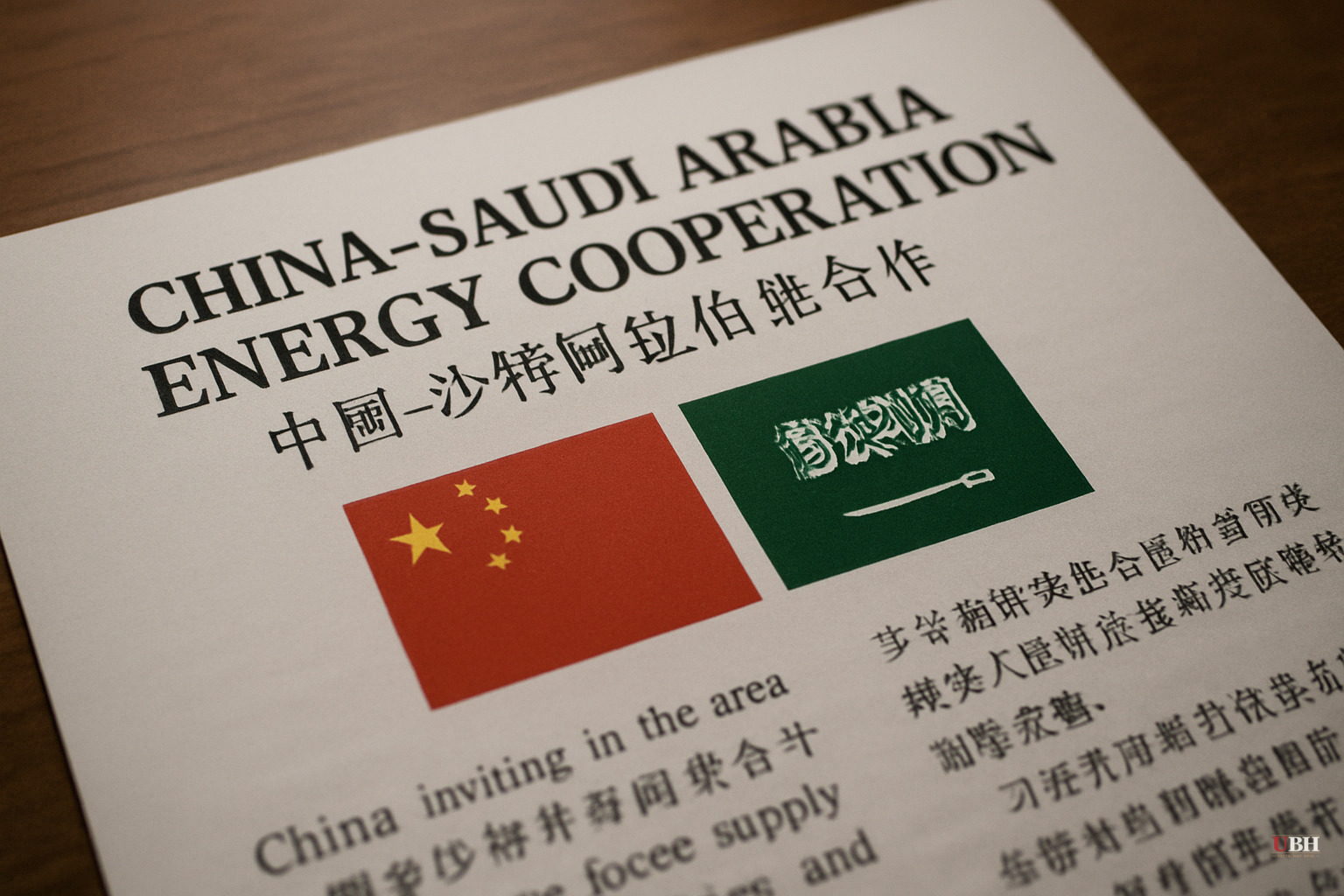
Last week, senior Chinese and Saudi officials held a series of high-level meetings on energy cooperation, according to OilPrice.com. One session paired Song Hongkun, deputy head of China's National Energy Administration, with Mohammed Al Qahtani, Saudi Aramco's Downstream President. The stated agenda: boosting global energy security and expanding bilateral oil and gas cooperation.
These meetings came directly after Operation Epic Fury, the U.S.-led strikes against Iran. Saudi Arabia, which shares a maritime boundary and a centuries-old sectarian rivalry with Iran, did not publicly oppose the operation. But Riyadh also did not signal alignment with Washington afterward. Instead, Chinese officials showed up.
Eighty Years of One Deal
The U.S.-Saudi relationship was never complicated in its original form. On February 14, 1945, President Franklin D. Roosevelt and King Abdulaziz Al Saud reached a foundational agreement: Saudi Arabia would supply the U.S. with all the oil it needed, and the U.S. would guarantee the security of the House of Saud.
That deal survived serious stress. It held through the 1973 Oil Crisis, when Riyadh led an OPEC embargo against the U.S. and its allies in response to American support for Israel during the Yom Kippur War. The relationship bent but did not break.
The 2014-2016 Oil Price War broke it, or at least cracked the foundation beyond quiet repair.
The Fracture
By 2014, American shale production had turned the U.S. into a serious global oil producer. Saudi Arabia, facing competition it could not match on cost, flooded the market to drive prices down. The strategy inflicted serious financial damage on OPEC members, including Saudi Arabia itself — whose government budget went into deficit, reaching double-digit levels of GDP in the first full year of the war, and remaining in deficit until the end of 2021. Washington viewed it, according to OilPrice.com, as a second oil price war instigated by Riyadh — one breach too many of the 1945 framework.
Riyadh paid a steep price. To rebuild OPEC's credibility in global markets after that war, Saudi Arabia had little choice but to bring Russia into the expanded OPEC+ grouping. That opened the door wider for China. Beijing leveraged Moscow's new position inside OPEC+ to extend its own influence in the Gulf, signing a series of wide-ranging agreements with Saudi Arabia after 2016.
China's Patient Strategy
China's approach to the Middle East has not been dramatic. It has been relentless commercial presence: infrastructure investment, refinery partnerships, long-term oil purchase contracts, and diplomatic engagement sustained across administrations.
A landmark visit to China by Saudi Arabia's King Salman in March 2017 saw around US$65 billion of business deals signed in sectors including oil refining, petrochemicals, light manufacturing, and electronics. That same year, the then-Saudi Vice Minister of Economy and Planning, Mohammed al-Tuwaijri, told a Saudi-China conference in Jeddah: "We will be very willing to consider funding in renminbi and other Chinese products."
The roots of the relationship go back further. When Saudi Arabia's planned IPO of 5% of Aramco struggled to attract serious international investors or prestigious stock exchanges, China offered to buy the entire 5% stake outright. Although the offer was eventually declined, MbS never forgot China's gesture.
During the first months of Trump's second term, Riyadh did tilt noticeably back toward Washington. OilPrice.com notes that arc now appears to be reversing in the wake of the Iran strikes.
The Strongest Case for the U.S. Position
The argument for continued American primacy in Saudi Arabia is real and should not be dismissed. The U.S. still provides the security architecture that keeps the House of Saud in power: intelligence, weapons systems, and the implicit deterrent of American military presence in the region. China has no comparable security guarantee for Riyadh and no record of intervening militarily to protect a partner's government.
From this view, Saudi Arabia's energy diplomacy with China is pure commercial hedging, not a strategic defection. Every major oil producer diversifies its customer base. Meeting with Chinese energy officials the week after a major regional military operation could be Riyadh simply making sure its largest buyer stays calm.
Why It May Not Be Enough This Time
The problem for Washington is structural. The 1945 deal rested on U.S. energy dependence on Saudi oil. That dependence has diminished sharply as the U.S. shale sector became, in OilPrice.com's words, "a serious global oil-producing force" — making the country far better able to withstand lower-for-longer oil prices than Saudi Arabia. Saudi Arabia noticed.
China's energy dependence on Gulf oil, by contrast, is growing and has no domestic shale revolution on the horizon. Saudi Arabia is not just a customer relationship for China; it is a strategic necessity. That asymmetry gives Riyadh real leverage in Beijing that it no longer holds in Washington.
Operation Epic Fury adds a new variable. The strikes against Iran raised the regional temperature sharply. Saudi Arabia has every incentive to maintain lines to both Washington and Beijing simultaneously. But if Riyadh concludes that the post-strike environment leaves Iran humiliated but not neutralized, and that Iranian retaliation risk is now elevated, it may accelerate its diplomatic diversification.
The Open Question
OilPrice.com's source article leaves unresolved whether the Song-Al Qahtani meeting produced concrete new commitments — specific contract volumes, refinery deals, or infrastructure pledges — or whether it was a signaling exercise. Diplomatic meetings happen constantly. Signed agreements with dollar figures attached are a different category of fact. Until the terms of those discussions are disclosed, the full weight of last week's meetings cannot be assessed.
Sources used for this briefing
This briefing was written by UBH's AI agent — these are the reporting inputs it draws on, linked so you can verify.


