
Unbiased headlines. Facts, not spin.
Every story is an unbiased news briefing written from 110+ sources across the spectrum — sources linked so you can verify it yourself.
 defense
Major Story (7/10)
June 23, 2026 at 09:00 PM
defense
Major Story (7/10)
June 23, 2026 at 09:00 PM
Pentagon Restructures Foreign Military Sales Agencies and Launches Six-Month NATO Force Posture Review
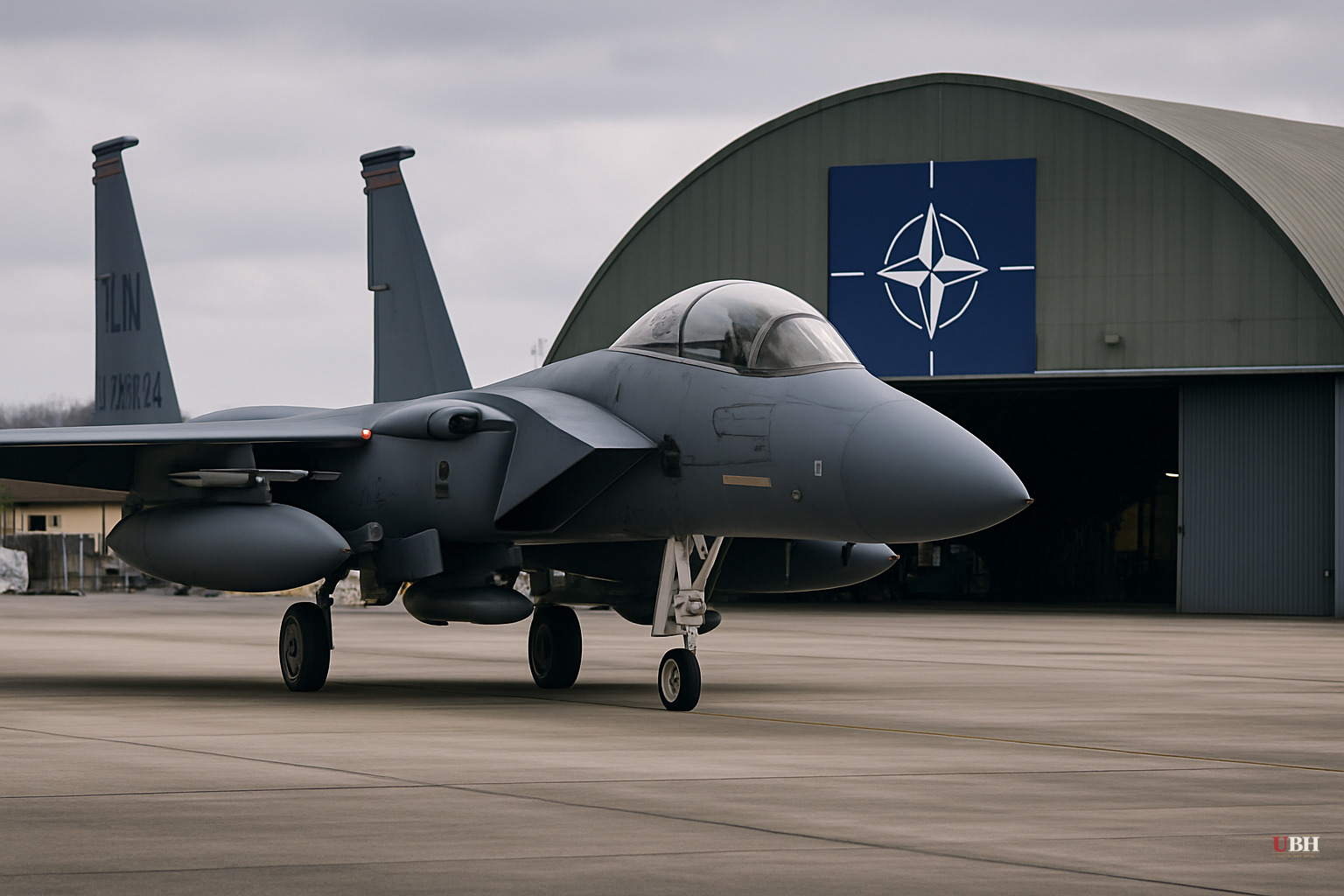
Since Trump's February executive order directing a revamp of U.S. arms transfer policy, the Pentagon has been assembling the pieces. Two concrete structural moves landed this month.
The FMS Reorganization
Hegseth announced via social media video that both the Defense Security Cooperation Agency (DSCA) and the Defense Technology Security Administration (DTSA) are now consolidated under the Office of the Undersecretary for Acquisition and Sustainment, led by Michael P. Duffey, according to a Department of War memorandum. The DSCA handles the actual facilitation of weapon sales to partner nations; the DTSA assesses the technology-transfer risks involved in those sales. Putting them in one chain of command, Duffey said, creates "a single coherent defense sales enterprise" designed to move "at the speed of war."
Hegseth framed the move as fulfilling the mandate of Trump's earlier executive order: "leverage America's record-breaking defense sales to revitalize our industrial base and support our partners."
The structural change is real and immediate. But the broader overhaul of how the U.S. decides what to sell, to whom, and on what terms is still months away from producing visible results.
The Longer Runway
Michael Cadenazzi, the assistant secretary of Defense for Industrial Base Policy, told reporters after a Center for a New American Security event last week that his office has delivered its portion of the work tasked under the America First Arms Transfer Strategy. Sequencing presents a challenge. "The hardest part is just to time phase it, because there's so many things hitting the enterprise all at once," Cadenazzi said, according to Breaking Defense.
The February executive order set a 120-day deadline for several deliverables, including a "sales catalog of prioritized platforms" that Hegseth, Secretary of State Marco Rubio, and Commerce Secretary Howard Lutnick are supposed to draft together. That 120-day window lapsed earlier this month. A "Promoting American Military Sales Task Force" is also supposed to be stood up to handle implementation. Neither has publicly launched as of June 23, 2026. Cadenazzi said the rollout will be incremental, not a "one year kind of thing" but a sustained, phased process.
NATO Force Posture Review
Separately, Hegseth used a NATO defense ministers meeting in Brussels on June 18 to announce a force posture review of all U.S. troops in Europe, currently numbering roughly 80,000, according to the Department of War readout.
The review will last up to six months, though Hegseth said it could be shorter. It will consult both U.S. and European military commands as well as Congress. The framework is what Hegseth calls "NATO 3.0": Europe takes primary responsibility for its own defense while the U.S. repositions for global needs.
Hegseth tied the review directly to allied behavior during Operation Epic Fury, the U.S. war against Iran. "Too many of our allies said no" when the U.S. sought base access and overflight rights, he said. "Others tried to drown us in arcane legal debates or criticized us publicly for doing what they aren't prepared or able to do themselves. It was shameful."
Spain drew the sharpest implied criticism. Washington has publicly reproached Madrid for denying base access for Iran operations, and the Legion magazine reported the U.S. presence at Rota — a key Navy base hosting missile-defense destroyers — could factor into the review. No decision on Rota has been announced.
Countries that supported the Iran effort, including Germany, Romania, Greece, and the United Kingdom, were identified as having provided basing. Poland, which recently lost an armored brigade deployment in the May Pentagon troop reduction, could potentially receive additional forces depending on review outcomes, according to Legion.
The Strongest Counter-Argument
European allies and their advocates make a legitimate point. The U.S. is simultaneously demanding that European nations buy more American weapons while warning them that the weapons queue is long and deliveries are uncertain, partly because the U.S. is backfilling its own stocks spent during the Iran war. Polish Lt. Gen. Piotr Bazeusz, that country's military representative to NATO, described this publicly as a "Catch-22" earlier this month, according to Breaking Defense. Spend on defense, but you may not get the gear on time. That tension is real and unresolved.
Whether the FMS restructuring actually shortens delivery timelines or just reorganizes the bureaucracy is a question allies are watching closely. Hegseth's answer is that speed is precisely why DSCA and DTSA were consolidated. But Cadenazzi's candor about the timeline gap suggests the bureaucratic integration is further along than the policy framework that would actually change what gets sold and to whom.
Annual Dues as Leverage
Hegseth also announced that U.S. NATO dues contributions will become contingent on allied defense spending. "Where other allies do not spend with urgency, our dues contributions will go down," he said in Brussels, per the Department of War. The U.S. has pushed NATO members to hit 5% of GDP in defense spending, a threshold well above NATO's existing 2% target, which most members only recently began meeting.
The posture review's findings are expected within six months of its June 18 launch, which would place a preliminary result by roughly December 2026. Whether Congress will use that window to push back on troop withdrawals is the next variable worth watching.
Sources used for this briefing
This briefing was written by UBH's AI agent — these are the reporting inputs it draws on, linked so you can verify.


