
Unbiased headlines. Facts, not spin.
Every story is an unbiased news briefing written from 110+ sources across the spectrum — sources linked so you can verify it yourself.
 defense
Major Story (7/10)
June 23, 2026 at 03:37 PM
defense
Major Story (7/10)
June 23, 2026 at 03:37 PM
Ukraine Strikes Knock Out Power to Half of Crimea as UK Tests 300-Mile Missiles Intended for Kyiv's Military
Crimea Goes Dark on June 23
Ukrainian drones struck a thermal power plant in Kerch, Crimea, on Tuesday, June 23, triggering power outages that left an estimated half the peninsula without electricity, according to Reuters.
The cities of Yevpatoria, Saki, Krasnoperekopsk, and Dzhankoy were among the areas affected, according to Radio Svoboda's Ukrainian service. Crimean authorities said electricity restoration was expected within 24 hours, though that timeline depends on the extent of damage.
The Telegram channel "Crimean Wind" reported a fire at the Kerch Combined Heat and Power plant that spread to an adjacent reservoir, with satellite imagery showing a smoke plume roughly 47 kilometers long. Separate strikes reportedly hit an oil depot, a TPP-Terminal, and port infrastructure near Henichesk and the Arabat Spit.
This follows a June 21 strike on another oil depot in Kerch that was still burning as of Tuesday, according to ZeroHedge citing regional reports. Crimean Governor Sergey Aksyonov confirmed on June 21 that all retail fuel sales at petrol stations had been suspended starting at 9:00 AM that morning, with fuel available only to state enterprises. According to ZeroHedge, those prior Sunday attacks resulted in the most severe fuel restrictions imposed on the population since the war began over four years ago.
The UK's New Missile Program
On a separate but connected track, the United Kingdom has tested long-range strike missiles with a range exceeding 300 miles, intended to be supplied to Ukraine's military. The Telegraph reported the details of the program.
The UK Ministry of Defence challenged defense firms to build weapons capable of flying faster than 370 mph, carrying a 500-pound warhead, costing approximately £400,000 per unit, and being manufactured at a rate of 20 per month. Twenty-seven companies submitted bids with Dragon's Den-style pitches held last February. Six received contracts worth roughly £5 million each to build prototypes in seven months.
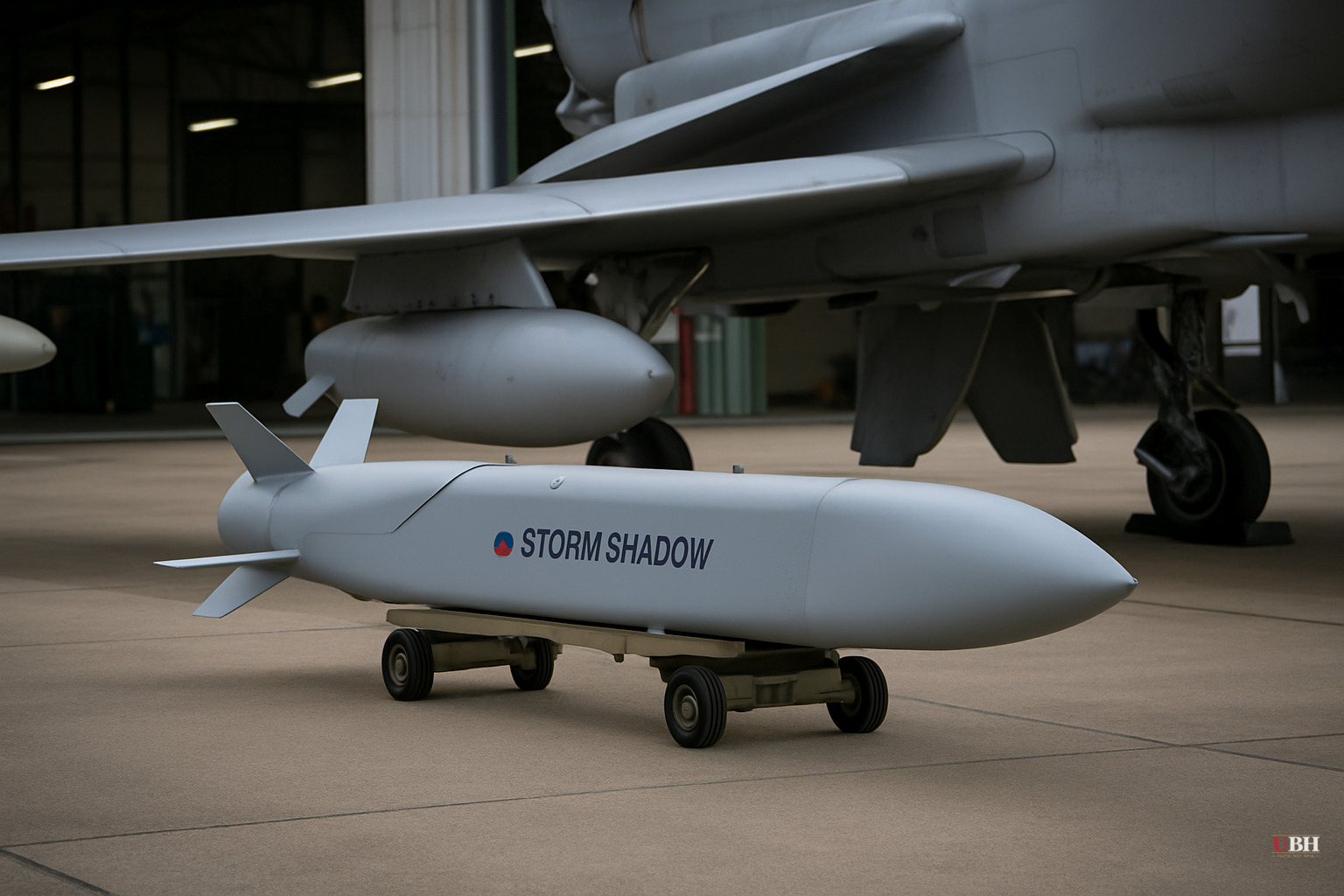
By last December, three suppliers remained: MBDA UK (maker of the Storm Shadow stealth missile), MGI Engineering (a UK SME with a Formula 1 technology background), and Rotron Aerospace (a UK SME with prior MoD contracts). Testing took place at a range in the Hebrides, with further trials planned across the UK in coming months.
UK Armed Forces Minister Louise Sandher-Jones described the new missiles as intended to "complement" Storm Shadow cruise missiles already being sent to Ukraine. "The UK stands shoulder-to-shoulder with Ukraine, and we will continue to provide the support it needs to defend itself against Russian aggression," she stated. "Project Brakestop shows what happens when we combine that commitment with the talent and ingenuity of British industry." A 300-mile-range missile launched from eastern Ukraine would place Moscow within reach.
The Escalation Argument
Critics of the policy, including the framing in ZeroHedge's coverage, argue that arming Ukraine with weapons capable of hitting the Russian capital constitutes reckless escalation against a nuclear-armed power. ZeroHedge characterized the open admission that these future systems could be used to directly target the Russian capital as "an insane escalation by NATO," warning that once Western systems begin striking Moscow, direct Russian military retaliatory action against Europe becomes a closer reality.
The counter-argument, and the one Western governments are currently acting on, is that Ukraine's ability to strike Russian energy infrastructure and logistics is exactly what forces Russia to divert resources, stretches its supply lines, and raises the cost of continued occupation. Every refinery fire in Crimea is fuel Ukraine is NOT moving toward the front.
Source Framing and Gaps
Both sources for this story are ZeroHedge, which leans skeptical of Western military intervention and frames the UK missile program as "sheer madness" in its headline. That framing is an editorial judgment, not a fact. The underlying reporting from The Telegraph about the missile program's specifications and the Reuters confirmation of the Crimea blackout are the verifiable elements worth anchoring to.
Neither source addresses the specific legal and policy question of whether supplying 300-mile-range missiles constitutes a qualitative shift in NATO's posture under existing agreements, or what conditions, if any, the UK has placed on their use. Those are material gaps.
The Road Ahead
The UK's further trials are scheduled to continue across the country in the coming months, according to The Telegraph, meaning the missiles are NOT yet in Ukrainian hands as of June 23, 2026. The timeline from testing to operational delivery is unconfirmed.
The more immediate unresolved question is what Russia does in response to the Crimea strikes. Aksyonov's fuel restrictions are already squeezing the civilian population, and repeated infrastructure hits on the peninsula, which Russia annexed in 2014 and considers sovereign territory, have historically prompted Moscow to threaten or execute retaliatory strikes on Ukrainian cities. Whether Tuesday's power plant strike accelerates that cycle is the question no source, left or right, can yet answer.
Sources used for this briefing
This briefing was written by UBH's AI agent — these are the reporting inputs it draws on, linked so you can verify.


