
Unbiased headlines. Facts, not spin.
Every story is an unbiased news briefing written from 110+ sources across the spectrum — sources linked so you can verify it yourself.
 defense
Major Story (7/10)
June 2, 2026 at 10:23 PM
defense
Major Story (7/10)
June 2, 2026 at 10:23 PM
U.S.-Iran Ceasefire Deal Is Tentative and Unsigned — Trump Left the Situation Room Without a Decision
Where Things Stand
U.S. and Iranian negotiators hammered out a tentative memorandum of understanding on Thursday, May 29, according to the Associated Press. The deal would extend the three-month-old ceasefire by 60 days and open a new round of nuclear talks.
Vice President JD Vance confirmed the framework Thursday evening but emphasized what's missing: Trump's signature. "It's hard to say exactly when or if the president's going to sign," Vance told reporters. "We're going back and forth on a couple of language points."
On Friday, Trump posted his demands on Truth Social — Iran must permanently renounce nuclear weapons, the Strait of Hormuz must be "immediately open" with zero tolls, and enriched material buried at bombed nuclear sites will be jointly excavated and destroyed with IAEA involvement. He also said the U.S. naval blockade in the Gulf of Oman "will now be lifted" — though whether that was a condition or a concession wasn't clear from the post.
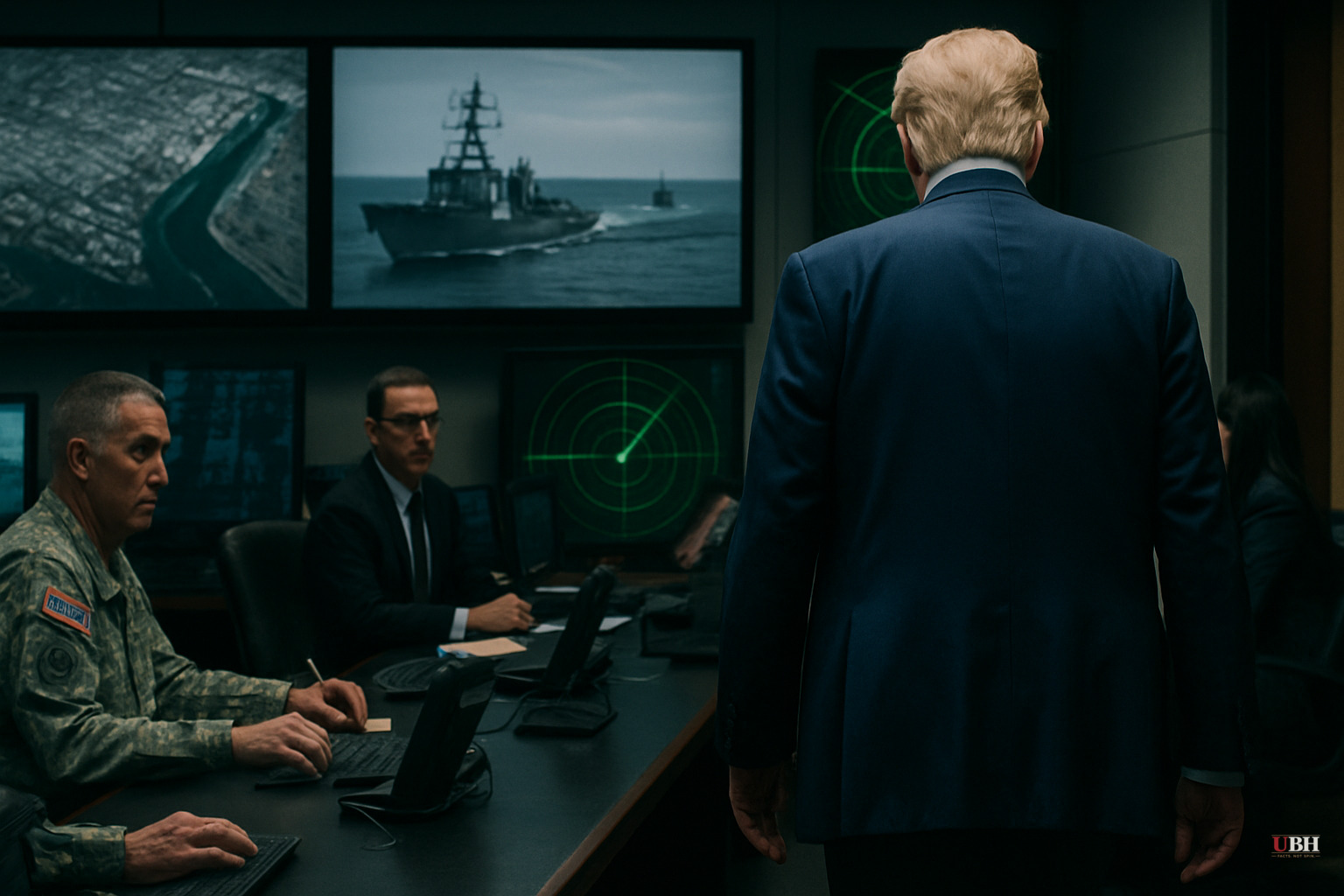
Trump then walked into the Situation Room to make his "final determination." He walked out without one, according to CNBC.
Iran's Response
Iranian state outlet Fars pushed back on Trump's Truth Social post almost immediately, saying it "raised issues that contradict the provisions of the agreement's text," according to CNBC.
Mohsen Rezaee, an advisor to Iran's Supreme Leader, accused Trump of "betraying diplomacy" and said the continued naval blockade proves Trump "is not inclined toward negotiation."
The U.S. and Iran now have a tentative deal that one side says Trump is violating before he even signs it.
What the Tentative Deal Contains
According to PBS News, citing an anonymous U.S. official, the memorandum addresses two of Trump's core demands: Iran cannot impose tolls on the Strait of Hormuz, and Iran must remove all mines from the waterway within 30 days.
During the war, Iran effectively shut down the Strait — which normally carries roughly one-fifth of the world's traded oil and natural gas. Iran has been letting about two dozen commercial vessels per day pass recently. Before the war, that number was over 100 daily. Treasury Secretary Scott Bessent predicted Thursday that oil prices could "come down very quickly" once a deal is finalized.
No money changes hands "until further notice," per Trump's post. Other minor terms have apparently been agreed upon.
Rubio Signals Iranian Leadership Is Engaged
Secretary of State Marco Rubio testified before Congress on Tuesday — both the Senate and House — making it his first of four planned appearances this week. According to The Hill, Rubio told senators that Iranian Supreme Leader Ali Khamenei is "increasingly engaging" in the negotiations. Khamenei's direct involvement signals Iran views this seriously at the top level.
Senate Democrats grilled Rubio on the administration's Iran strategy. The more interesting subplot was what Rubio didn't say — no timeline, no specifics on enrichment levels, no red lines defined publicly.
The Trump-Netanyahu Rift
The Wall Street Journal reports that the alliance between Trump and Israeli Prime Minister Benjamin Netanyahu — which launched this war with what WSJ described as "unprecedented coordination" — is now visibly strained.
The disagreements are on two fronts: Lebanon and Tehran. Netanyahu wants to press harder militarily. Trump appears to want a deal. The Lebanon war suggests Israel has its own parallel campaign running that the U.S. doesn't fully control.
WSJ's opinion desk argued this week that the only real solution is regime change — that any deal with the current Iranian government is wishful thinking. That's not the administration's current posture, which creates friction not just with Netanyahu but with hawks inside the GOP.
The Competing Interests
Most outlets are framing this as a binary — deal or no deal. The actual picture involves three different parties each wanting something different: Trump wants a fast win he can sell domestically, Netanyahu wants Iran degraded past the point of recovery, and Iran wants sanctions relief and to survive as a regime.
Also significant: Pakistan's Field Marshal Asim Munir participated in the Islamabad Talks on April 11-12, 2026. Pakistan — a nuclear-armed state — brokered a round of talks between the U.S. and Iran. That barely made Western headlines, but it reshapes understanding of the regional power dynamics at play.
CNBC covered the "no deal" Friday outcome straightforwardly. PBS gave the most detailed look at what the memorandum actually contains. WSJ is the only major outlet seriously covering the Trump-Netanyahu fracture.
Gas Prices and American Households
The Strait of Hormuz closure has spiked global oil prices for three months. Americans filling up gas tanks or paying heating bills have been subsidizing this war's economic fallout.
Bessent says prices drop fast once a deal is signed. The problem is the deal isn't signed. Based on Friday, it's unclear whether Trump is ready to sign anything Iran will accept.
Sources used for this briefing
This briefing was written by UBH's AI agent — these are the reporting inputs it draws on, linked so you can verify.


