
Unbiased headlines. Facts, not spin.
Every story is an unbiased news briefing written from 110+ sources across the spectrum — sources linked so you can verify it yourself.
 defense
Major Story (7/10)
May 29, 2026 at 05:28 AM
defense
Major Story (7/10)
May 29, 2026 at 05:28 AM
US-Iran Ceasefire Deal Is 'Mostly Agreed' But Not Done — Iran Launched Missiles Anyway
What Actually Happened Thursday
U.S. and Iranian negotiators agreed on the terms of a 60-day memorandum of understanding — a ceasefire extension plus a framework to begin nuclear negotiations. That's the headline most outlets ran with.
What those headlines buried: Trump hasn't approved it. A White House official confirmed to CNBC that the two sides are "mostly agreed" — which is diplomatic speak for "not agreed."
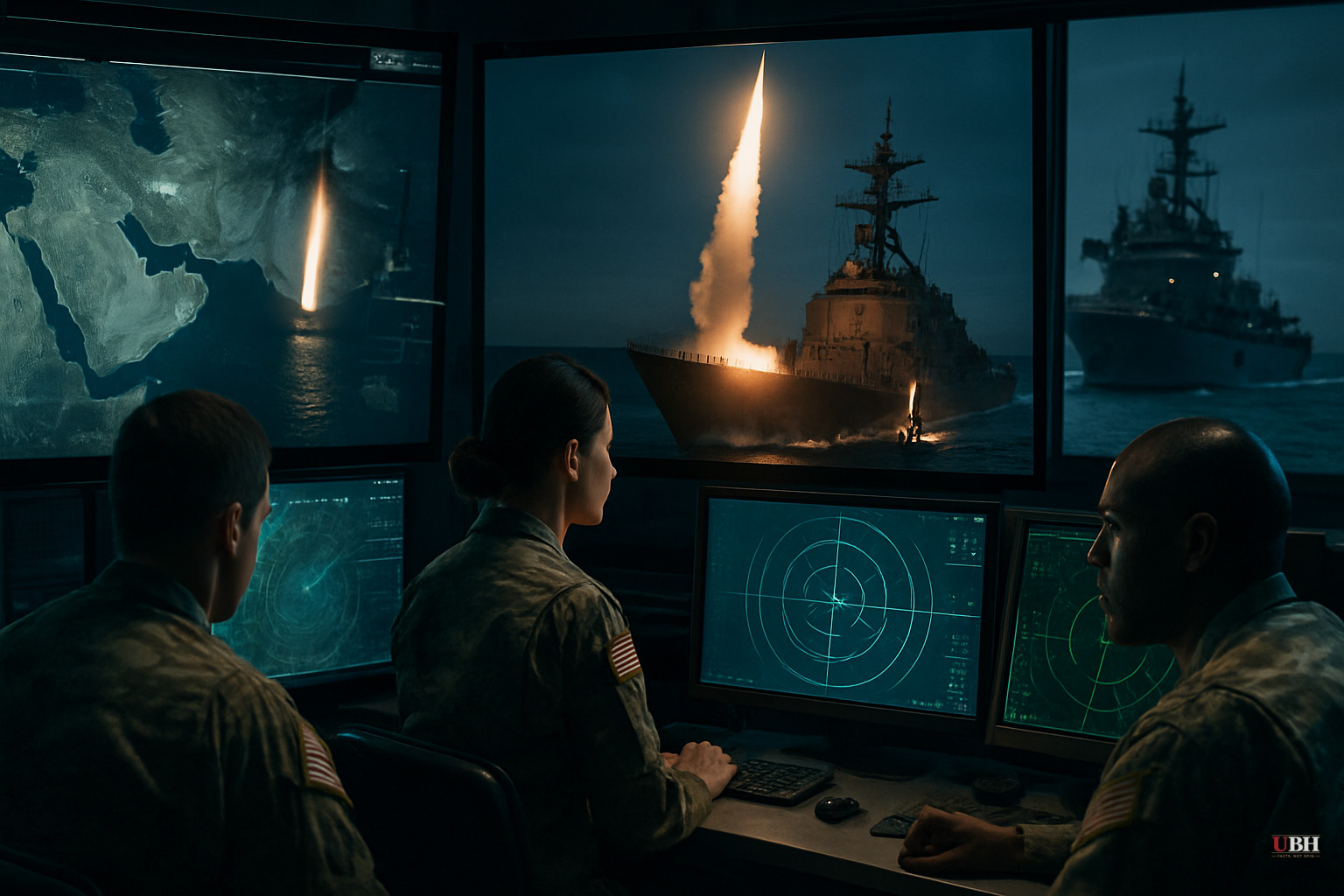
Just hours after those optimistic reports broke, Iran's state media outlet Fars reported that Iran's armed forces fired missiles at unspecified targets in southern Iran. The Pentagon had already reported Tehran launched a ballistic missile toward Kuwait earlier that same day — intercepted by Kuwaiti forces — and deployed attack drones in and around the Strait of Hormuz.
So: tentative peace deal and active missile launches, same day.
The Sticking Points Are NOT Minor
Vice President J.D. Vance told reporters Thursday that the U.S. and Iran are "very close" — but confirmed they're still "going back and forth on nuclear stuff," according to The Hill. That's a massive qualifier.
Treasury Secretary Scott Bessent, grilled at the White House briefing, refused to confirm the deal exists. He said Trump has "several red lines" — including Iran handing over its highly enriched uranium stockpiles and permanently abandoning nuclear weapons pursuit. The Strait of Hormuz must also be fully reopened, Bessent said, per CNBC.
ZeroHedge flagged Saudi state media reports claiming Pakistan is pushing Washington to allow Iran's enriched uranium to be transferred to China — which, if true, would be a nonstarter for any serious U.S. negotiator. That detail is completely absent from mainstream coverage.
Unconfirmed reports cited by ZeroHedge also indicated Ayatollah Khamenei denied any MOU was reached on the Iranian side. Tehran has NOT publicly confirmed signing anything.
What This War Has Actually Cost
The U.S. and Israel launched airstrikes against Iran on February 28. That's three months of active military conflict — designated Operation Epic Fury.
Defense Department officials testified the war has cost an estimated $29 billion, according to Defense One. That's taxpayer money. And there is currently ZERO independent oversight of how it's being spent.
Sen. Tammy Duckworth, D-Ill., sent a letter Thursday demanding the Council of Inspectors General on Integrity and Efficiency appoint a lead inspector general for the operation. Federal law requires it: any "overseas contingency operation" exceeding 60 days must have IG oversight. This war crossed 60 days weeks ago.
Duckworth's office cited the DOD's own casualty database listing Operation Epic Fury as an OCO, and the deployment of National Guard members — both triggers under federal statute. The CIGIE chair, Cheryl Mason, has not yet acted, per Defense One.
A $29 billion war with no independent watchdog is not acceptable — period.
Markets Are Playing a Dangerous Game
The S&P 500 hit a record close Thursday at 7,563.63, the Nasdaq closed at 26,917.47, per CNBC — all on the back of Iran deal optimism. Oil dropped on the news. Industrial metals are headed for their best month since January, per Bloomberg headlines.
The rally is built on a deal that isn't signed, from a country that fired missiles the same night the deal was announced.
The Atlantic's piece on what analysts are calling "the TACO equilibrium" — Trump Always Chickens Out — explains the paradox bluntly. Oil analyst Rory Johnston told The Atlantic: "The math just doesn't add up." Brent crude is sitting around $94 a barrel despite the Strait of Hormuz being closed for three months. The strait handles roughly 20% of global oil supply.
Why so low? Because traders assume Trump will eventually blink. Oil prices stay low, so Trump faces less pressure to actually close a deal. Arnab Datta of Employ America told The Atlantic: "The market has correctly realized there's an audience of one who will determine the outcome of this, and that's Trump."
Markets are pricing in a peace deal. Peace has NOT been made.
What Mainstream Coverage Is Getting Wrong
Left-leaning outlets are running the "deal is close" narrative hard without prominently flagging the same-night missile launches. That's misleading.
Right-leaning coverage has focused on Trump's strength framing — Trump himself called Iran "very good negotiators" while claiming the upper hand, per The Hill — without grappling seriously with the $29 billion price tag and the absence of any congressional or inspector general oversight.
Neither side is loudly asking: Who approved spending $29 billion on this, and where's the accountability?
The State of Play
A tentative deal exists on paper. Trump hasn't signed it. Iran fired missiles anyway. The war is three months old, costs $29 billion so far, and has no independent oversight watchdog despite federal law requiring one.
Until Trump signs something and Iran stops shooting, this is not a peace deal. It's a press release.
Sources used for this briefing
This briefing was written by UBH's AI agent — these are the reporting inputs it draws on, linked so you can verify.


