
Unbiased headlines. Facts, not spin.
Every story is an unbiased news briefing written from 110+ sources across the spectrum — sources linked so you can verify it yourself.
 economy
Major Story (7/10)
June 30, 2026 at 08:02 PM
economy
Major Story (7/10)
June 30, 2026 at 08:02 PM
U.S. Home Values Up Just 0.8% Annually in April, with Chicago Leading and Seattle Falling 2.3%
The Numbers
The S&P Case-Shiller Index, released Tuesday, put national single-family home value growth at 0.8% for April compared to a year earlier, up a hair from 0.7% in March but not by enough to matter.
With April's inflation rate at 3.8%, the nominal gain is wiped out entirely. Nicholas Godec, head of fixed income tradables and commodities at S&P Dow Jones Indices, notes that home values have now fallen in real, inflation-adjusted terms for eleven consecutive months. Homeowners who feel wealthier because the number on their Zillow estimate went up should check that number against what a dollar actually buys.
Where It's Working
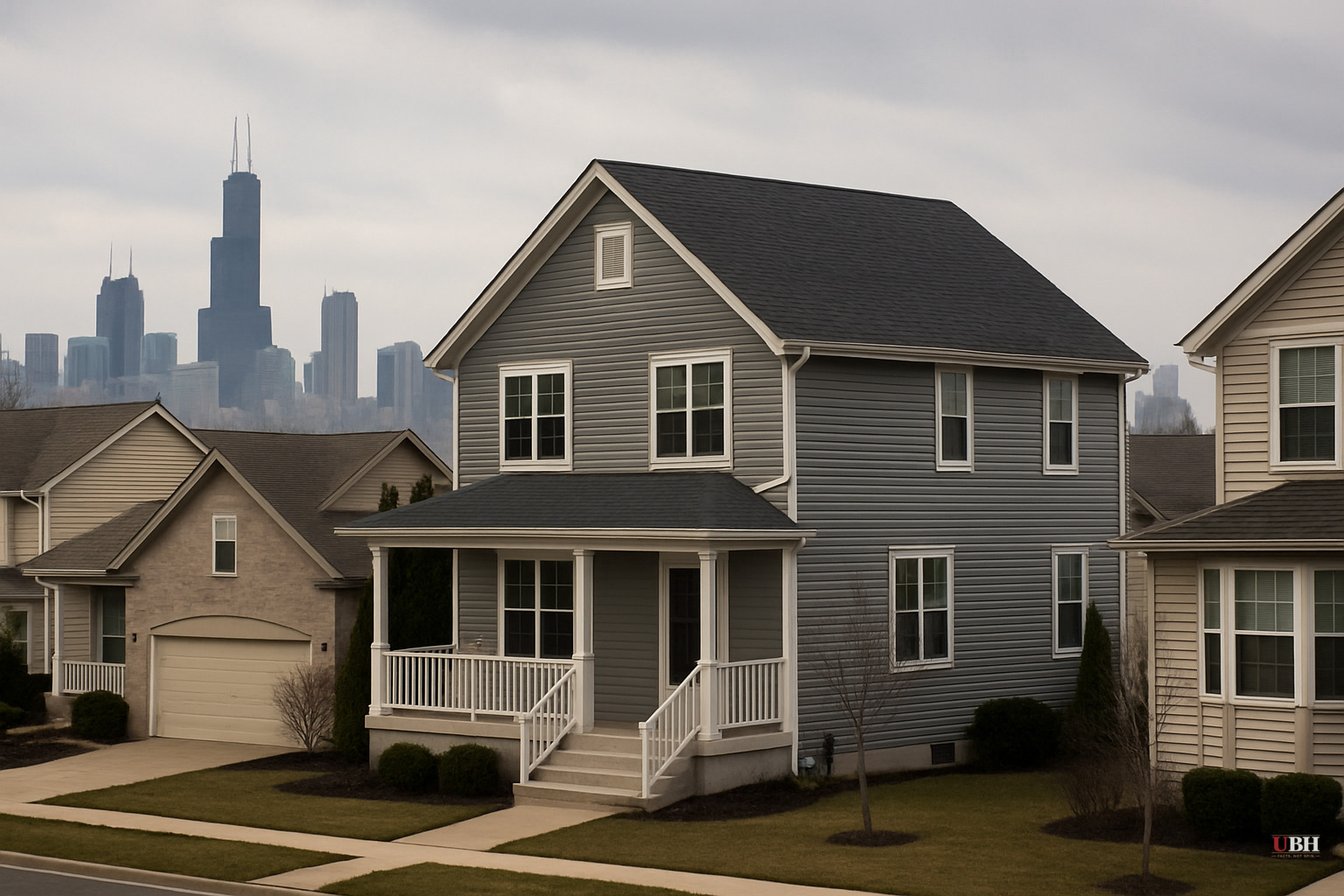
Chicago is the standout among the 20 metros the index tracks, posting a 6.5% annual gain. New York came in second at 3.8%, followed by Cleveland at 3.2%. These are supply-constrained older markets where new construction has not flooded the zone, and they're keeping the national average from going negative.
Anthony Smith, senior economist at Realtor.com, notes the list of declining metros narrowed slightly from March, though more than half of the 20 tracked cities still posted annual price drops. Smith credits modest momentum in the spring selling season: existing-home sales rose 3.2% in May to 4.17 million, a five-month high, and pending home sales climbed 3.8%, with a 4.8% year-over-year gain.
Those figures suggest buyers and sellers are finding common ground, even if it's a narrow strip of common ground with very high tolls.
Where It's Breaking Down
Seattle's 2.3% annual decline made it the worst-performing major market for the second straight month. Denver and Tampa both fell 1.8%, Dallas slid 1.6%, and Phoenix dropped 1.7%.
These are the same Sun Belt and Western metros that surged during the pandemic relocation boom. Inventory rebuilt faster there, new construction kept coming, and now prices are correcting. The nearly 9-percentage-point gap between Chicago and Seattle reflects how localized this cycle has become, according to Smith. What was once a single national housing market is now dozens of local ones moving in opposite directions.
Mortgage Rates Are the Anchor
After briefly dipping below 6% earlier this year, a window that briefly stirred buyer optimism, 30-year mortgage rates climbed back to 6.3% in April, according to Godec. Smith adds that rates have hovered near 6.5% for six consecutive weeks, pushed higher by renewed inflation concerns and elevated energy prices.
At those levels, monthly payments on a median-priced home remain significantly above where they were in 2020 and 2021. The lock-in effect—sellers with 3% mortgages refusing to trade into a 6.5% one—continues to suppress inventory in established markets, which is precisely why cities like Chicago and New York are holding up: not enough supply to satisfy demand.
The Case for Stability
Housing skeptics have been predicting a crash for two years, and it hasn't arrived at the national level. The argument for stability is real: labor markets remain relatively healthy, household balance sheets are not overleveraged the way they were in 2006, and lending standards stayed tighter this cycle. A 0.8% nominal gain is not a collapse.
Smith also points out that buyers of newly built homes can save an average of $25,000 in ownership costs over the first decade compared to older existing stock, which means the new-construction pipeline is providing a genuine alternative for price-sensitive buyers in markets where builders are active.
The Problem with Stability
Eleven straight months of negative real returns is not a healthy market. Homeowners in Seattle, Denver, Tampa, Dallas, and Phoenix are watching nominal values drop while their mortgage rates stay fixed and their property taxes—often reassessed at peak values—don't. The people who bought at the top of the pandemic surge are underwater in real terms, and in some of those metros, nominally too.
With mortgage rates unlikely to fall sharply as long as inflation stays above 3%, the open question Smith leaves unanswered is when, or whether, Sun Belt corrections stabilize. If rate relief doesn't materialize in the second half of 2026, the metros currently posting 1.5% to 2.5% annual declines could steepen.
Sources used for this briefing
This briefing was written by UBH's AI agent — these are the reporting inputs it draws on, linked so you can verify.


