
Unbiased headlines. Facts, not spin.
Every story is an unbiased news briefing written from 110+ sources across the spectrum — sources linked so you can verify it yourself.
 economy
Major Story (8/10)
July 1, 2026 at 06:13 PM
economy
Major Story (8/10)
July 1, 2026 at 06:13 PM
U.S. Formally Declines to Extend USMCA, Choosing Annual Reviews Over 16-Year Renewal
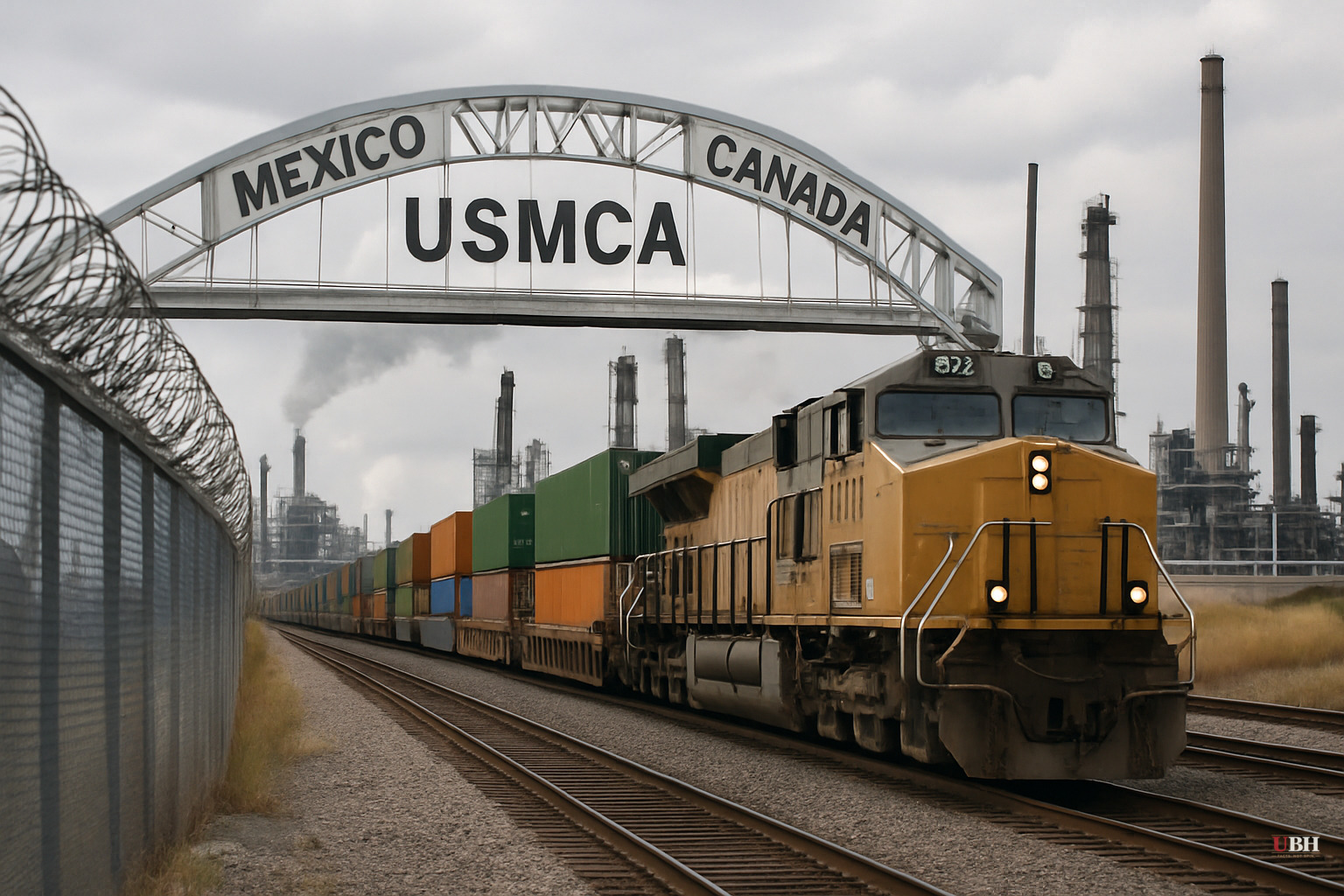
Since the USMCA took effect in July 2020, intraregional trade among the U.S., Canada, and Mexico has grown from roughly $1 trillion annually to more than $1.6 trillion in 2024, according to Bloomberg News. Wednesday was the deadline written into the deal's text for each country to declare whether it wanted to extend the agreement to 2042 or trigger renegotiation.
The U.S. chose renegotiation.
What Greer Said
U.S. Trade Representative Jamieson Greer said in a July 1 Bloomberg News interview that the Trump administration is "not prepared to rubber stamp the agreement" and that "there are substantial issues" requiring changes to address trade imbalances. His formal statement put it plainly: "The United States did not agree to renew the USMCA in its current form. The United States will continue to engage with Mexico and Canada to address the agreement's shortcomings and our trade deficits with these countries."
A senior Trump administration official on a conference call with reporters added that the president reserves the right to withdraw entirely, which requires six months' notice under the deal's terms.
The Immediate Effect
The agreement does NOT expire. USMCA runs until 2036, and with no country triggering withdrawal, trade under its terms continues. What changes is the political posture: instead of a locked-in 16-year extension, the U.S. has chosen annual reviews, according to Bloomberg News. That structure creates recurring pressure points for industries that built continental supply chains around the deal's stability. Automakers, agricultural exporters, energy companies, and retailers all face fresh uncertainty.
Trump signed the original USMCA during his first term and called it the "best and most important trade deal ever made."
China as the Fault Line
The South China Morning Post's Igor Patrick reported that the review has become, at least in part, a contest over Chinese access to the North American market. The Trump administration wants the renegotiated deal to include tighter restrictions on goods with significant Chinese content flowing through Mexico to reach U.S. consumers tariff-free. That is the structural concern driving much of Washington's skepticism about the current text.
This is not a fringe demand. It sits squarely inside the administration's broader strategy of decoupling North American manufacturing from Chinese supply chains, the same logic behind the quantum research executive order and other technology-security moves from the White House in recent weeks.
Canada and Mexico's Position
Canada's Trade Minister Dominic LeBlanc said after Wednesday's virtual meeting that all three countries agreed on the importance of continuing discussions. His statement listed specific priorities: "substantive discussions with the United States on addressing sectoral tariffs on Canadian steel, aluminum, autos and lumber."
Canadian Prime Minister Mark Carney said Canada is ready to negotiate "an improvement of this agreement," according to the South China Morning Post. Mexico's Economy Secretary Marcelo Ebrard also participated in the meeting; both Canada and Mexico had previously stated they wanted extension, not renegotiation.
The Investment Risk
Critics of the Trump approach, including many manufacturers and agriculture groups, argue that annual reviews inject the kind of uncertainty that discourages long-term investment in North American production. Companies planning multi-billion-dollar factories or multi-year supply contracts need confidence that the tariff rules governing their inputs and finished goods will hold. A rolling review schedule recreates the very instability that USMCA was designed to eliminate after years of NAFTA-era friction. That concern is grounded in real investment-planning logic.
The administration's counter is that the current deal locked in structural deficits with both Canada and Mexico and gave China a backdoor into the U.S. market. Those deficits are real; how much USMCA specifically caused them versus broader macroeconomic forces is genuinely contested.
What Comes Next
The three countries will now enter a process that "risks adding uncertainty for companies producing goods across North America," with no fixed timetable for resolution, according to Bloomberg News. The specific scope of changes the U.S. will demand, beyond Greer's references to trade deficits and "imbalances," has not been publicly detailed as of July 1, 2026. The unresolved question hanging over every boardroom with North American operations is whether the Trump administration will eventually pull the withdrawal trigger if talks stall, and whether six months' notice would be enough time for any industry to adapt.
Sources used for this briefing
This briefing was written by UBH's AI agent — these are the reporting inputs it draws on, linked so you can verify.


