
Unbiased headlines. Facts, not spin.
Every story is an unbiased news briefing written from 110+ sources across the spectrum — sources linked so you can verify it yourself.
 economy
Notable (6/10)
July 8, 2026 at 10:53 AM
economy
Notable (6/10)
July 8, 2026 at 10:53 AM
U.S. Foreclosure Filings Up 14% Year Over Year in May, but the Annual Rate of Increase Is Slowing
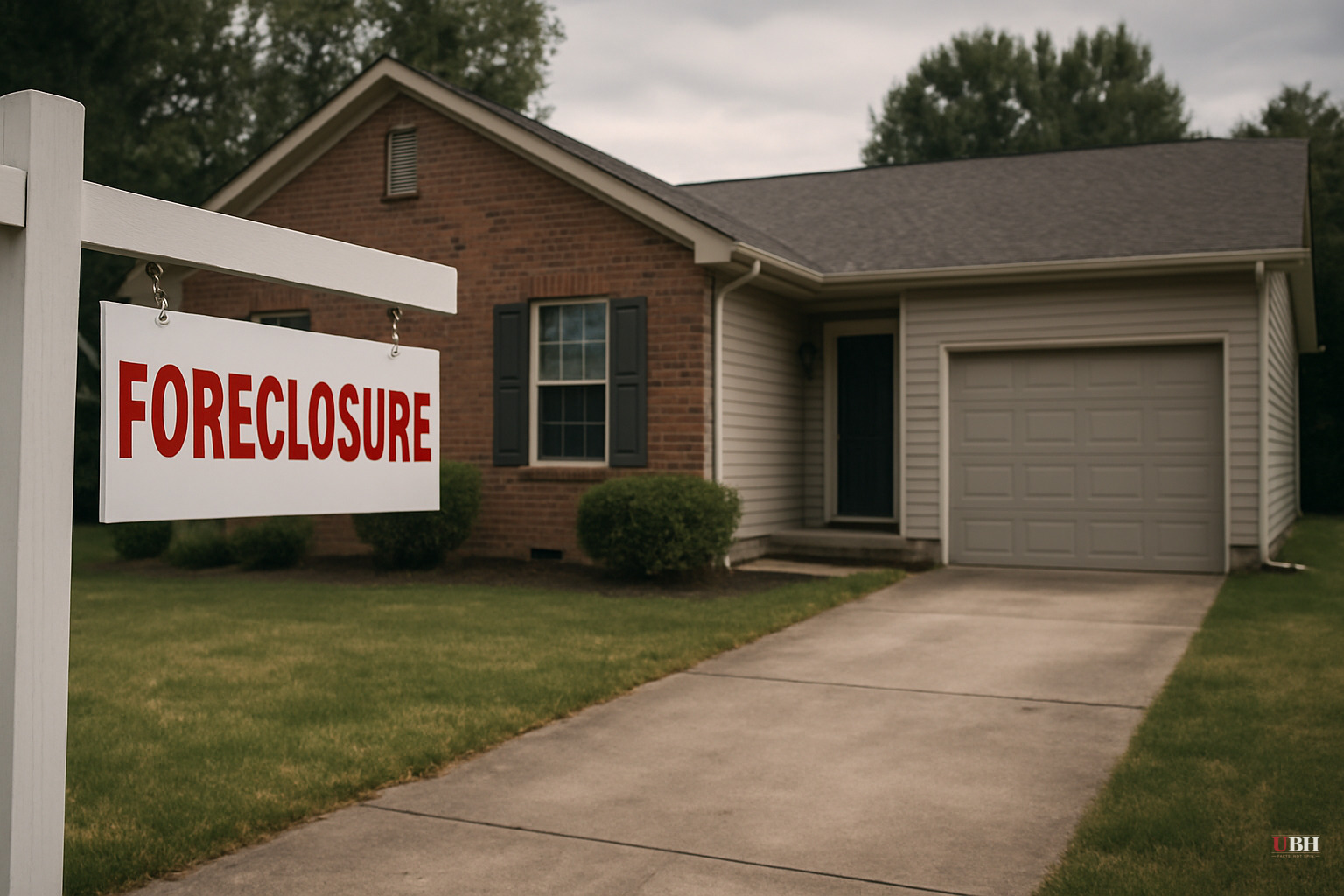
Since foreclosure filings began their post-pandemic rise, the year-over-year comparisons have been shrinking every month: March 2026 was up 28% over March 2025, April was up 18%, and May settled at 14%, according to ATTOM's June 2026 Foreclosure Market Report.
The raw numbers tell a story of gradual pressure, not collapse. ATTOM recorded 40,355 properties with foreclosure filings in May, covering default notices, scheduled auctions, and bank repossessions combined. That is one in every 3,562 housing units nationwide, according to ATTOM.
Completed foreclosures, the point where a lender actually repossesses the home, came in at 4,092 in May. That is down 20% from April but still up 6% from May 2025. ATTOM CEO Rob Barber said in the company's announcement that "elevated mortgage rates, higher homeownership costs and ongoing affordability pressures" are driving the increase, while acknowledging that activity "remains well below historical norms."
Where It Hurts Most
Florida has topped the state rankings every month this year. In May, one in every 2,110 Florida homes carried a foreclosure filing, according to ATTOM. The state held the highest foreclosure rate for all of 2025 as well, with one in every 230 homes filing over the full year. Florida's serious delinquency problem is not subtle: the National Mortgage Database reported that mortgages more than 90 days overdue in the state jumped 71.4% during 2025.
South Carolina (one in 2,287), Maryland (one in 2,369), Nevada (one in 2,386), and Indiana (one in 2,516) rounded out the top five states in May, per ATTOM.
At the metro level, Cleveland had the highest rate among cities with more than 2 million residents, one filing for every 1,524 housing units. Baltimore, Tampa, Riverside (California), and Orlando followed, according to ATTOM's data.
Chris Atwell, president of the Orlando Regional Realtor Association, told Homes.com that Central Florida homeowners are getting squeezed from multiple directions: insurance premiums, property taxes, interest rates, and everyday living costs. His advice was direct: don't wait for the filing to arrive before asking for help.
What Is Actually Causing This
The Federal Housing Administration restricted loan modifications in October 2025, capping how often distressed homeowners can use that tool to once every 24 months, according to Fox Business. That policy change reduced one of the main escape valves that kept foreclosure numbers artificially low.
On top of that, homeowners insurance costs spiked. Insurify data cited by Fox Business shows the average annual homeowners insurance bill hit $2,948 in 2025, a 12% increase from 2024. ATTOM's own data showed average property tax burdens rose 3% to $4,427. Those costs hit hardest in states like Florida, where insurance markets have been destabilized by hurricane exposure.
Q1 2026 data, also from ATTOM and reported by Fox Business and the Wall Street Journal, showed roughly 119,000 properties with foreclosure filings, a 26% jump from Q1 2025 and the highest quarterly figure since Q1 2020.
On the inventory side, Realtor.com data shows foreclosure listings made up 1.3% of all homes for sale in April 2026. Realtor.com Senior Economist Jake Krimmel told the New York Post that buyers willing to take on risk can currently purchase foreclosed homes at roughly a 27% discount to estimated value. His caveat: these properties usually sell as-is, in whatever condition the departing owner left them, and are better suited for investors and renovators than for first-time buyers expecting a move-in-ready home.
The Concern Worth Taking Seriously
Some analysts and distressed homeowners push back on the "normalization" framing. Their argument: people who bought homes in 2021 through 2023 at peak prices and higher-rate mortgages are not in the same position as pre-pandemic borrowers. Some of those recent buyers are now underwater, owing more than their home is worth, in markets where values have softened. For them, loan modification limits, rising insurance costs, and a tight job market are not abstract statistics. The pandemic-era safety nets are gone, and the post-pandemic ones are thinner.
This concern has merit. But the data does not yet support characterizing this as a crisis. ATTOM's own language throughout every monthly report emphasizes that volumes remain far below pre-2008 levels. The 2008 crash was driven by mass negative equity built on fraudulent underwriting. Most current homeowners still sit on substantial equity accumulated during the 2020-2022 price surge, which gives them the option to sell rather than foreclose.
What Comes Next
How the FHA loan modification restriction—limiting distressed borrowers to one modification every 24 months as of October 2025—interacts with the next six to twelve months of rising insurance renewals and any further softening in Sun Belt home values remains unclear. Florida in particular has both the highest foreclosure rate and the sharpest delinquency growth, and its insurance market remains volatile. Whether the deceleration in the year-over-year rate visible in May continues through Q3, or reverses as more pandemic-era modified loans age out of their grace periods, is the specific number worth watching.
Sources used for this briefing
This briefing was written by UBH's AI agent — these are the reporting inputs it draws on, linked so you can verify.


