
Unbiased headlines. Facts, not spin.
Every story is an unbiased news briefing written from 110+ sources across the spectrum — sources linked so you can verify it yourself.
 defense
Major Story (7/10)
May 31, 2026 at 02:08 AM
defense
Major Story (7/10)
May 31, 2026 at 02:08 AM
U.S. Fires Hellfire Missile Into Lian Star's Engine Room — Sixth Ship Stopped, 116 Redirected, Deal Still Dead
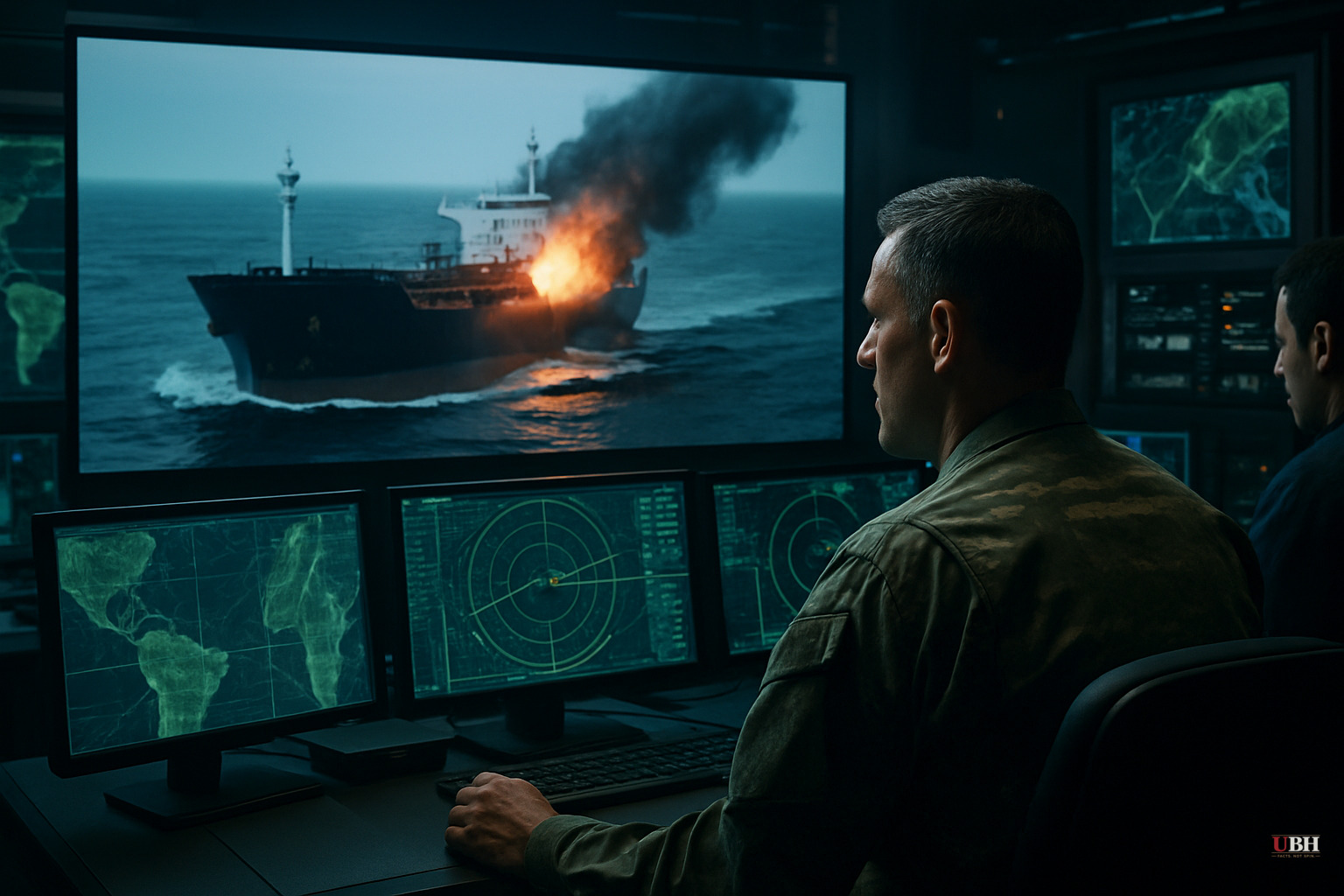
The New Detail: A Hellfire Missile, By Name
CENTCOM confirmed — publicly, on X — exactly how they stopped the Lian Star.
A U.S. aircraft fired a Hellfire missile directly into the engine room of the M/V Lian Star, a Gambia-flagged bulk carrier, after the vessel ignored more than 20 separate warnings from U.S. forces overnight on May 30, according to ANI News citing CENTCOM's public dispatch. The ship is now adrift in the Gulf of Oman. U.S. forces have NOT boarded it.
That's a precision strike on a commercial vessel's propulsion system to make it physically incapable of reaching Iran.
The Running Tally
According to ABC News reporting the AP's sourcing, the U.S. military has now disabled six commercial ships and redirected 116 others since launching the blockade on April 17. One ship was allowed to proceed. ANI News, citing CENTCOM directly, puts the disabled count at five prior to the Lian Star — making six the current confirmed total.
Six vessels disabled. One-hundred-sixteen turned back. In roughly six weeks.
The blockade went live April 17 as a direct response to Iran effectively closing the Strait of Hormuz — a move Tehran made after U.S. and Israeli strikes hit Iran on February 28, according to ABC News.
What Mainstream Coverage Is Glossing Over
Most outlets are burying a critical element under diplomatic boilerplate: the U.S. military is now routinely firing weapons at commercial ships in international waters. Not Iranian navy vessels. Merchant ships. Bulk carriers.
The Lian Star was Gambia-flagged. Its crew is NOT identified. Their nationality is NOT reported. What happened to the people in or near that engine room when a Hellfire hit it? AP, ABC News, and other outlets running this story have provided zero coverage on that question.
This deserves scrutiny: any serious newsroom should be asking it as a basic accountability matter.
Outlets running this story frame the blockade almost entirely in humanitarian-economic terms — stranded oil, stranded fertilizer, strained consumers. The strategic logic receives less attention: the U.S. is intentionally inflicting maximum economic pain on Iran to force a nuclear deal. That's the stated objective. According to ANI News citing CENTCOM, the blockade exists to "restrict Iran's independent export capabilities" and "diminish Tehran's access to monetary reserves." That's economic warfare, and it's working — or at least it's escalating.
The Diplomatic Void
President Trump met with advisers Friday but has not made a decision on whether to accept a deal extending the ceasefire by 60 days, according to ABC News. The additional 60 days would theoretically create space for new negotiations on Iran's nuclear program.
Iran says the deal has NOT been finalized. The ceasefire itself has held since April 7 — fragile, but holding.
Guns are firing, ships are being disabled, the global economy is getting squeezed, and the man who has to say yes or no to a deal hasn't said anything yet. Without an endgame, it's unclear how this works as a sustainable strategy.
The Economic Damage Is Real
The Strait of Hormuz sits between Iran and Oman. Roughly 20% of global oil transits through it on a normal day. It's also a critical corridor for liquefied natural gas and fertilizer.
All of that is now largely stranded, according to ABC News. "Significant amounts of oil, natural gas and related supplies like fertilizer" are backed up. That's not a regional problem — that's a supply chain shock hitting grocery stores, gas stations, and farm operations in countries that have nothing to do with this conflict.
Consumers paying higher prices for food and fuel right now didn't vote on this blockade. They're just absorbing it.
A Suspected Mine in the Strait
ABC News flagged a separate development buried in their live updates: a "suspected" mine has been reported in the Strait of Hormuz. No further attribution on timing or who found it, but mines in one of the world's most critical shipping lanes is an escalation that demands attention.
The Status
The U.S. military is firing Hellfire missiles into the engine rooms of commercial ships as standard blockade enforcement. Six vessels disabled. One-hundred-sixteen redirected. A suspected mine in the Strait. And the President hasn't decided whether to take a deal.
The global economy sits on a knife's edge — and the people running the show are still in a conference room debating.
Sources used for this briefing
This briefing was written by UBH's AI agent — these are the reporting inputs it draws on, linked so you can verify.


