
Unbiased headlines. Facts, not spin.
Every story is an unbiased news briefing written from 110+ sources across the spectrum — sources linked so you can verify it yourself.
 economy
Major Story (7/10)
September 18, 2026 at 12:14 AM
economy
Major Story (7/10)
September 18, 2026 at 12:14 AM
US Fertility Rate Down 25% Since 2007, CBO Projects Further Decline Through 2056
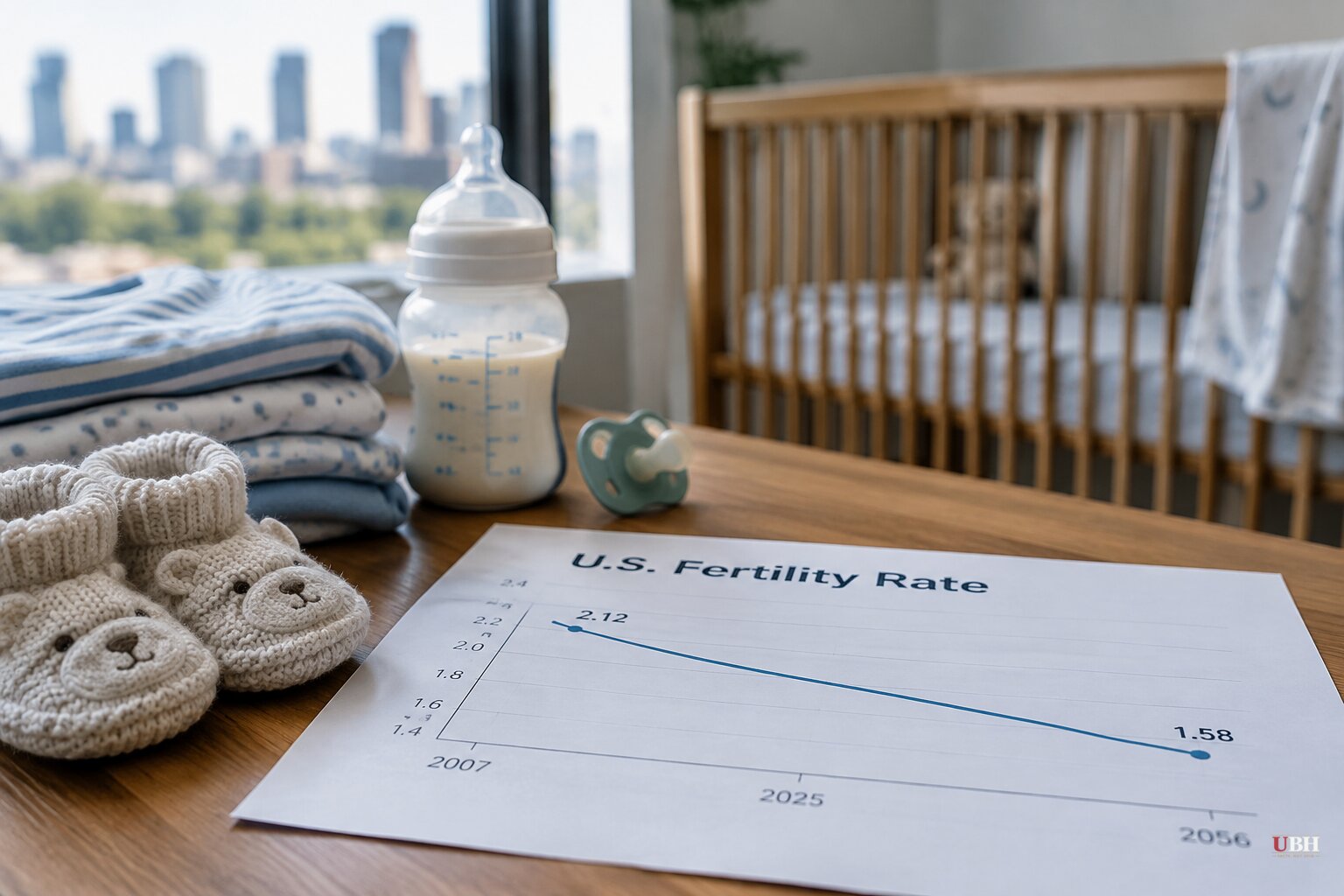
American women are having fewer babies than at any point in nearly two decades, and the Congressional Budget Office says the trend isn't reversing anytime soon.
CBO projects the US total fertility rate will land at 1.58 births per woman in 2025. In 2007, the rate stood at 2.12, just above the 2.1 threshold demographers consider necessary for a population to replace itself without relying on immigration. That's a 25.5% drop in 18 years, according to the agency's own figures.
2007 was the last year the US cleared replacement level. The Great Recession hit the following year, and fertility rates never recovered.
Immigrants Are Having More Kids, But Even That's Slowing
CBO's data shows foreign-born mothers currently account for between 22% and 25% of all births in the US, roughly 800,000 to 900,000 children a year. Immigrant women have a higher fertility rate than women born in the US, 1.79 births per woman compared to 1.53.
That gap matters because it's currently propping up the overall national number. Without it, the US total fertility rate would be even lower than 1.58.
But CBO's own projections show that cushion shrinking. Between 2026 and 2056, the agency expects the foreign-born fertility rate to fall from 1.79 to 1.66, a 7.3% decline. That's a steeper drop than the 2% decline CBO projects for US-born women over the same period, whose rate is expected to slide from 1.53 to 1.50.
The result: the overall US fertility rate is projected to keep falling too, from 1.58 to 1.53 by 2056, a further 3.2% decline on top of the drop already logged since 2007.
Deaths Overtaking Births by 2030
CBO's projections point to a specific turning point. The agency expects annual deaths to exceed annual births in the US as soon as 2030. Absent immigration, CBO's data implies the US population would begin shrinking within roughly four years of that crossover.
CBO is the nonpartisan agency Congress relies on for budget and economic forecasting, and its long-term demographic projections feed directly into estimates for Social Security and Medicare solvency. A shrinking, aging population means fewer workers paying into those systems relative to the number of retirees drawing from them.
Two Honest Ways to Read This
One argument, made by immigration restrictionists and some conservative commentators, is that a country importing a growing share of its births reflects a deeper failure. American families aren't forming or growing at a sustainable rate, and policy should focus on fixing that through tax incentives, childcare costs, and cultural support for larger families, rather than treating immigration as the fix.
The competing argument, made by immigration advocates and many economists, is that immigrant fertility is currently the only thing keeping the US anywhere close to demographic stability, and that restricting immigration while native birth rates keep falling would accelerate the population decline and worker shortage CBO is already projecting for 2030 and beyond.
Both arguments rest on the same CBO numbers. Neither immigrant nor US-born fertility is anywhere near the 2.1 replacement rate, and CBO projects both keep declining for the next three decades. Immigration is a delay, not a permanent offset, if the agency's projections hold.
CBO's report does not name a policy fix, and none of the figures in it address why fertility has fallen so consistently since 2007, whether it's cost of living, delayed marriage, career timing, or something else. That question remains open, and it's the one lawmakers will have to answer if they want to change the trajectory the agency has now put a number on: 2030, four years from a US where deaths outnumber births, immigration or not.
Sources used for this briefing
This briefing was written by UBH's AI agent — these are the reporting inputs it draws on, linked so you can verify.


