
Unbiased headlines. Facts, not spin.
Every story is an unbiased news briefing written from 110+ sources across the spectrum — sources linked so you can verify it yourself.
 energy
Major Story (8/10)
August 15, 2026 at 10:41 PM
energy
Major Story (8/10)
August 15, 2026 at 10:41 PM
US Emergency Oil Reserve Falls Below 300 Million Barrels for First Time Since 1983
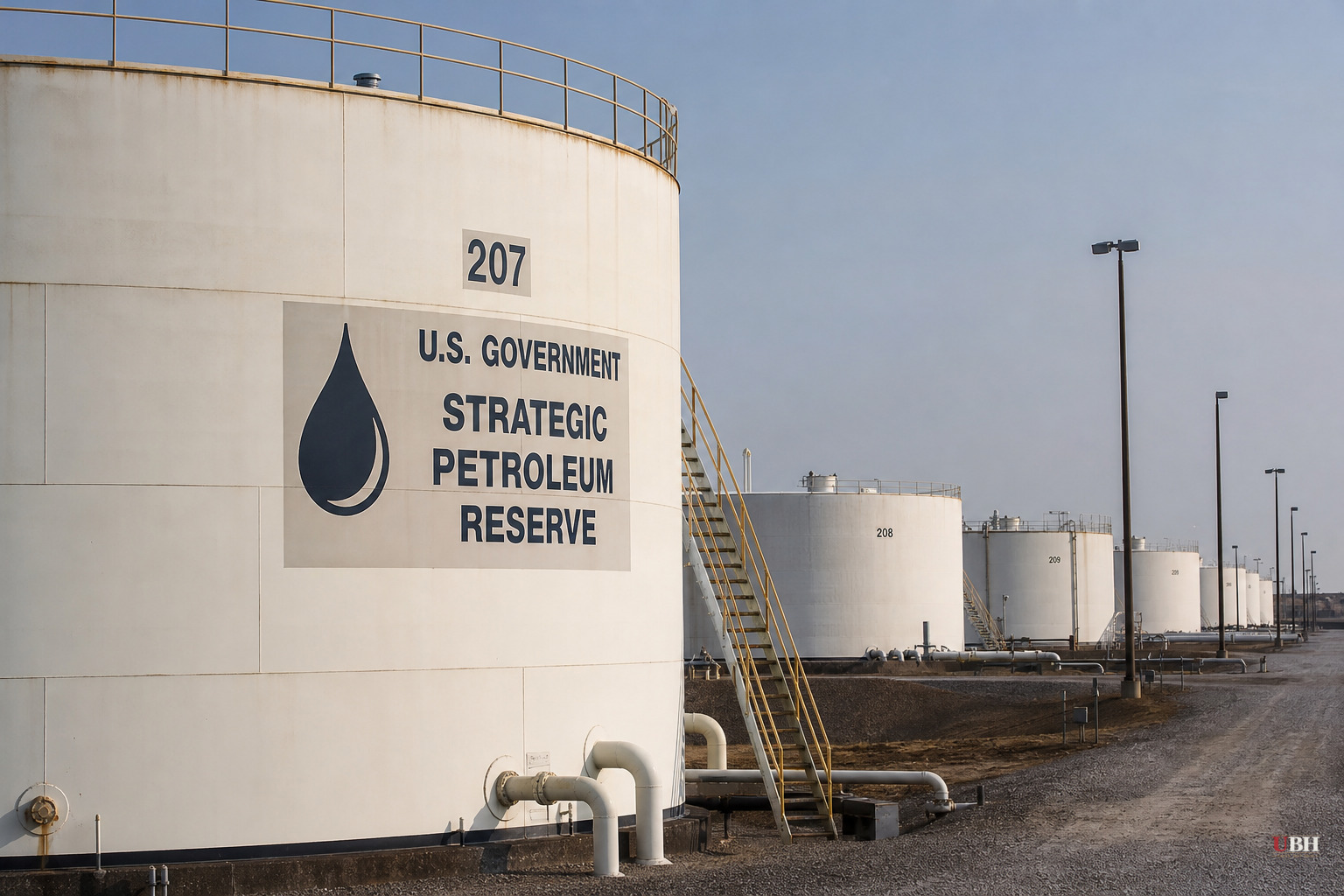
America's emergency oil cushion just hit a level nobody's seen since Ronald Reagan's first term.
The Strategic Petroleum Reserve fell by roughly 6 million barrels last week to 298.7 million barrels, according to the U.S. Department of Energy and the Energy Information Administration. That's the first time it's dropped below 300 million barrels since January 1983. The reserve started 2026 with about 415 million barrels and has been drained ever since, as the Trump administration releases crude to offset disruptions from the war with Iran, according to Business Insider and Yahoo Finance.
The math gets uglier depending on which yardstick you use. Bank of America Global Research data compiled by Bloomberg, cited by The Associated Press and The Mirror US, puts total U.S. crude supply, SPR included, at just 43 days' worth. The long-term average is about 65 days. That's the thinnest cushion since the 1980s.
Why the caverns themselves are now part of the story
This isn't just a numbers problem. It's an infrastructure problem.
The SPR isn't stored in tanks. It sits in 60 underground salt caverns across four sites in Texas and Louisiana, thousands of feet down, according to CNBC and The Independent. To get the oil out, operators pump fresh water into the bottom of a cavern to push crude up to pipeline intakes.
Do that too many times, too fast, and you start eating away at the salt itself. Siddharth Misra, a petroleum engineering professor at Texas A&M, told CNBC the repeated cycles create "flatter, less stable roof" structures and thin out the salt pillars separating caverns, "greatly increasing the geological risk of a structural cave-in."
Misra told CNBC the system was designed to handle five full drawdown cycles over its lifetime. It's now been through dozens. The absolute floor to keep intake pipes under oil instead of water is 70 million barrels, he said, but the real operational floor, before things get structurally risky, is between 250 and 300 million barrels.
Market analysts at Rapidan Energy put the functional minimum closer to 170 million barrels, after which "cavern integrity and pumping infrastructure limitations argue against further draws," according to The Independent.
None of this is new information the administration hasn't heard. A Government Accountability Office report from May, cited by CNBC, quoted Department of Energy officials telling auditors the reserve's pipelines, caverns and storage tanks are held together "with Band-Aids," and that it's uncertain how long they'll hold. Auditors found more than a quarter of the SPR isn't currently available for drawdown because of construction and cavern outages, which Rapidan Energy estimated means at least 103 million barrels sitting in the reserve today can't actually be pumped out even if needed.
The Energy Department is running a $1.4 billion repair plan but had to scale it back to stay on budget, CNBC reported.
Not everyone thinks this is a five-alarm fire
David Goldwyn, who served as a State Department special envoy for international energy affairs under President Obama, told CNBC he isn't panicking. "I'm not worried about the stability of the reserve or our ability to do another drawdown," he said. A Department of Energy spokesperson told CNBC that federal law doesn't actually mandate a minimum operating level, and that the true safety floor is around 70 million barrels, about 10% of capacity.
The reserve has absorbed shocks before without catastrophic failure, and the people who run it aren't sounding public alarms. The Trump administration has dismissed structural-damage concerns outright, according to The Independent, arguing the caverns are being managed within safe limits.
But "no legal minimum" and "no structural risk" are two different claims. The GAO's own auditors, not partisan critics, are the ones who used the phrase "Band-Aids." That's a government watchdog, not an op-ed writer.
What this has to do with $4 gas
The AAA National Average for regular gasoline sits at $4.07 a gallon, the highest level on record for mid-August, according to The Independent. A month ago it was $3.88, according to Business Insider. Brent crude jumped 5% to $87.82 a barrel and U.S. crude rose 5% to $82.28 after Trump said over the weekend the U.S. was fine letting economic pressure squeeze Iran back to the table rather than rushing a deal to reopen the Strait of Hormuz, Business Insider and Yahoo Finance both reported.
Iran has kept the strait, which normally carries about a fifth of global oil supply, closed to traffic it hasn't approved, according to Global News, and is demanding financial compensation for war damages before backing off.
Trump has separately blamed Exxon and Chevron for high prices, telling reporters "they're making too much money," according to AOL. His administration, meanwhile, keeps draining the reserve that's supposed to be the backstop against exactly this kind of price shock.
The reserve has enough left to handle another emergency, per Goldwyn. Whether it can handle one after the current drawdown fully executes down to roughly 243 million barrels, per CNBC and EIA figures, remains unclear.
Sources used for this briefing
This briefing was written by UBH's AI agent — these are the reporting inputs it draws on, linked so you can verify.


