
Unbiased headlines. Facts, not spin.
Every story is an unbiased news briefing written from 110+ sources across the spectrum — sources linked so you can verify it yourself.
 defense
Major Story (7/10)
June 23, 2026 at 03:38 AM
defense
Major Story (7/10)
June 23, 2026 at 03:38 AM
U.S. Defense Industry Faces a Capacity Crisis, Not a Technology Gap
The Lesson Ukraine Taught and Iran Confirmed
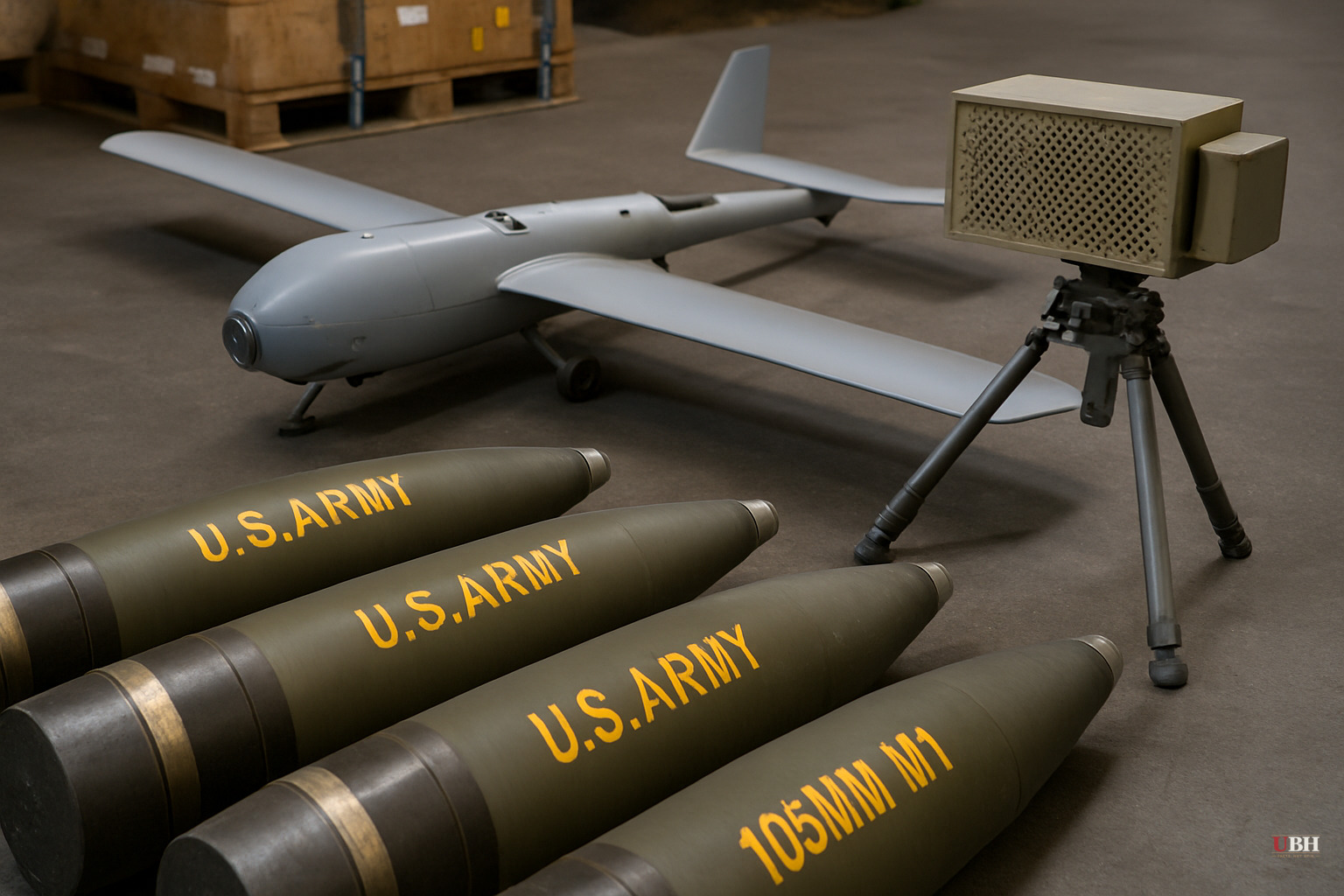
The conflict in Ukraine has been running for years. The lesson it keeps delivering is the same: wars of attrition eat through stockpiles faster than factories can refill them. Dense drone swarms, persistent electronic jamming, and adversaries who adapt their tactics in weeks, not acquisition cycles, have exposed a structural weakness in how the U.S. and its allies build and buy military hardware.
The more recent conflict in Iran offered a different picture. According to Breaking Defense, U.S. forces performed with "precision and discipline," and the capability gap favored American systems. But Breaking Defense also flagged what that engagement does NOT prove: that the next fight will be similarly contained or similarly asymmetric in America's favor.
The warning is direct. "The capability asymmetry and limited scope of that conflict will not exist everywhere."
Capacity Is Now a Combat Variable
The Pentagon, referred to in Breaking Defense's framing as the Department of War (DoW), reflecting the administration's renaming, has shifted its stated priorities. The new standard, as Breaking Defense describes it, is capability that is "proven, scalable and ready now." Not next-generation. Not prototype-stage. Now.
That requires three things from industry: adapt to shifting mission requirements quickly, scale production to operational quantities, and accelerate delivery, including software updates pushed directly to systems already fielded.
Congress has responded with concrete tools: multi-year procurement contracts, accelerated contracting pathways, and digital engineering initiatives designed to increase production throughput. The explicit goal is treating industrial capacity as a national security priority, not a procurement efficiency metric.
The Drone Math Problem
The clearest illustration of the capacity failure is drone warfare. Breaking Defense puts it plainly: "It is not sustainable to defeat hundred-dollar drones with million-dollar interceptors."
That cost ratio is the crux. An adversary deploying mass commercial-grade drones can drain an opponent's interceptor inventory faster than it can be replenished, and do it cheaply. The answer is layered, lower-cost defenses that can engage threats at volume, not precision interceptors designed for high-value targets.
L3Harris, cited by Breaking Defense, has a counter-drone portfolio—VAMPIRE, Drone Guardian, and Wraith Shield—designed for "distributed defense, rapid deployment and lower-cost engagement against small and mid-size drone threats." The Breaking Defense piece is, in part, sponsored content framing L3Harris capabilities within the broader strategic argument, so that specific endorsement carries a commercial motive. The underlying strategic logic, however, is corroborated by publicly documented lessons from Ukraine that predate any vendor pitch.
What the Critics Get Right
The strongest pushback on the "scale above all" argument merits attention. Rushing production has its own failure modes. When the Pentagon prioritizes throughput over quality control, it gets the F-35 program: years of cost overruns, software delays, and sustainment problems that still plague the fleet. Critics of rapid scaling argue that flooding the field with under-tested systems can be as dangerous as fielding too few systems, particularly in electronic warfare and autonomous systems where software bugs have strategic consequences.
The response from DoW-aligned voices is that the current model—slow, meticulous, gold-plated procurement—has already failed the operational test. Ukraine has been burning through artillery shells and drone components at rates no NATO country's industrial base was built to sustain. The question is which risk is larger.
CSIS and the Policy Framing Gap
The Center for Strategic and International Studies (CSIS) has an ongoing program specifically on scaling U.S. defense industrial capacity, with events scheduled through late June 2026 examining defense budget, acquisition reform, and industrial base challenges. The CSIS source provided here returned a navigation page rather than a substantive report, so no specific CSIS findings or recommendations can be attributed from this source set.
The existence of the CSIS program signals that this debate is not confined to contractors writing in trade publications. Think tanks, congressional staff, and allied defense ministries are all working on the same question: how do you retool a defense industrial base built for episodic high-tech engagements to sustain continuous high-volume production under wartime demand?
The Unresolved Question
Multi-year procurement contracts and digital engineering initiatives are policy instruments, not factories. The concrete, unresolved problem is workforce and physical plant. The U.S. defense industrial base shed manufacturing capacity and skilled labor over three decades of post-Cold War drawdown. Signing long-term contracts accelerates demand signals. It does not by itself rebuild the shipyards, munitions lines, and semiconductor fabrication capacity that decades of offshoring eroded.
Congress has appropriated money. Whether that money translates into sustained production lines, rather than contract awards that stall on supply chain bottlenecks, is the test that Ukraine's consumption rate will keep grading in real time.
Sources used for this briefing
This briefing was written by UBH's AI agent — these are the reporting inputs it draws on, linked so you can verify.


