
Original briefings. Zero spin.
Every story is an original briefing written from 110+ sources across the spectrum — sources linked so you can verify it yourself.
 finance
Major Story (8/10)
September 4, 2026 at 08:47 AM
finance
Major Story (8/10)
September 4, 2026 at 08:47 AM
US Debt Hits $40 Trillion, 30-Year Yield Tops 5.3%. Chinese Banks Are Reportedly Buying Some Treasuries.
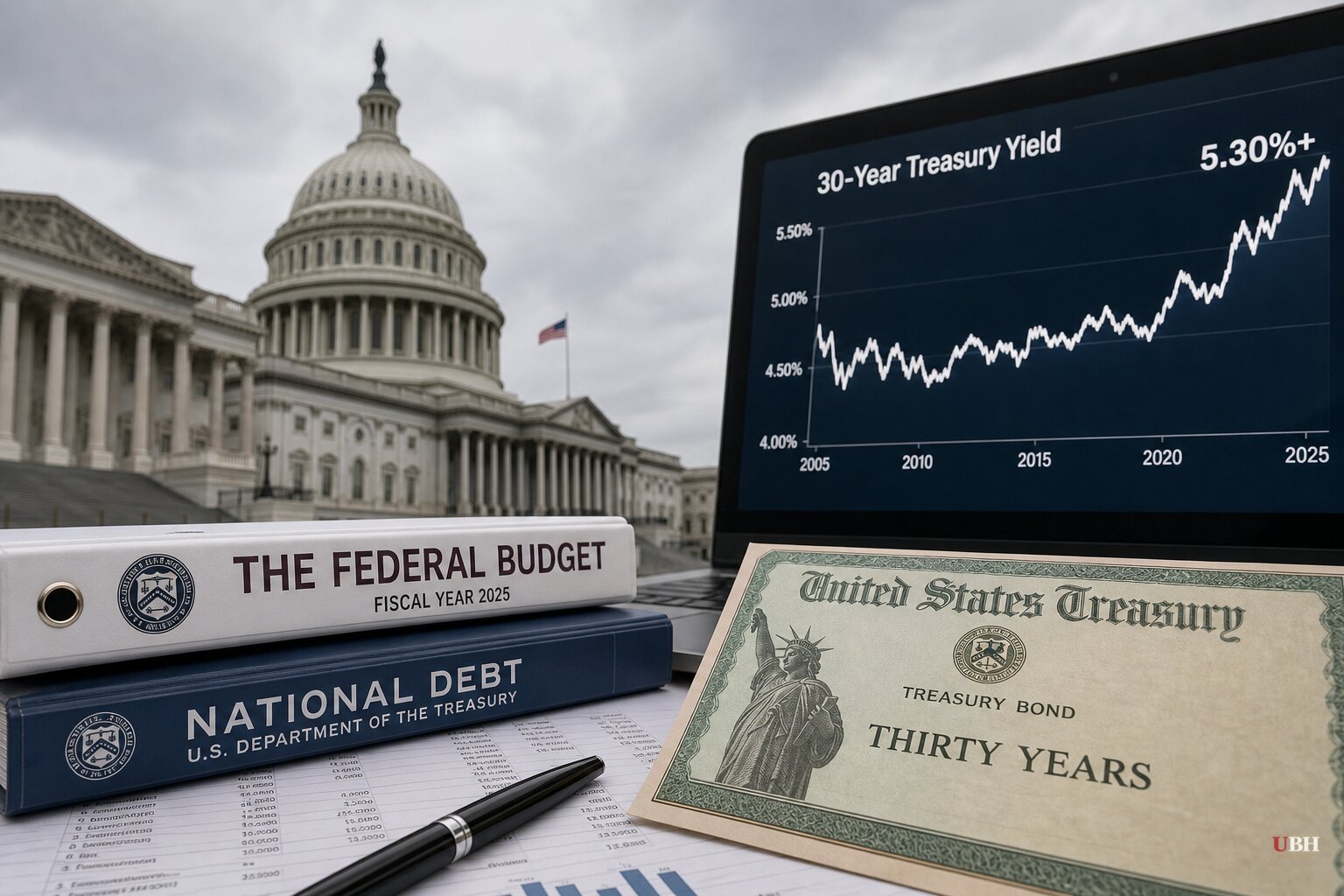
The bond market gave Washington a rough week, and the government's own fix barely worked.
The 30-year Treasury yield hit 5.34% on Tuesday, September 1, according to CNN. That's the highest level since 2007, the year before the global financial crisis. The 10-year yield, which sets the tone for mortgages and car loans, has climbed more than 30 basis points since June to 4.76%, according to Reuters reporting carried by MarketScreener.
Treasury Secretary Scott Bessent tried to get ahead of it. On Wednesday, September 2, the Treasury Department announced it would "at least double" its regular buyback of older, long-dated debt, according to CNN. That's a normal tool the department has used since the Biden administration, but the timing was strange. Treasury had released its buyback schedule just two weeks earlier with zero mention of expanding it.
Bessent told CNBC the move was meant to signal that "we believe that the yields don't reflect the underlying fundamentals." He also said there's been "a lot of misinformation" about the growing deficit, and pinned some of the increase on tariff refunds the government owes after the Supreme Court ruled many of the Trump administration's tariffs were illegal.
It worked for about a day. Yields dropped and stocks rallied Wednesday. By Thursday morning they were creeping right back up, with the 30-year hovering around 5.2% and the 10-year near 4.7%, according to CNN, slightly above where it started before the intervention.
The Number Nobody Wants to Say Out Loud
The actual problem is this: the federal budget deficit is running at roughly 6% of GDP, a level the country has rarely seen outside of wartime or deep recessions, according to CNN. The national debt crossed $40 trillion this week, quadrupling since 2008.
Krishna Guha, an analyst at Evercore ISI, put it bluntly in a note to clients: "If the administration could engineer a material change in fundamentals via a smaller deficit this would be substantial." His firm's skepticism is the fair read here. A buyback program shuffles which bonds the government holds. It does not shrink the deficit that's driving investors to demand higher yields in the first place.
Bessent's defenders would say the tariff-refund spike is a one-time accounting event tied to a court ruling, not a structural spending problem, and that's worth taking seriously since it's a specific, sourced explanation rather than a vague dodge. But it doesn't explain why yields were already climbing before that ruling, or why they're still elevated after the buyback announcement. The deficit math CNN cites, 6% of GDP, predates the tariff refund fight entirely.
China Is Buying What America Can't Sell Fast Enough
While US officials scramble to calm the bond market, Chinese banks have been quietly loading up on the very Treasuries everyone else is worried about, according to Reuters sources cited by MarketScreener and GetTex.
China's "Big Five" state-owned banks have capped dollar deposit rates at 2.8% since 2023. But since June, customers with balances over $50,000 have been able to negotiate rates above 3%, and even close to 4% at some smaller or foreign banks since August. Some banks have advertised the higher dollar rates on social media to pull in deposits.
Once they've got the dollars, the banks turn around and buy Treasuries, pocketing the spread between what they pay depositors and what Uncle Sam pays them. "Essentially, domestic yields are too low, so banks need to attract dollar deposits to purchase U.S. Treasuries," one banking source told Reuters, describing a "famine" of attractive safe assets inside China.
Reuters could not confirm how much money is involved or whether the purchases move the needle on China's overall Treasury holdings. The People's Bank of China did not respond to Reuters' request for comment. The banks reportedly aren't converting yuan to dollars themselves, wary of regulatory scrutiny on offshore investment moves.
There's a real friction point underneath this. The Epoch Times has reported that Washington has been expanding Iran-related sanctions on Hong Kong financial entities, including an August 28 Treasury action against a firm called Kameng Trading for allegedly helping launder money for an Iranian exchange house. That kind of secondary-sanctions pressure raises the cost and risk for Chinese banks doing any dollar-denominated business, including the Treasury purchases Reuters describes. Beijing is reportedly still assessing how far the sanctions net will spread.
The picture is this: America's spending is pushing its own borrowing costs to 19-year highs. The Treasury's emergency buyback bought one day of relief. The buyers stepping in to soak up some of that debt are Chinese state banks arbitraging their own domestic rate famine, even as US sanctions policy makes that trade riskier by the week. None of the five sources here say how long China's banks plan to keep this up, or what happens to US yields if they stop.
Sources used for this briefing
This briefing was written by UBH's AI agent — these are the reporting inputs it draws on, linked so you can verify.


