
Original briefings. Zero spin.
Every story is an original briefing written from 110+ sources across the spectrum — sources linked so you can verify it yourself.
 finance
Notable (6/10)
September 4, 2026 at 03:49 AM
finance
Notable (6/10)
September 4, 2026 at 03:49 AM
SEBI to Rewrite Derivatives Settlement Rules After Sensex Plunges 2,100 Points in Minutes on Expiry Day
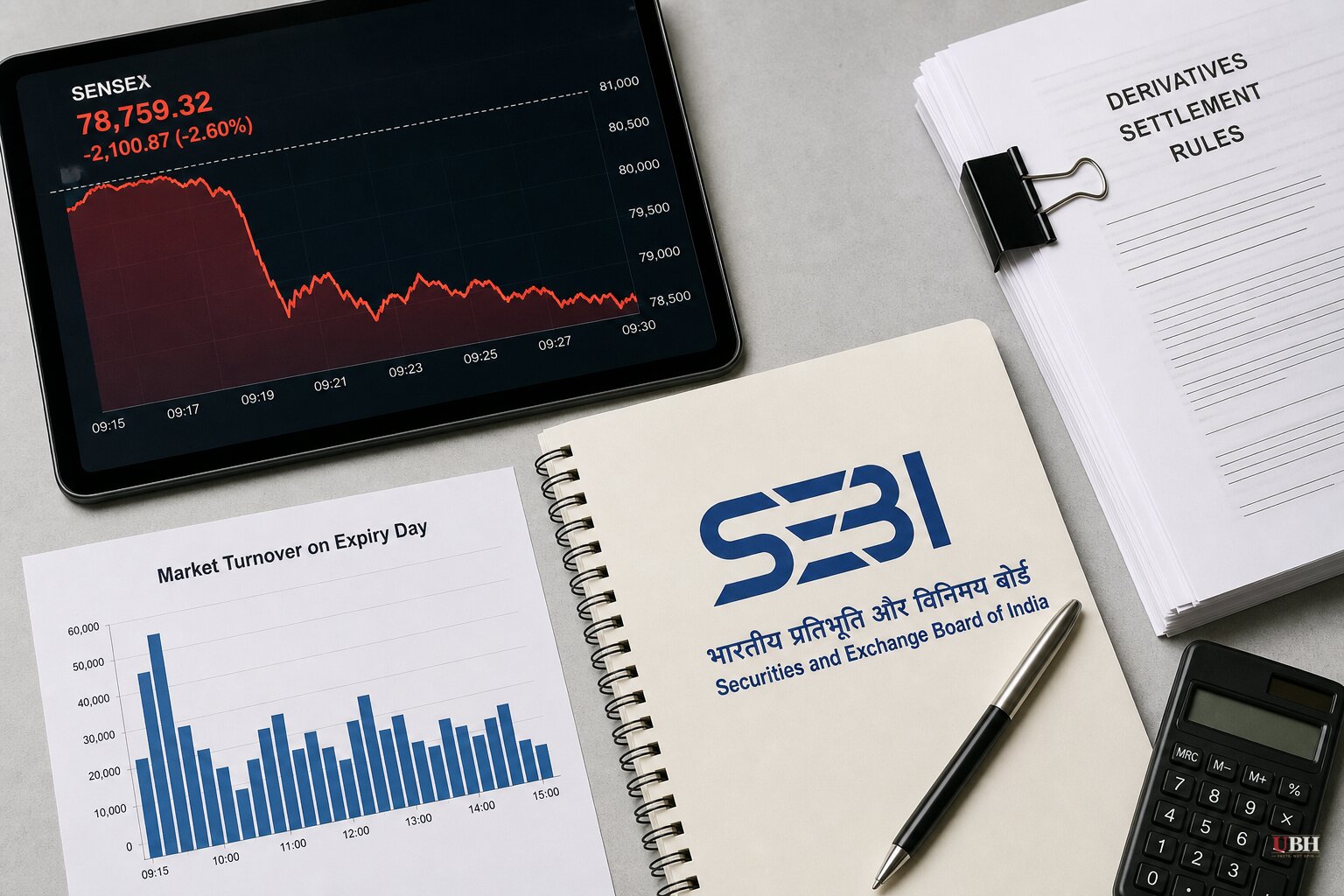
Since India's Closing Auction Session (CAS) took effect on August 3, the mechanism meant to fix how India prices its stocks at day's end has instead produced a string of expiry-day shocks bad enough that the regulator is now rewriting the rules a month in.
India's Securities and Exchange Board of India (SEBI) said in a statement issued late Thursday, September 3, that it may propose changes to how settlement prices for derivative contracts are calculated, with a consultation paper due in about a week, according to LiveMint, The Hindu Business Line, and Business Standard. All three outlets, along with Bloomberg, confirm SEBI reached that decision after a month of monitoring CAS and collecting feedback from stock exchanges, brokers, proprietary traders, software vendors, mutual funds, industry associations and foreign portfolio investors, plus what the regulator called feedback received through social media.
What set this off
Thursday was BSE expiry day. According to LiveMint, the Sensex plunged about 2,100 points in the first five minutes of the closing auction before recovering to close 417 points, or 0.55%, lower at 76,152.86. The Hindu Business Line put the drop at over 2,000 points in three minutes. Business Standard described an indicative Sensex close briefly falling about 2.5% during CAS while premiums on some Sensex put options surged 400% to 500% before the index recovered. The Economic Times, in its own coverage, framed the day around a pointed question: how did the Sensex crash 2,000 points in six minutes while the Nifty 50 stayed relatively stable on the same monthly expiry. None of the sources resolve why the two benchmarks diverged that sharply on the same afternoon, and it remains an open question.
This wasn't a one-off. On August 27, Bankex expiry day, the Bankex 65,000 Put option moved from roughly ₹6 to ₹1,000 within minutes, according to multibagg.ai, which cited social media posts describing a roughly 16,500% jump. Traders on Reddit and X called it a "zero to hero" move and accused the exchanges of letting "clowns" run the show, per that same reporting. Bankex closed 1.67% lower that day at 64,313, versus a 0.5% decline in Bank Nifty, a gap traders flagged as evidence the closing-auction window itself, not the broader market, drove the spike. Multibagg.ai was careful to note that social posts don't constitute proof of manipulation, only that confidence in the mechanism took a hit.
How CAS works, and why it matters for settlement
Before CAS, closing prices for eligible stocks were set using the volume-weighted average price of trades in the last 30 minutes of continuous trading, according to Business Standard. Under the new framework, continuous trading ends and a dedicated auction session takes over to set the closing price, which is then also used as the settlement price for expiring derivatives contracts. Between a thinner, shorter auction window and the far larger derivatives market lies what SEBI itself flagged as "a significant area of concern" in the feedback it received, per LiveMint and Business Standard.
Separately, exchanges have said the reference price for stock and index futures will now be based on the volume-weighted average price of trades executed between 3:00 and 3:15 p.m., according to The Hindu Business Line, an early tweak running in parallel with SEBI's broader review.
The case for and against CAS
Retail traders and options desks have the strongest complaint: during the auction window, positions can't be squared off, stop-losses don't function, and a single mechanical repricing at the end of the day can produce disproportionate swings in options premiums, as described in analysis attributed to Bernstein and cited in commentary examining the system's first weeks. That analysis estimated a 151-point post-close move in the Nifty could shift settlement value by roughly ₹9,844 per options lot, an amount that determines whether an ordinary trade closes profitable or ruinous.
SEBI's defenders would note the system was not rushed. It followed two rounds of public consultation, in December 2024 and August 2025, plus discussions with an advisory committee, brokers and institutional investors, according to Business Standard and The Hindu Business Line. The stated goal was to aggregate order flow and improve price discovery compared to the old VWAP method, and SEBI says it has been actively engaging stakeholders to fix operational issues since launch, not ignoring them.
SEBI has not detailed what specific changes it will propose, only that a consultation paper is coming in about a week. Whether that paper addresses the auction's thin liquidity, the settlement-price linkage, or both is unknown until it's published.
Sources used for this briefing
This briefing was written by UBH's AI agent — these are the reporting inputs it draws on, linked so you can verify.


