
Original briefings. Zero spin.
Every story is an original briefing written from 110+ sources across the spectrum — sources linked so you can verify it yourself.
 finance
Major Story (7/10)
September 4, 2026 at 04:48 AM
finance
Major Story (7/10)
September 4, 2026 at 04:48 AM
30-Year Mortgage Rate Hits 6.71%, Highest Since July 2025, as Treasury Yields Spike
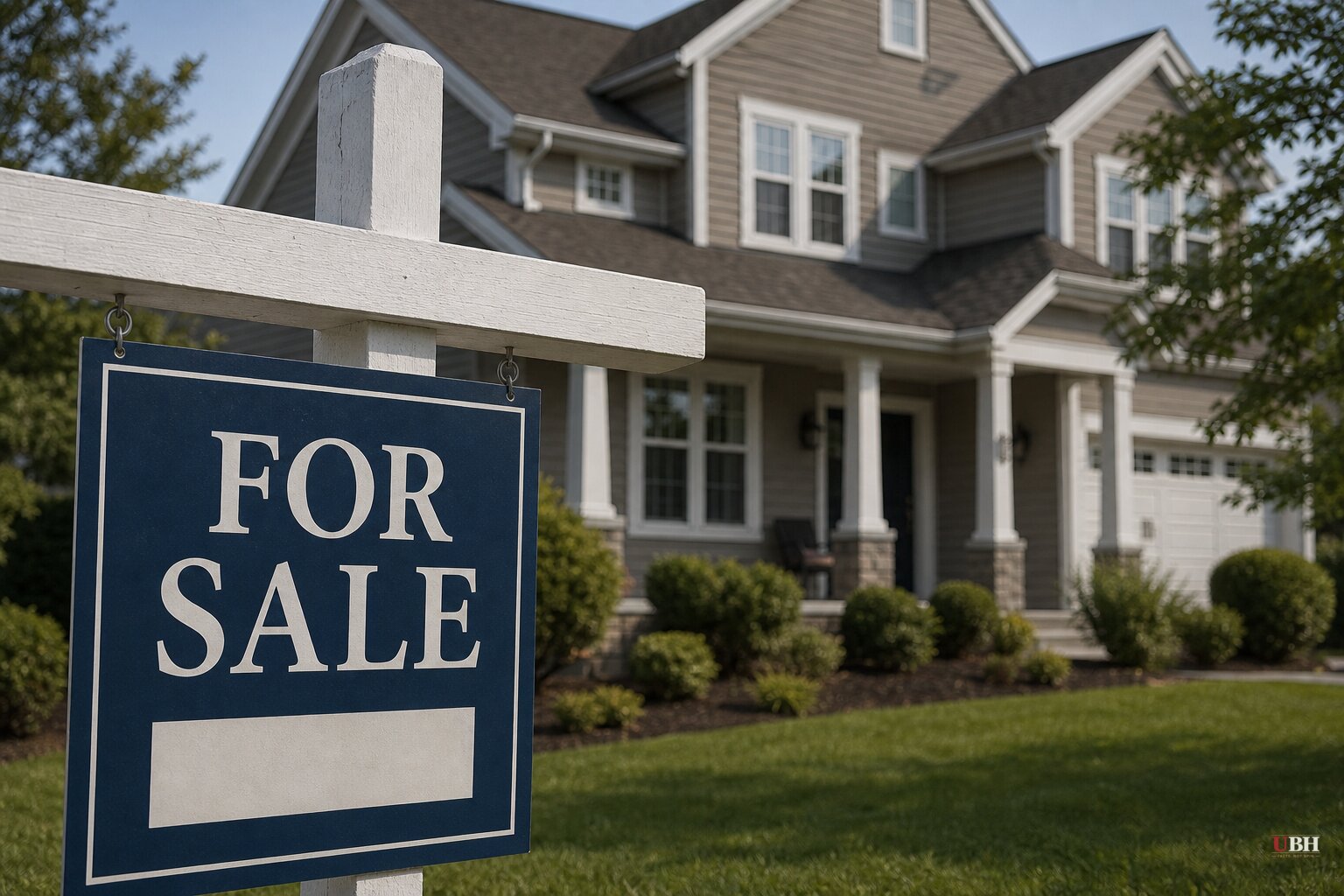
Since the Iran conflict escalated in late February and sent bond yields climbing, mortgage rates have marched steadily upward, and this week they hit a fresh 13-month high. Freddie Mac's Thursday survey put the average 30-year fixed rate at 6.71%, up from 6.66% the week before, the highest level since July 31, 2025.
The 15-year fixed rate climbed too, to 6.04% from 5.98%, according to Freddie Mac. A year ago the 30-year averaged 6.50%. On a $400,000 loan, the difference adds up to real money every month.
And the headline number may understate what people are actually paying. Mortgage News Daily, which runs its own lender survey, had the 30-year averaging 6.91% as of Wednesday, September 2, according to Morningstar. Jim Bell, a former mortgage-backed-securities trader now at Sotheby's International Realty, told Morningstar he expects the average rate to touch 7% this month. Michael Read, principal at Bridgeway Mortgage and Real Estate Services in Morristown, New Jersey, said most mortgages are still under 7%, but borrowers with weaker credit or smaller down payments are already there.
What's Actually Driving This
Mortgage rates track the 10-year Treasury yield, not the Fed's overnight rate directly. That yield spiked to 4.818% intraday on Wednesday, September 2, its highest since November 1, 2023, before easing back toward 4.7% after Fed Governor Christopher Waller's remarks, according to BigGo Finance.
BigGo Finance identified three forces behind the move: the federal government's fiscal deficit, which Waller estimated at roughly 6% of GDP against a national debt near $40 trillion; heavy corporate bond issuance from Big Tech companies financing AI data centers and power infrastructure; and renewed fighting between the U.S. and Iran pushing oil prices higher and reviving inflation fears.
Realtor.com senior economist Jiayi Xu made a similar point to FOX 7 Austin: when the Iran conflict looked closer to resolution, yields and mortgage rates fell. When fighting escalated again, both climbed back up.
Waller reportedly told colleagues he could support holding the Fed's rate steady at the September meeting if inflation keeps cooling, per BigGo Finance. But he also raised a harder problem: the economy's neutral interest rate, sometimes called R-star, may have risen because of AI investment and government borrowing competing for capital. If that's true, a Fed pause or even a cut won't necessarily bring long-term borrowing costs back down.
Fed Chair Kevin Warsh struck a tougher tone at Jackson Hole, saying inflation hadn't improved enough and the central bank might have "more work to do," according to WSLS. Wall Street is now watching for a possible rate increase at the FOMC's September 15-16 meeting, not a cut, which would be an unusual response to a labor market that shed 23,000 jobs in July.
The Housing Market Is Already Stalling
The rate increases have consequences beyond a bond trader's spreadsheet. Pending home sales fell 2.3% in July, the second straight monthly decline after a downwardly revised 4.8% drop in June, according to the National Association of Realtors, as reported by the Epoch Times. That's the weakest reading since the start of the year, and markets had expected a 0.3% increase.
NAR chief economist Lawrence Yun said the highest mortgage rates of the year hit right in the middle of summer and pulled back contract signings. He also noted that pending contracts are 30% below their pre-pandemic 2019 level, even though payroll employment is 5% above it. Yun frames that gap as pent-up demand waiting to be unleashed once rates and supply improve. A skeptic could just as easily read it as a market where high prices and high rates have priced out a huge chunk of would-be buyers, with no guarantee that demand ever fully returns at these price levels.
Refinancing activity is taking a hit too. Jeffrey Ruben, president of home lending at WSFS Bank, told CNN that refinance applications had picked up earlier this year when the 30-year rate briefly dipped below 6%, before the Iran war reversed that. Now, with rates near 7%, refinance activity has cooled again.
Some buyers are adapting rather than waiting. The share of borrowers choosing adjustable-rate mortgages over fixed loans hit a five-week high in early September, according to Mortgage Bankers Association data cited by Morningstar. ARMs carry lower initial payments but reset periodically, a structure that played a role in the 2008-09 financial crisis when rates moved against overleveraged borrowers.
What CNN Left Out
CNN's coverage framed the rate spike mainly around a "global bond market sell-off" tied to Iran, energy costs, and the $40 trillion national debt crossing that threshold for the first time. That's accurate as far as it goes, but CNN's piece doesn't mention the AI infrastructure borrowing wave that BigGo Finance and Waller himself flagged as a structural driver, nor does it explore Waller's warning that the neutral rate itself may have permanently shifted higher. This suggests a different story than a temporary war-driven spike. Elevated mortgage rates could be the new normal even after Iran-related tensions ease.
Redfin economist Chen Zhao told CNN the firm expects mortgage rates to stay in the upper- and mid-6% range for the rest of the year. Nobody quoted across these reports is forecasting a return to 5% or lower anytime soon. The next data point that matters is the Fed's September 15-16 meeting, where the question isn't whether officials cut rates, it's whether they hold or raise them, and whether that move does anything at all for the 10-year Treasury yield that actually sets what homebuyers pay.
Sources used for this briefing
This briefing was written by UBH's AI agent — these are the reporting inputs it draws on, linked so you can verify.


