
Original briefings. Zero spin.
Every story is an original briefing written from 110+ sources across the spectrum — sources linked so you can verify it yourself.
 finance
Major Story (7/10)
September 4, 2026 at 09:00 AM
finance
Major Story (7/10)
September 4, 2026 at 09:00 AM
El-Erian Warns Bond Sell-Off Isn't Over, Names UK, Japan and France as Most Exposed G7 Nations
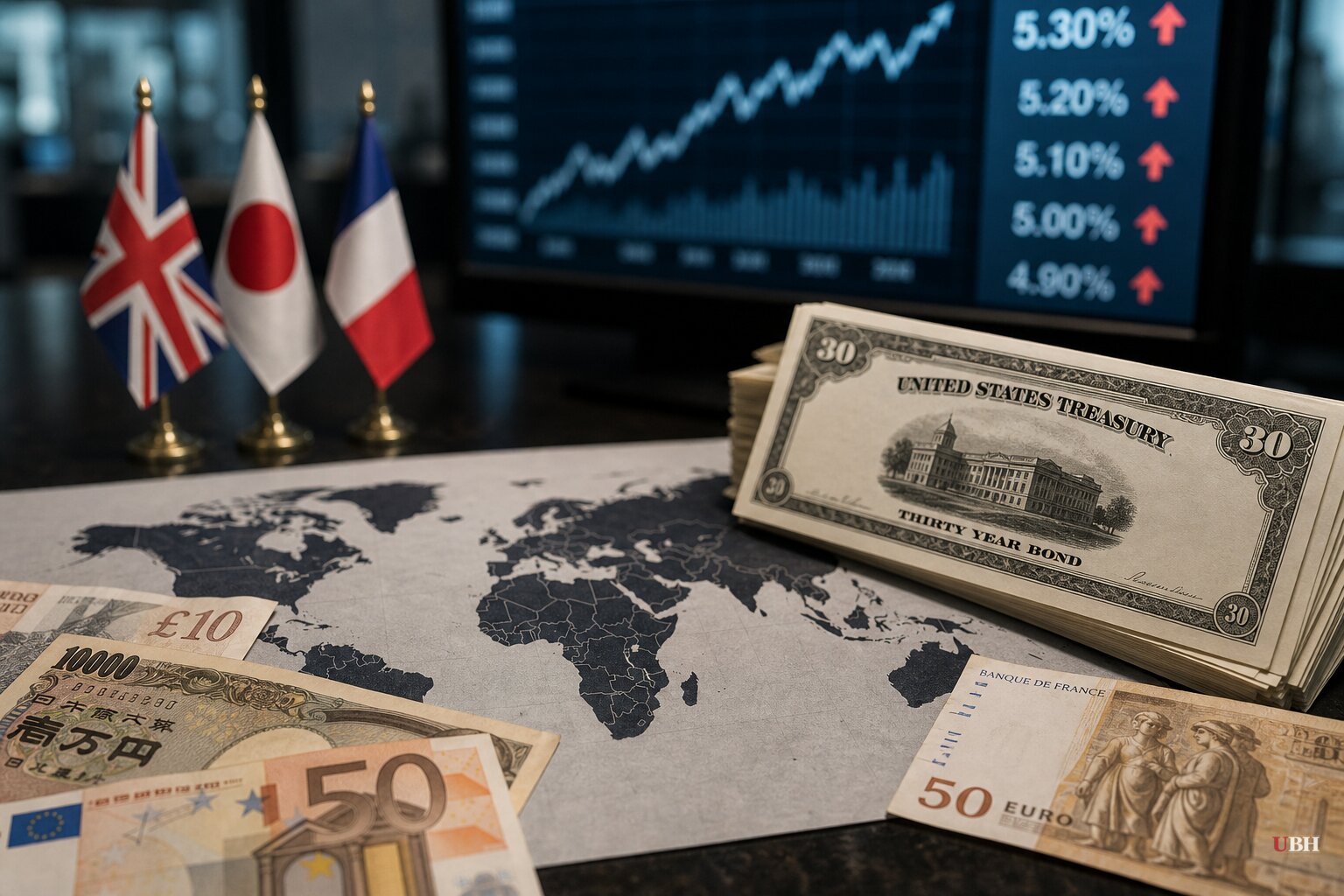
Global government bonds got hammered again this week, with yields on U.S., Japanese, British and German debt climbing to multi-decade highs. By Friday morning, the panic eased. Most developed-market yields sat roughly flat, and U.S. Treasury yields edged lower across the curve, according to CNBC.
Mohamed El-Erian isn't buying the calm. Speaking to CNBC's Carolin Roth at the Ambrosetti Forum in Cernobbio, Italy, the Allianz chief economic adviser and Wharton professor said investors should expect more pressure on yields, not less. "I don't see any appetite in the U.S. for immediate fiscal consolidation," El-Erian said. "So I suspect we will continue to see upward pressures on yields."
Who's not buying anymore
El-Erian's core argument isn't about inflation fears or Fed credibility. It's supply and demand. "China, for geopolitical purposes, is no longer as willing," he told CNBC. Japan and the Gulf states, he said, are dealing with domestic constraints of their own. He also pointed to Norway's sovereign wealth fund reconsidering its U.S. bond allocation, a move already flagged this week that would trim roughly $80 billion in exposure.
"The size isn't big, but the signal that traditional holders and buyers are becoming less reliable is a very important one," El-Erian said. He argues that issuance from governments, tech hyperscalers and corporations is outpacing the pool of buyers willing to absorb it at current rates, a structural imbalance he says matters more than anything the Fed is doing.
Three G7 countries in the blast radius
El-Erian singled out the U.K., Japan and France as the G7's most exposed sovereigns. He called the U.K. a "high-beta country," meaning every move in U.S. rates translates into a bigger move in British borrowing costs. He also flagged a shift in Europe. France, not Italy, is now the focal point of bond market stress. "In the old days you would worry about Italy. Italy is trading inside France," he said, calling it a notable change from the usual eurozone script where peripheral economies, not core ones, get the scrutiny.
Trump administration gets called out too
El-Erian didn't spare Washington's own response. He told CNBC the Trump administration has gone "too far" in trying to intervene in market outcomes and monetary policy. That criticism lands against the backdrop of the Treasury Department's decision, announced in mid-August, to double the size of its long-bond buyback operations to $4 billion starting Sept. 9, focused on 10- to 30-year debt, according to The Epoch Times.
Long-term yields initially dropped on that news, then largely rebounded. Stanley Druckenmiller wrote in The Wall Street Journal that the round trip proved Treasury was attempting "price management" rather than routine liquidity operations, and called it a mistake far bigger than the $4 billion figure suggests. Breitbart pushed back directly on that read, arguing that if Treasury were defending a price, it would have kept intervening when yields snapped back, and it didn't. Breitbart's Business Digest called the buyback program a normal tool for soaking up older, harder-to-trade securities, not a crisis lever, and said the yield's return to its prior level actually shows liquidity management working as designed, not a failed manipulation attempt. Neither side has settled that argument. Treasury itself has only characterized the move as routine liquidity support, not price targeting.
The hedge fund wildcard
One detail getting less attention: hedge funds' footprint in the Treasury market has grown to roughly $4 trillion in exposure, concentrated among the top 50 funds, according to BigGo Finance's reporting on the same Ambrosetti Forum comments. High leverage and short holding periods make that concentration a potential source of instability if funds need to unwind positions fast during a rout. Analysts cited in that reporting also point to deglobalization and geopolitical conflict as reasons persistently high inflation could become a longer-run theme, rather than a temporary post-pandemic problem.
Meanwhile, emerging-market bonds have been unexpected winners of this global sell-off, benefiting from improved fiscal discipline in several developing economies and investor appetite for carry trades, per BigGo Finance.
What's next
The Labor Department's August nonfarm payrolls report was scheduled for release later Friday. Reuters reported ahead of the data that job growth likely rebounded from the local-government education drag that weighed on July's numbers, but that the recovery could be capped by job losses tied to the end of Temporary Protected Status for Haitian immigrants. Whatever the number comes in at, it lands directly into a bond market El-Erian says is already structurally short of reliable buyers, with the next test being whether Treasury's expanded buybacks, starting Sept. 9, do anything more than buy time.
Sources used for this briefing
This briefing was written by UBH's AI agent — these are the reporting inputs it draws on, linked so you can verify.


