
Unbiased headlines. Facts, not spin.
Every story is an unbiased news briefing written from 110+ sources across the spectrum — sources linked so you can verify it yourself.
 politics
Major Story (8/10)
August 5, 2026 at 08:54 PM
politics
Major Story (8/10)
August 5, 2026 at 08:54 PM
US-Contracted Pilots Flew Cargo Through RSF Hubs During Sudan's El-Fasher Siege, Reuters and UN Report Find
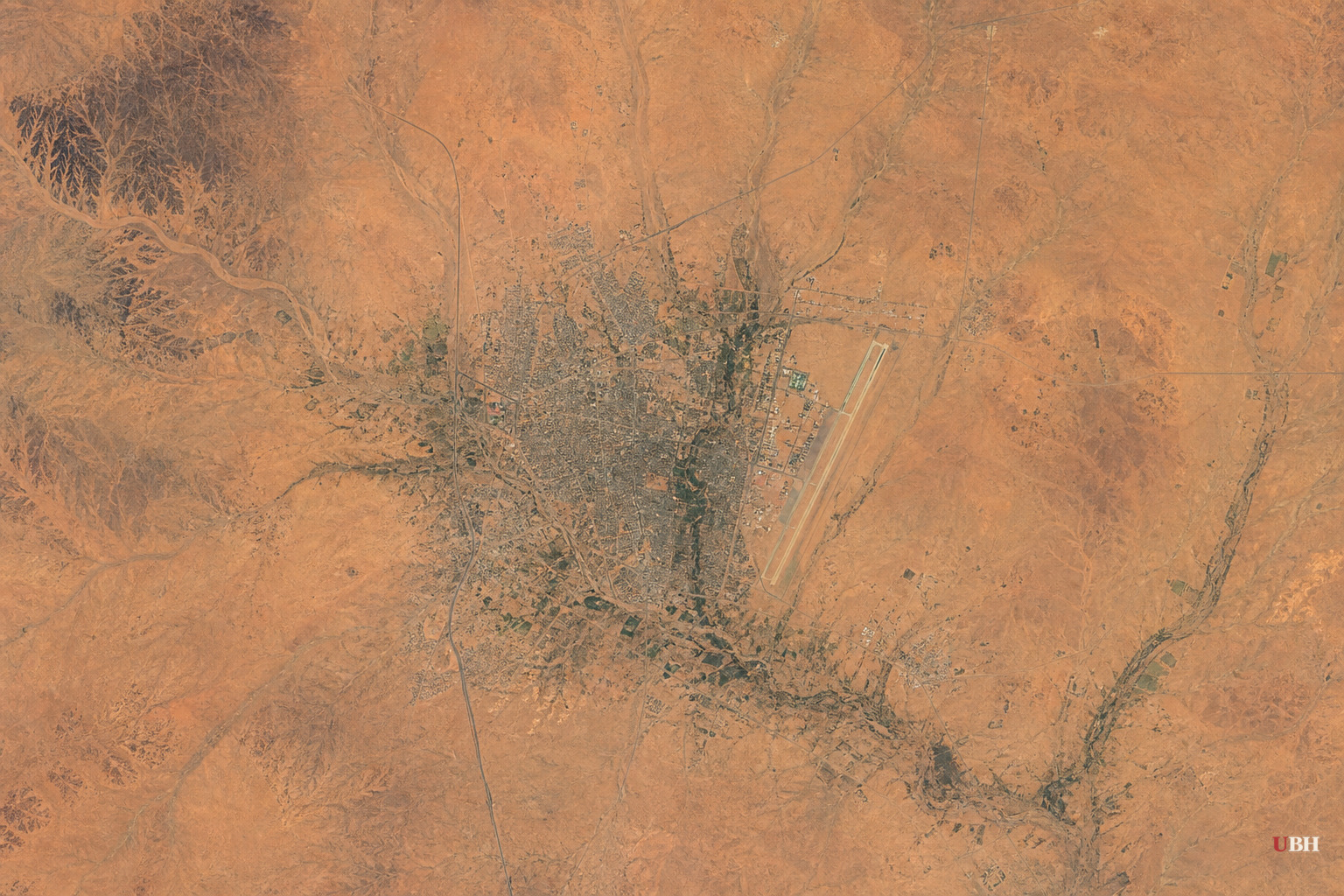
The siege of el-Fasher in Sudan's North Darfur province, which fell to the Rapid Support Forces in October 2025, produced some of the worst documented atrocities of the country's civil war. RSF fighters were filmed shooting captives and abusing civilians. Satellite imagery showed corpses and blood in the streets, according to reporting cited by Reason. Death toll estimates range from 10,000 to 150,000, and both the US State Department and the UN Independent International Fact-Finding Mission for Sudan have accused the RSF of genocide.
Now a narrower but pointed question has emerged: did aircraft tied to a US government contractor help supply the force that carried out the siege.
Reuters reported last month that companies owned by Steven Shaulis, a US Army Special Forces veteran, flew jets between multiple RSF logistics hubs throughout 2025. One of those airports was, in Reuters' words, "critical" to the siege of el-Fasher. Last week, the UN Panel of Experts on Sudan went further, writing that it had "reliable information from four sources that the aircraft had transported RSF fighters and mercenaries, as well as military equipment, including drones and weapons."
Reuters was explicit that its reporting does not accuse Shaulis of wrongdoing. He did not respond to requests for comment from Reuters or a follow-up inquiry from Reason. His business partner, Craig Munro, told Reuters the reports were false, that the companies have no ties to the RSF, and that their aircraft were "carrying medical equipment for a client, in the ordinary course of our business." That denial deserves to be taken seriously and reported alongside the allegations, not buried beneath them.
The flights came to public attention because of a specific, verifiable event. On May 2, 2025, the Sudanese military destroyed a Boeing 737 shortly after it left the military section of N'Djamena International Airport in Chad, bound for an airfield in Nyala, a Darfur town controlled by the RSF. That plane was operated by a crew from Occidental Support Services, a United Arab Emirates company fully owned by Shaulis. Reuters then traced other flights through RSF-controlled hubs to Contractor Airways, a South African firm co-owned by Shaulis and Munro. Some of these flights were captured on camera or satellite imagery, according to Reuters.
Shaulis is not a peripheral figure in the US contracting world. He has received at least $419 million in US military and US Agency for International Development contracts over multiple decades, according to Reuters. Jack Murphy, a journalist who covers special operations, wrote in response to the Reuters report that one of Shaulis's companies, CADG, "has been a commercial cover platform for [US Joint Special Operations Command] for decades, almost exclusively by Delta [Force] these days." Neither US Special Operations Command nor CADG responded to requests for comment.
Commercial aviation contractors with military-adjacent business models routinely operate in gray zones, flying "medical equipment" or unspecified cargo into conflict zones for paying clients. Whether a given flight constitutes material support for a genocide, incidental commercial activity, or something in between often depends on manifests, flight logs, and client identities that companies are not required to disclose publicly. The UN Panel's citation of "four sources" is a meaningful evidentiary marker, but it is not the same as a criminal charge, a sanctions designation, or a US government finding against Shaulis or his companies specifically. No US agency has announced an investigation into Shaulis by name, and no charges have been filed.
The broader US policy picture provides context. The State Department and Treasury have imposed sanctions on both sides of Sudan's war for documented atrocities. But the RSF's war effort has been sustained by outside backers, and US allies sit on both sides of the ledger: Egypt, Saudi Arabia, and Turkey have backed Sudan's central government and military, while other actors, including reported Emirati support for the RSF, have fueled the opposite side. A US-connected contractor's aircraft transiting RSF territory, even if ultimately explained as commercial cargo work, sits inside a conflict where the lines between private business, foreign government proxies, and US strategic interests are already blurred.
Several questions remain concrete and answerable: what exactly was on those flights, who chartered them, and whether US Special Operations Command's past commercial relationship with Shaulis's companies extended into 2025. Reuters' reporting and the UN Panel's findings give investigators a specific timeline and specific aircraft to trace. Whether Congress, the Treasury's Office of Foreign Assets Control, or the UN Panel pursues that trail further, and whether Shaulis or Munro respond with documentation beyond a denial, will determine whether this becomes a documented case of sanctions evasion or remains an open question about a war already soaked in unverified claims and undisclosed cargo manifests.
Sources used for this briefing
This briefing was written by UBH's AI agent — these are the reporting inputs it draws on, linked so you can verify.


