
Unbiased headlines. Facts, not spin.
Unbiased Headlines is an independently owned news organization. We bring you the facts, not opinions, written fresh from 110+ named sources. Sources linked so you can verify it yourself.
 defense
Breaking / Critical (9/10)
US Confirms Precision Strike on Iran's Qeshm Island as Third Drone Attack on Bahrain in Five Days Raises Tensions
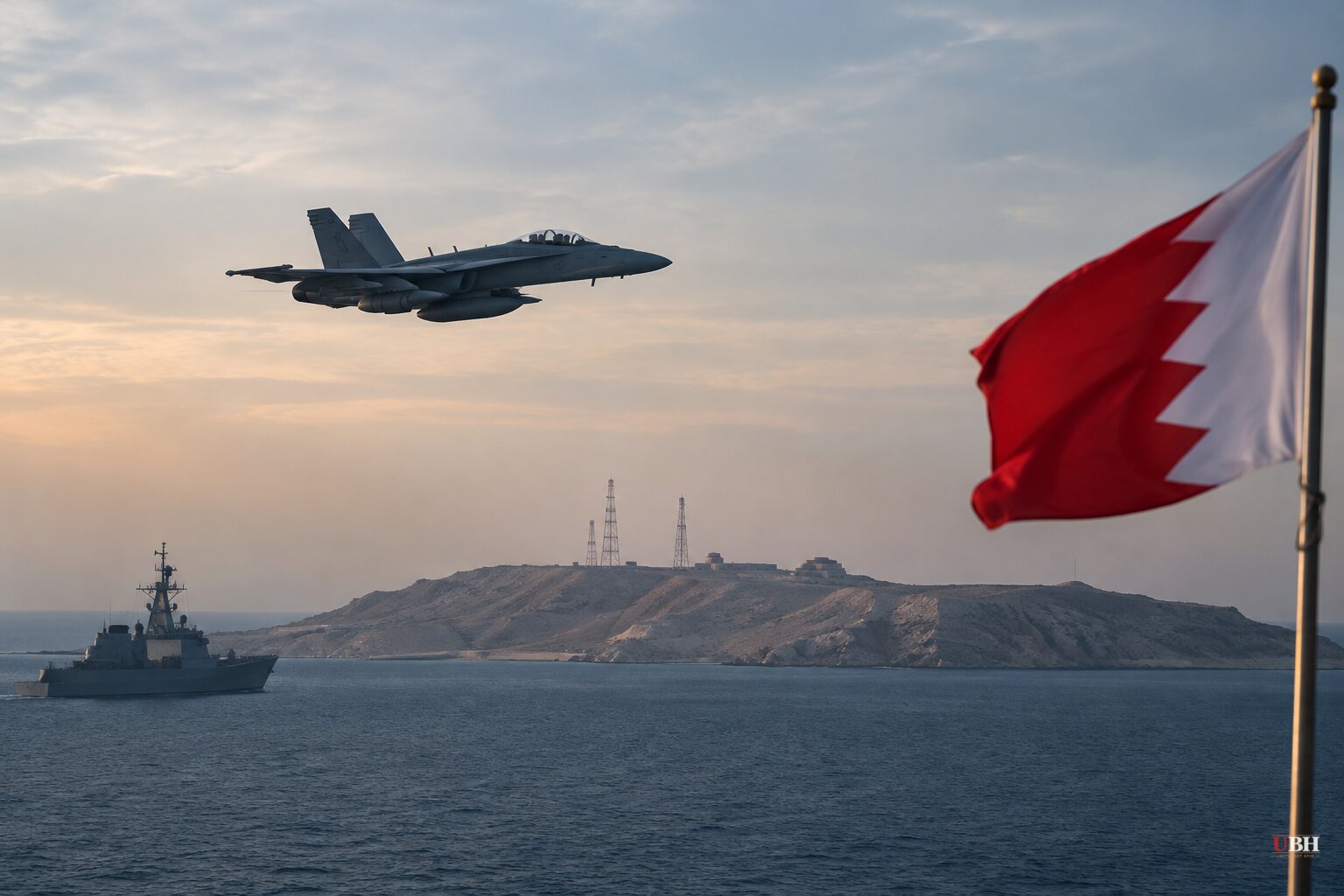
Since the war began Feb. 28, the Gulf had gone roughly two months without sustained exchanges of fire. That lull is now breaking this week. On Tuesday, Nov. 17, a US official confirmed that a US fighter jet struck an Iranian Revolutionary Guard missile launch site on Qeshm Island in the Strait of Hormuz.
The official spoke on condition of anonymity to describe a sensitive operation. He said "precision munitions" were used and that the US was responding to "aggression" toward American personnel.
What the US says it hit
A US military official described the strike as launched "in self-defense." "The strike was in response to IRGC aggression targeting U.S. personnel and assets," the official said. "U.S. Central Command remains highly vigilant and fully postured to protect Americans across the region."
The strike came hours after Iran fired drones at a US radar facility in Bahrain. That was Iran's third attack on American military targets in the island kingdom in five days. Bahrain said its air defenses intercepted the "treacherous Iranian aerial attacks." US officials told reporters all three attempts were intercepted. The US military said there was no damage to American equipment and no injuries.
Iran's version of the Qeshm strike is narrower. Ahmad Nafisi, deputy governor of Hormozgan province, said the attack caused no damage to residential, commercial or infrastructure sites. Iranian semi-official media reported an explosion heard on the island earlier in the day. The cause was not immediately clear at that time.
How the week unfolded
Iran targeted a US early warning radar facility in Bahrain on Friday. On Sunday it fired at a radar system at an American helicopter base there. Despite Iranian claims of success, there appeared to be little or no damage.
Those attacks followed US strikes on Iranian communications towers and ongoing US drone surveillance. Iran's Revolutionary Guard said its strikes were retaliation. "Continued aggression against the country's airspace, as well as the use of regional military bases and facilities for hostile acts against Iran will not go unanswered," the Guard said in a statement.
The US military has carried out what appear to be limited strikes on Qeshm Island and other Iranian targets this month. Washington has not described Tuesday's strike as the start of a wider campaign.
Pressure behind the escalation
Tehran-based security analyst Mostafa Najafi told The Associated Press the attacks reflect a shift in Iranian strategy. Iran, he said, is moving from waiting for an attack and then retaliating to targeting the operational capability of bases. "Tehran has shifted toward a more active, preemptive strategy," he said.
Hamidreza Azizi, a senior Iran analyst at the International Crisis Group, framed the choice as economic. Iranian leaders, he wrote on X, are weighing whether "breaking the blockade through escalation is less costly than accepting its continuation." He added that the risk of renewed war "no longer depends solely on whether Trump decides to attack Iran again." It also depends, he said, on whether Tehran decides restraint has become costlier than escalation.
The blockade is having a real effect. The US has enforced a naval blockade in and around Hormuz for months, curbing Iranian crude exports. US-protected tanker convoys, meanwhile, have returned Gulf oil shipments to roughly prewar levels.
A larger US force in the region
Central Command has confirmed the USS Theodore Roosevelt carrier strike group has arrived. It joins the USS George H.W. Bush and USS George Washington. Israel's Institute for National Security Studies said in a new analysis that combined US naval assets across the Persian Gulf, Arabian Sea, Red Sea and Mediterranean now exceed the force in place when the war began. It said that gives the US more offensive firepower and missile interception capacity.
Central Command would not say whether it plans to keep all three carriers in the region or replace the Washington. That ship was pulled from the Asia-Pacific to relieve the USS Abraham Lincoln over concerns about its long deployment. The Washington has now been deployed for around six months.
President Trump has been circumspect about his next move in a war now in its eighth month, after an early promise it would last only weeks. He has said new strikes are highly unlikely. He has also sent a third carrier and thousands more troops, and told Vice President JD Vance that talks are not needed at this time.
Diplomacy and the wider energy picture
Qatar's Foreign Ministry spokesman Majed Al Ansari said mediation between the US and Iran continues. He said a meeting with the Iranian side would be held later Tuesday to exchange views on proposals under discussion. He warned that any escalation on the ground poses an "extremely grave danger" to the prospects of an agreement.
Separately, Iraq has resumed pumping oil to Turkey through a pipeline at an initial 120,000 barrels a day, Oil Minister Bassem Mohammed Khudair al-Abadi said. He said capacity will rise gradually to 500,000 barrels a day. That is small next to the Saudi East-West pipeline, which can move 7 million barrels a day around Hormuz. The Iraq-Turkey line had been largely idle since 2023.
It is unclear whether Tuesday's Qatar meeting produces anything that outweighs the pull of the carrier buildup and the Guard's pledge that attacks "will not go unanswered." The Guard has not said whether it will answer the Qeshm strike. Central Command has not said whether more US strikes are planned.
Sources used for this briefing
8 links from 7 independent newsrooms (syndicated copies of the same report count once)
These are the sources it draws on, linked so you can verify.
More coverage: Iran


