
Unbiased headlines. Facts, not spin.
Unbiased Headlines is an independently owned news organization. We bring you the facts, not opinions, written fresh from 110+ named sources. Sources linked so you can verify it yourself.
 defense
Major Story (8/10)
Trump Says U.S. Takes Iran Dirty Bomb Report 'Very Seriously' as Tehran Denies It
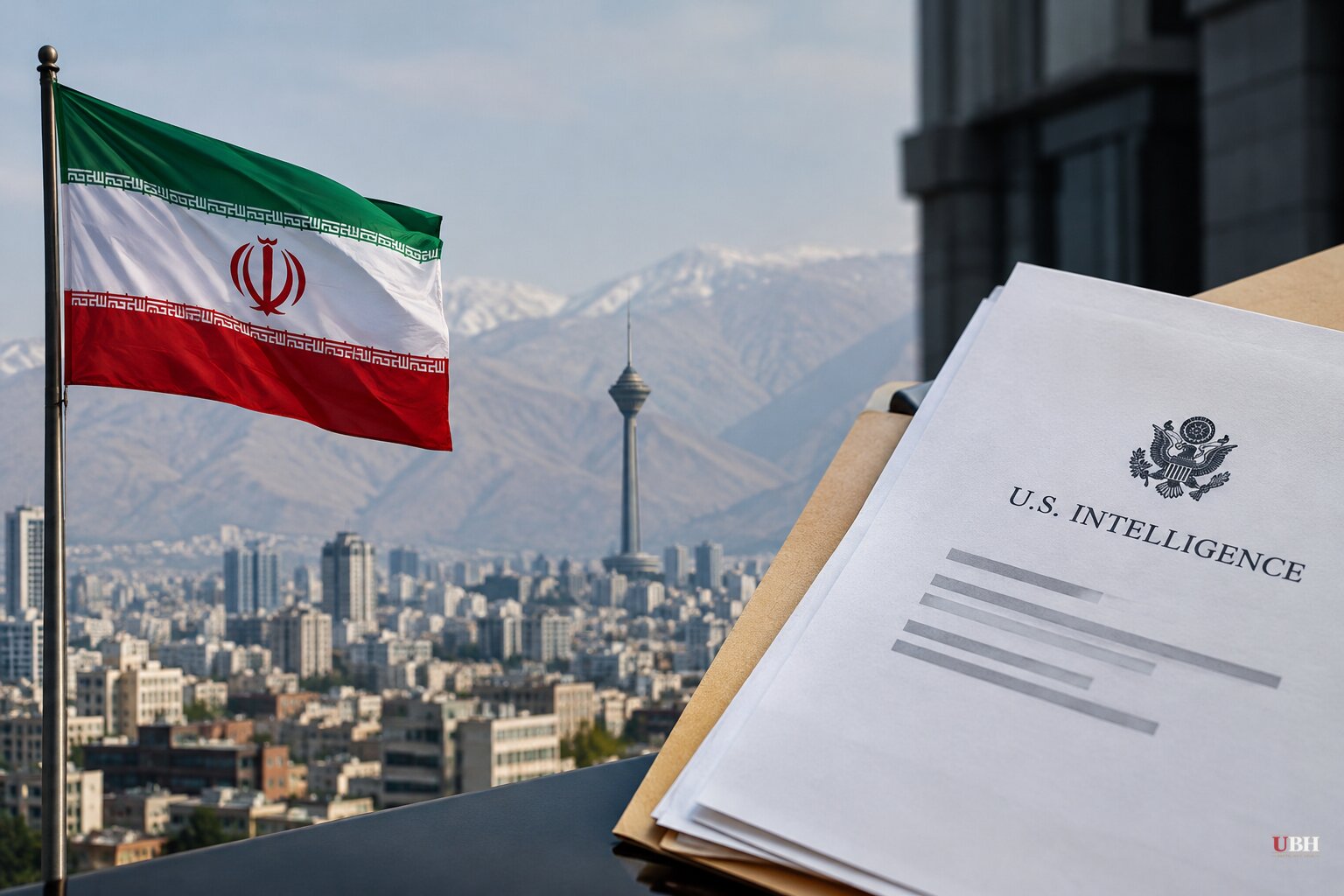
President Donald Trump said Tuesday, Nov. 17, that the United States is taking reports of an Iranian plot against Washington "very seriously." The reports surfaced a day earlier and describe a possible radiological or chemical attack on senior administration officials.
"We're looking into it," Trump told reporters in Manila. Asked if an attack was imminent, he said: "I hope it's not, but we take it very seriously because they happen to be crazy."
He added a warning: "If there is, they will pay a price the likes of which no country has ever paid before."
What CNN reported
On Monday, Nov. 16, CNN reported, citing seven anonymous U.S. officials, that new intelligence indicates Iran is developing plans to target senior Trump administration officials with a so-called dirty bomb or a chemical weapon in Washington.
Those sources described the planning as an effort by Tehran to give itself more options, not as evidence an attack is imminent. Two sources told CNN the intelligence included specific locations and potential targets, and that it prompted contingency planning. Officials reportedly held several meetings in recent days on possible countermeasures.
One source said U.S. intelligence picked up Iranian "chatter" indicating bomb-making materials had been stashed inside the United States. That claim has not been independently verified.
The officials were divided. One source told CNN "there is disagreement over whether they actually have the personnel in place to execute the plan." According to CNN's sources, Iran's capability has not grown. What has changed is its incentive. There is no evidence Iran has decided to go ahead.
The administration's mixed signals
Trump neither confirmed nor denied the substance of the report. The White House was more dismissive.
"We are monitoring any and all potential threats, but at this time there are no credible threats to the homeland," spokeswoman Lauren Bis told CNN.
Homeland Security Secretary Markwayne Mullin called the reported planning "aspirational" and said it is not new.
Rep. André Carson, an Indiana Democrat on the House Intelligence Committee, told CNN that lawmakers receive "these kinds of reports quite often," though many never become public.
So the president is promising overwhelming retaliation while his spokeswoman and his homeland security chief play down the threat. Those are two different postures, and the administration has not reconciled them in public.
Iran's response
Tehran rejects the account outright. A Foreign Ministry spokesman called the claims "baseless." Iran's mission to the United Nations said it "categorically rejects and unequivocally refutes the false and fabricated allegations."
Foreign Minister Abbas Araghchi went further on social media. He said that over the past 72 hours "pro-Israel media" had reported Iran was plotting chemical weapons use in Washington and building missile bases under dams. The second claim refers to a New York Times report.
"Rubbish," Araghchi wrote. "Spare us the Iraq War-style propaganda, especially with Israeli fingerprints all over it. Nobody is buying it."
Parliament speaker Mohammad Bagher Ghalibaf, described as Iran's top negotiator, wrote on X: "Same false flags, same war mongering, new logos."
Neither Araghchi nor Ghalibaf offered evidence for the claim of Israeli involvement in the reporting. The U.S. government has not publicly released the underlying intelligence, so the specific allegations can be neither confirmed nor ruled out from outside the intelligence community.
What a dirty bomb is
A dirty bomb is not a nuclear weapon. According to the Centers for Disease Control and Prevention, it combines conventional explosives with radioactive material, which the blast scatters as dust or smoke. There is no atomic explosion.
The CDC says the immediate danger would likely come from the blast itself. Radioactive material generally would not deliver enough radiation to cause immediate serious illness in most people outside the immediate blast area. The longer-term risk is inhaling or touching contaminated material, and contamination cannot be seen or smelled without specialized equipment.
The U.S. National Academy of Sciences has said most dirty bombs would immediately contaminate an area of one or two city blocks. The radioactive material can come from medical or industrial equipment, which makes such a device far cheaper and easier to build than a nuclear weapon.
Experts say the threat should not be waved off. "Unfortunately, the threat posed by the potential acquisition or construction of a crude RDD is credible," Margarita Kalinina-Pohl, director of the CBRN Security Program at the Middlebury Institute of International Studies at Monterey's Center for Nonproliferation Studies, told Newsweek.
Her colleague Phillip Bleek described an "inverse relationship between how feasible a radiological weapon would be and how consequential it would be." The deadlier the device, the harder it is to acquire and deploy.
The backdrop
The report landed with U.S.-Iran relations already strained. The war on Iran began nearly nine months ago. Talks to end it have stalled, and Trump said last week that Washington does not "need" a deal.
The USS Theodore Roosevelt has just arrived in the region, bringing the number of U.S. aircraft carriers there to three.
Iran's UN mission and Foreign Ministry have flatly denied any such plan. The U.S. government has so far offered only the statements above. The open question is whether the administration will present evidence for or against the plot, or whether the dispute stays a standoff between anonymous U.S. sources and Tehran's denials while three carriers sit in the region.
Sources used for this briefing
6 links from 6 independent newsrooms (syndicated copies of the same report count once)
These are the sources it draws on, linked so you can verify.
More coverage: Donald Trump and Iran


