
Unbiased headlines. Facts, not spin.
Unbiased Headlines is an independently owned news organization. We bring you the facts, not opinions, written fresh from 110+ named sources. Sources linked so you can verify it yourself.
 defense
Major Story (8/10)
Trump Disputes 60 Minutes Account of Kuwait Strike as Whistleblower's Lawyers Seek Independent Probe
Since an Iranian drone struck the Port Shuaiba command post in Kuwait on March 1, killing six U.S. soldiers, the Pentagon has said little in public about what went wrong. Now the president has weighed in, and the survivor who went public is asking for an outside investigation.
President Donald Trump answered Army Maj. Stephen Ramsbottom's account in a Nov. 16 Truth Social post. He did not address the specific allegations. He went after CBS's "60 Minutes," which aired Ramsbottom's interview Nov. 15, saying its new leadership is "even worse than their predecessors."
"A recent study on an attack in the early stages of Iran was not correctly stated," Trump wrote.
Trump's numbers
Trump said Iran has fired between 8,000 and 9,000 one-way attack drones since the start of the U.S. operation, which he called Operation Epic Fury. By his count, only two got through, causing U.S. deaths in Kuwait and Saudi Arabia early in the war.
He said Iran has also fired roughly 2,000 ballistic missiles, and that only one slipped past defenses, resulting in U.S. deaths in Jordan.
"Translation: 99.99 percent of Iranian missiles and drones have been shot down or, in any event, not caused U.S. deaths. CENTCOM defensive measures have been historically effective," Trump wrote. "No one in the World has the ability to do so well."
Those figures are the president's own. No independent tally accompanied them. They also measure interception across the whole theater. Ramsbottom's complaint is narrower: it concerns what was and was not protecting one site on the first day of the war.
What Ramsbottom alleges
Ramsbottom, deputy chief of operations for the Army Reserve's 103rd Sustainment Command, filed his complaint Nov. 13 with the House and Senate Armed Services committees. He wants an investigation into why the post had no "dedicated protection against one-way attack drones."
He told 60 Minutes the site, about 65 miles from Iran, was protected against car bombs and nothing more. "There was nothing there designed to protect from an aerial attack," he said.
He says he raised the gap twice with senior leaders and was told, "We don't have to worry about protection." He told CBS he warned Maj. Gen. John Hinson, commanding general of the First Theater Sustainment Command. Leaders later said they would try to send a counter-drone system, he said, but it "never arrived at Shuaiba and we don't know if it was ever even ordered to or requested."
The complaint also alleges the post had "no physician, no fixed aid station, and only one ambulance." Ramsbottom was among the dozens wounded.
He did not put the blame only on others. "I feel this is a tactical failure by the Army, our leadership, and myself, all the way down to my level," he said.
The Pentagon's earlier account
Defense Secretary Pete Hegseth said the day after the attack that a "squirter" had made its way through air defenses and hit a tactical operations center "that was fortified." He added: "But these are powerful weapons."
A source familiar with the site told CNN at the time that it was ringed only by concrete barriers that would stop car bombs, not drones or missiles. CNN also reported, citing a source familiar with the situation, that no warning or sirens preceded the strike.
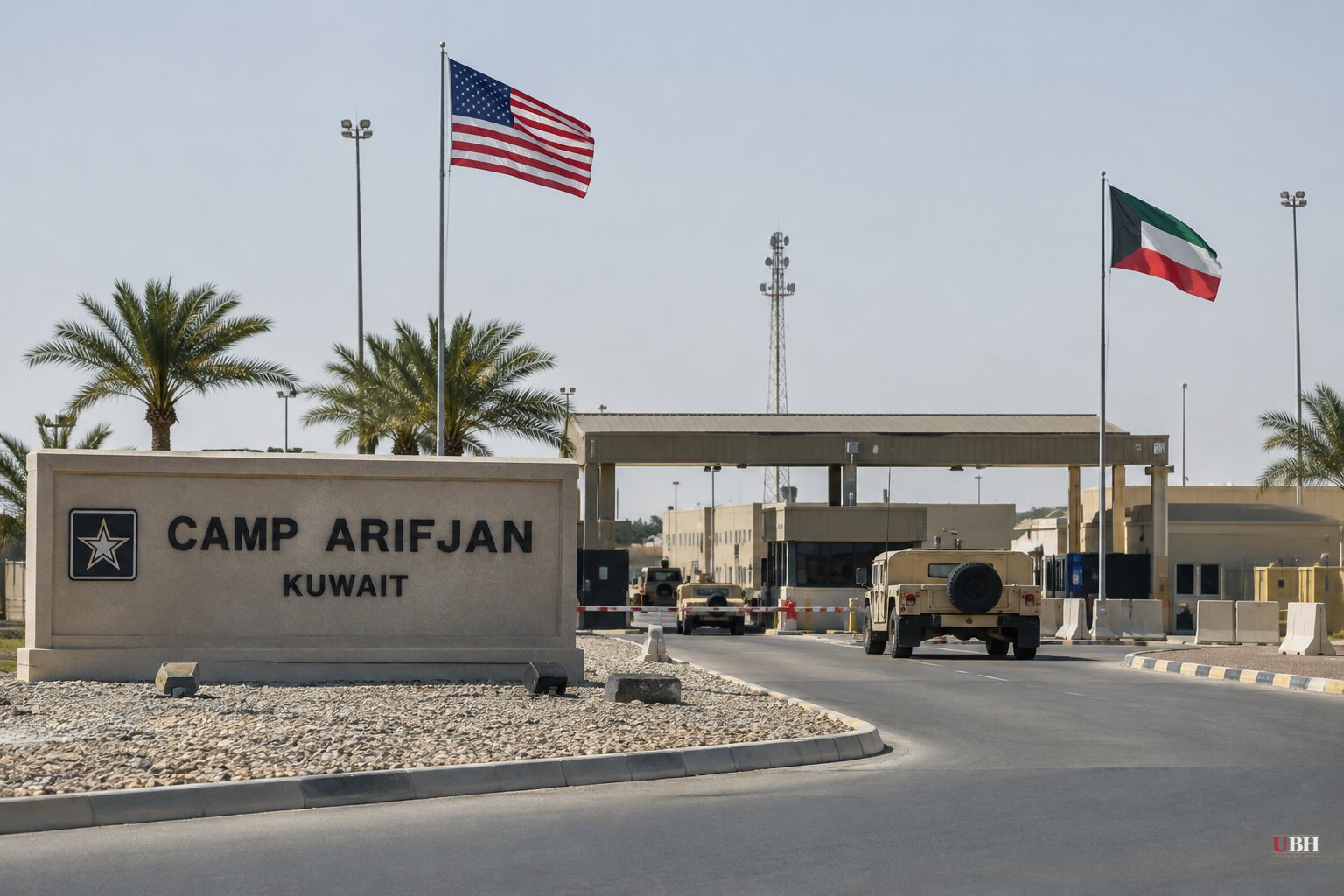
About 70 members of the 103rd Sustainment Command had been moved from Camp Arifjan, a major U.S. base south of Kuwait City, to the smaller Shuaiba outpost roughly a week before the war began, according to TIME. Days into the war, Hegseth said the Defense Department had moved "the vast majority" of troops "off the X, out of the range of Iranian fire."
The six dead were Capt. Cody Khork, Sgt. 1st Class Nicole Amor, Sgt. 1st Class Noah Tietjens, Sgt. Declan Coady, Maj. Jeffrey R. O'Brien and Chief Warrant Officer 3 Robert M. Marzan. TIME describes it as the deadliest attack on American troops since 2021. Twenty-three U.S. service members have died over the eight months of the war.
An investigation nobody has seen
The Pentagon announced an investigation March 3. The Associated Press reported it concluded in June, and families received a private briefing in July. The findings have not been made public.
Michelle Tietjens, widow of Sgt. 1st Class Noah Tietjens, told CBS that officials acknowledged no mistakes in that briefing. Ramsbottom's attorneys have separately requested an independent investigation. TIME said it had asked the Pentagon and U.S. Central Command for comment. Neither had responded in the material published so far.
What comes next
The committees have not said whether they will open an inquiry into the complaint. Democrats, who take control of Congress in January, plan wide-ranging investigations of the administration's handling of the Iran war, CNN reported.
The drone threat has not gone away. Bahrain's air defenses intercepted Iranian drones Tuesday, Nov. 17, according to Bahraini state television. Iran's Revolutionary Guards said they targeted a U.S.-operated radar at Sheikh Isa Air Base. It was the third Iranian attack on Bahrain in five days. No confirmed report of damage has been released.
The open question for Congress is whether the June findings, which families have heard but the public has not, match what Ramsbottom has put in writing.
Sources used for this briefing
8 links from 8 independent newsrooms (syndicated copies of the same report count once)
These are the sources it draws on, linked so you can verify.
More coverage: Donald Trump


