
Unbiased headlines. Facts, not spin.
Unbiased Headlines is an independently owned news organization. We bring you the facts, not opinions, written fresh from 110+ named sources. Sources linked so you can verify it yourself.
 defense
Major Story (7/10)
Event date: October 1, 2026 ·
defense
Major Story (7/10)
Event date: October 1, 2026 ·
US Completes Iraq Withdrawal Sept. 30 as Baghdad Steps Up Airstrikes on ISIS Cells
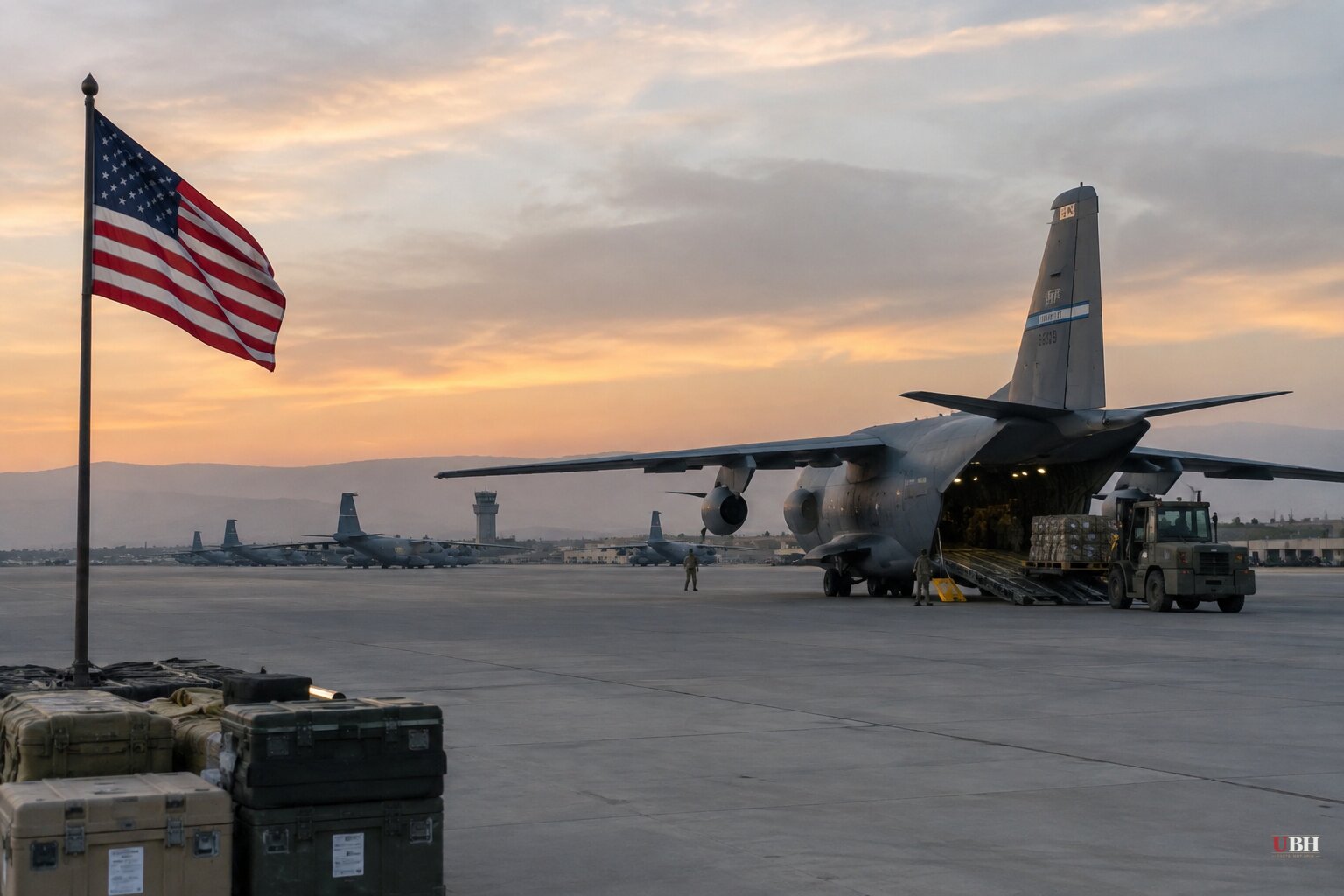
U.S. Central Command announced on Wednesday, Sept. 30, that American forces and equipment had completed an "orderly departure" from Erbil Air Base in northern Iraq. That closed the Iraq chapter of Operation Inherent Resolve, the anti-ISIS mission launched in 2014.
It is also the end of a U.S. military presence in Iraq that Trump put at 23 years, counting from the 2003 invasion.
What the Pentagon says it accomplished
Erbil was the main hub for the Combined Joint Task Force running the campaign. It hosted most of the roughly 1,500 American and coalition personnel supporting counter-ISIS operations, according to CENTCOM. The task force headquarters has moved to Jordan.
CENTCOM commander Adm. Brad Cooper said ISIS "no longer poses a systemic threat to Iraq's national security." He said Iraqi forces, including the Peshmerga, now have the "capacity, leadership, and operational independence to unilaterally manage threats to their homeland." He added that U.S. and coalition forces "remain ready to respond to any ISIS threats that arise."
Pentagon spokesman Sean Parnell called it a shift "from a wartime coalition mission to an Iraqi-led security effort supported by a more normal bilateral security relationship." Washington will keep providing targeted training and intelligence support. Parnell said responsibility for ISIS remnants and Iran-aligned militias "now rests with the Government of Iraq."
U.S. and coalition forces began leaving federal Iraq last October. The exit follows a 2024 agreement between Washington and Baghdad, reached under the Biden administration and carried through under Trump.
Trump took the credit at the White House. "This is a great day for America," he said, calling the Iraq commitment a "quagmire." He praised Iraqi Prime Minister Ali al-Zaidi as a "fantastic guy, friend of mine." Baghdad marked the exit with four national holidays, dubbed Sovereignty Days, running Sept. 30 to Oct. 3.
Baghdad moves against ISIS cells
Iraq has not waited. Its Security Media Cell said F-16s carried out two airstrikes on an ISIS hideout in the Nareen area of Diyala, destroying it. The statement cited intelligence from the Military Intelligence Directorate.
Iraq also sent Brig. Gen. Abdul Amir Al-Shammari, director of the Office of the Commander-in-Chief of the Armed Forces, to meet commanders over security around Kirkuk. The discussion covered unit deployments, border security and the protection of villages.
ISIS is a fraction of what it was in 2014, when it beat two Iraqi army divisions and seized their equipment. The Jerusalem Post described today's group as aging fighters and a few young recruits in scattered rural cells. It points to pockets in the Hamrin Mountains, near Hawija, and around Mount Qarachogh, where it says ISIS has exploited the gap between the Kurdistan Regional Government and federal forces.
Iraq's foreign minister has warned that fighters could cross in from Syria, and Baghdad says it is preparing its forces. The government has not said which units are being moved to that border.
The argument over what comes next
The Pentagon's position is that ISIS is beaten as an organized force in Iraq. Not everyone buys the idea that the risk is behind us.
Caroline D. Rose and Julie Chernov Hwang, writing in Defense One, argue that the absence of Americans cuts costs and risks to personnel but also "diminishes visibility into ISIS networks" and removes a forward position for spotting threats early. They say fewer ISIS attacks in Iraq and Syria since 2025 reflect "strategic recalibration," not lost capacity.
Their evidence is mostly from Syria. They cite June attacks on oil tankers, checkpoints, judges and buses carrying Defense Ministry personnel. They also cite a July bomb at a Damascus café that killed 10 people, and two blasts during French President Emmanuel Macron's first state visit that killed 10 and 18.
The prisons are their sharpest concern. After the SDF's January collapse in northeast Syria, Iraq took in 5,700 ISIS-affiliated prisoners from Iraq, Syria and 61 other countries, they write. Those detainees went into prisons already overcrowded and under-resourced, and Iraq is now responsible for interrogating and trying them. The authors say the U.S. presence encouraged humane treatment and fair trials, which limited ISIS's ability to recruit and organize inside. They worry about backsliding now that American troops are gone. They also point to ISIS's history of prison-break campaigns, including the 2012-13 "Breaking the Walls" effort in Iraq.
Officials in Iraq's Kurdish region have voiced concern about losing U.S. capabilities, including air defense, according to the Associated Press. Reuters reported that Iraqi security officials fear the exit could open space for ISIS and for Iran-backed militias. The AP also reported that Iran-backed groups celebrated the departure.
History and the Syria question
The last time American troops left Iraq, in 2011, ISIS surged back within three years. The Jerusalem Post ties that rise to sectarian tension under then-Prime Minister Nouri al-Maliki and the weakness of the Iraqi state. The Pentagon's counter is that Iraqi forces are now more capable and the U.S. relationship is a standing one, not a vacuum.
The Pentagon also credits the Iraqi security forces. Breitbart's account of the anti-ISIS effort adds that it strengthened Iran-aligned militias deputized as the Popular Mobilization Forces. Parnell named those militias as a problem for Iraqi sovereignty.
The status of Syria is also unsettled. CENTCOM says U.S. forces are continuing the mission there with coalition partners and the Syrian government. Rose and Chernov Hwang describe American withdrawals from both Iraq and Syria as complete, and say Syria must now build a sustained regional counterterrorism effort. Those two descriptions have not been reconciled publicly. CENTCOM has not said how many U.S. personnel remain in Syria or where.
What can be checked soon is Iraq's performance. Baghdad has set no public timeline for the Syrian-border deployments its foreign minister described, and it has not said how it will secure the thousands of transferred detainees. Those two items will show whether the "Iraqi-led" model the Pentagon announced on Sept. 30 holds.
Sources used for this briefing
7 links from 7 independent newsrooms (syndicated copies of the same report count once)
These are the sources it draws on, linked so you can verify.


