
Unbiased headlines. Facts, not spin.
Unbiased Headlines is an independently owned news organization. We bring you the facts, not opinions, written fresh from 110+ named sources. Sources linked so you can verify it yourself.
 defense
Notable (6/10)
Event date: October 15, 2026 ·
defense
Notable (6/10)
Event date: October 15, 2026 ·
CNN Reports U.S. Nearly Moved on Chinese Ship Over Chatbot-Generated Intelligence Report
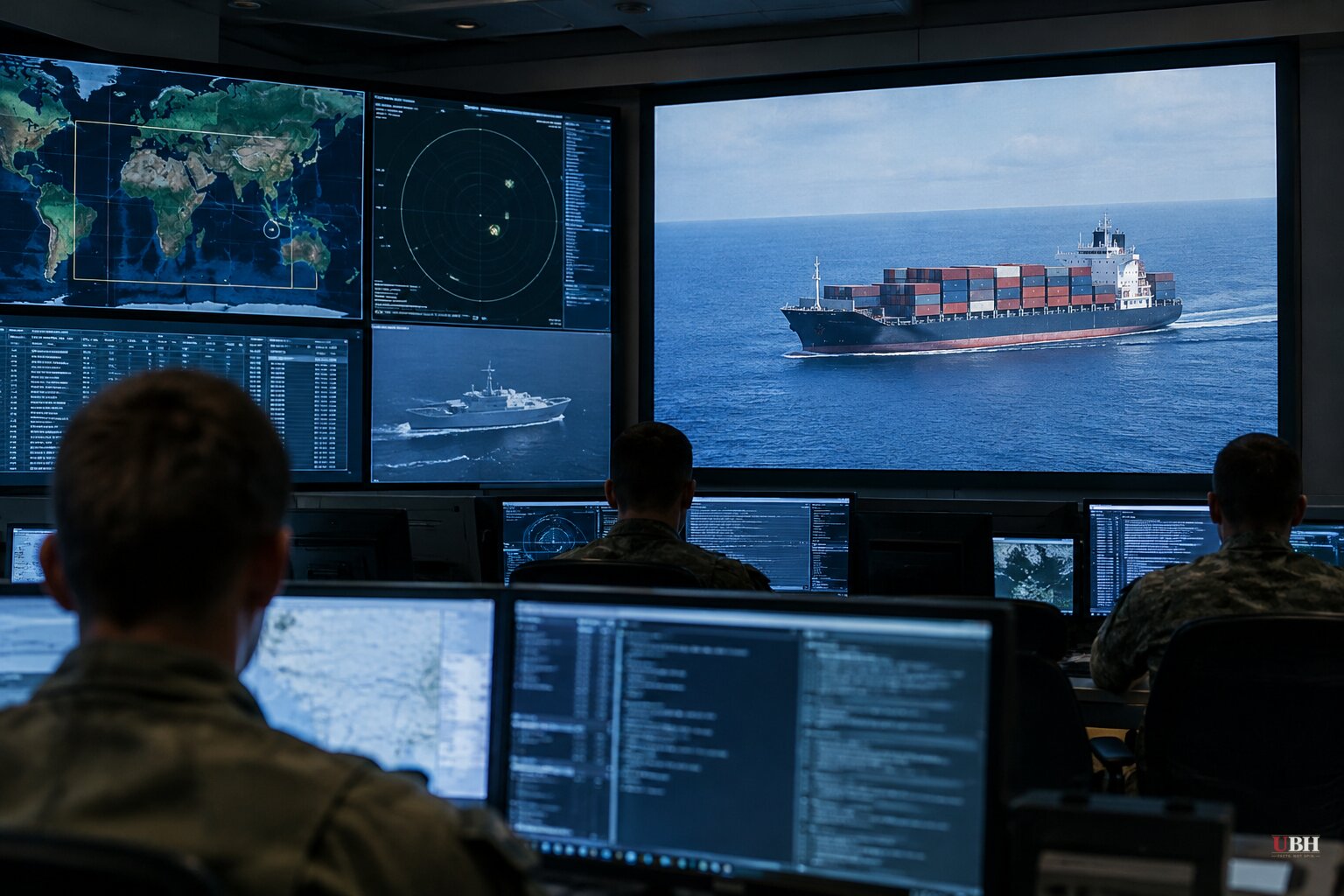
A report published by CNN on Sept. 18 describes a near-miss between the United States and China that involved no rogue machine. According to the account, summarized by AI researchers Timnit Gebru and Emily M. Bender in The Guardian, U.S. military personnel drew up plans to intercept a Chinese ship. Aircraft and soldiers were ready to board.
The trigger was an intelligence report claiming the vessel was carrying components of nuclear weapons. Moments before the plan was carried out, American officials looked into the report further. They found it had been generated with a chatbot and contained wrong information about what was on the ship.
Gebru and Bender write that other major outlets have not verified the CNN account. The story rests on one report, and the details of what the military actually did remain unconfirmed.
What the account claims, and what it does not
Treat it as a serious allegation, not an established fact. It names no specific unit, official, or product in the description relayed by Gebru and Bender. It does not say how a chatbot-written product made its way into an operational decision.
If the account holds, the failure was not artificial intelligence deciding anything. People allowed an unvetted, machine-generated claim about nuclear materials to drive an interdiction plan against a nuclear-armed rival. A boarding operation against a Chinese vessel could have started a military confrontation.
That is a basic tradecraft problem. Intelligence products are supposed to be sourced, checked, and signed off by accountable people. Taxpayers fund a very large intelligence apparatus for exactly that purpose.
The argument over what AI risk really is
Gebru and Bender use the episode to argue that public attention is pointed at the wrong danger. They say the past three weeks of AI news were dominated by the resignation of Anthropic engineer Jacob Coxon, who said OpenAI and Anthropic are "racing straight towards self-improving superintelligence and gambling with our lives."
The authors describe the political response to his warning. They say California Gov. Gavin Newsom issued a mandate to create an "AI kill-switch," that New York Gov. Kathy Hochul is exploring similar measures, and that Sen. Bernie Sanders and Rep. Greg Casar introduced legislation to "ban artificial superintelligence."
Their position is that the real hazard is government reliance on error-prone systems marketed as close to superintelligent. They call large language models "stochastic parrots," meaning systems built to repeat patterns in their training data. In their telling, the CNN story drew no comparable wave of regulatory announcements.
Coxon's side of the argument is the one the authors are rebutting: that machines far smarter than humans could eventually turn on them. The Guardian piece does not claim that scenario is impossible. It argues it is distracting lawmakers from a failure that, per CNN, nearly happened.
The two concerns are not mutually exclusive. A government can worry about future systems and still demand rules for the ones already in use.
A tense backdrop
The incident, if it happened as described, came amid open talk of great-power war. UK Defence Secretary Wes Streeting told The Sun: "The sobering reality is that we face a greater risk of war than we've done at any point in my lifetime." He has said the Kremlin poses the largest threat to British national security.
In Britain, broadcaster Adam Boulton told Times Radio on Oct. 15 that he fears President Trump "is so incompetent and so misguided and so selfish that he could plunge us into a hot third world war before we see the back of him." That is Boulton's opinion, offered as the U.S. heads toward November's midterm elections. He pointed to the Iran conflict, higher fuel costs and Trump's approach to Russia and Ukraine.
The factual backdrop he cited is narrower. Trump relaxed sanctions on Russian diesel last week, and he has suggested Ukraine needs a new leader and that Vladimir Putin is more interested in a peace deal than Kyiv is. Prime Minister Andy Burnham hosted Ukrainian President Volodymyr Zelensky at Downing Street on Wednesday, Oct. 14, and Britain says it will keep up pressure on Moscow. The White House position is not set out in those remarks.
Chatbots as forecasters
The limits of the technology show up in a smaller way too. When UNILAD asked a chatbot to predict when World War III would begin, it said such a war was unlikely in the next one to two years. It then offered Oct. 1, 2030, "purely as a guess," and added that there is "no sound basis for identifying a particular year." The tool itself called its output "rough judgments, not statistically reliable forecasts."
That label is accurate. The problem described in the CNN account is what happens when output like that gets treated as intelligence.
What remains unanswered
Several basic questions are open. Which chatbot produced the report? Who in the chain of command accepted it, and what review should have caught it? Is there a written rule barring unverified generative-AI output from targeting and interdiction decisions?
Until the Pentagon or the intelligence community answers on the record, or another outlet confirms the CNN reporting independently, the Sept. 18 account stays a single-source claim with very high stakes.
Sources used for this briefing
5 links from 5 independent newsrooms (syndicated copies of the same report count once)
These are the sources it draws on, linked so you can verify.


