
Unbiased headlines. Facts, not spin.
Unbiased Headlines is an independently owned news organization. We bring you the facts, not opinions, written fresh from 110+ named sources. Sources linked so you can verify it yourself.
 defense
Major Story (8/10)
Event date: October 14, 2026 ·
defense
Major Story (8/10)
Event date: October 14, 2026 ·
Ukraine's Starshield Terminals Hit With 100 mph Speed Cap, and Musk Says Washington Sets the Limits
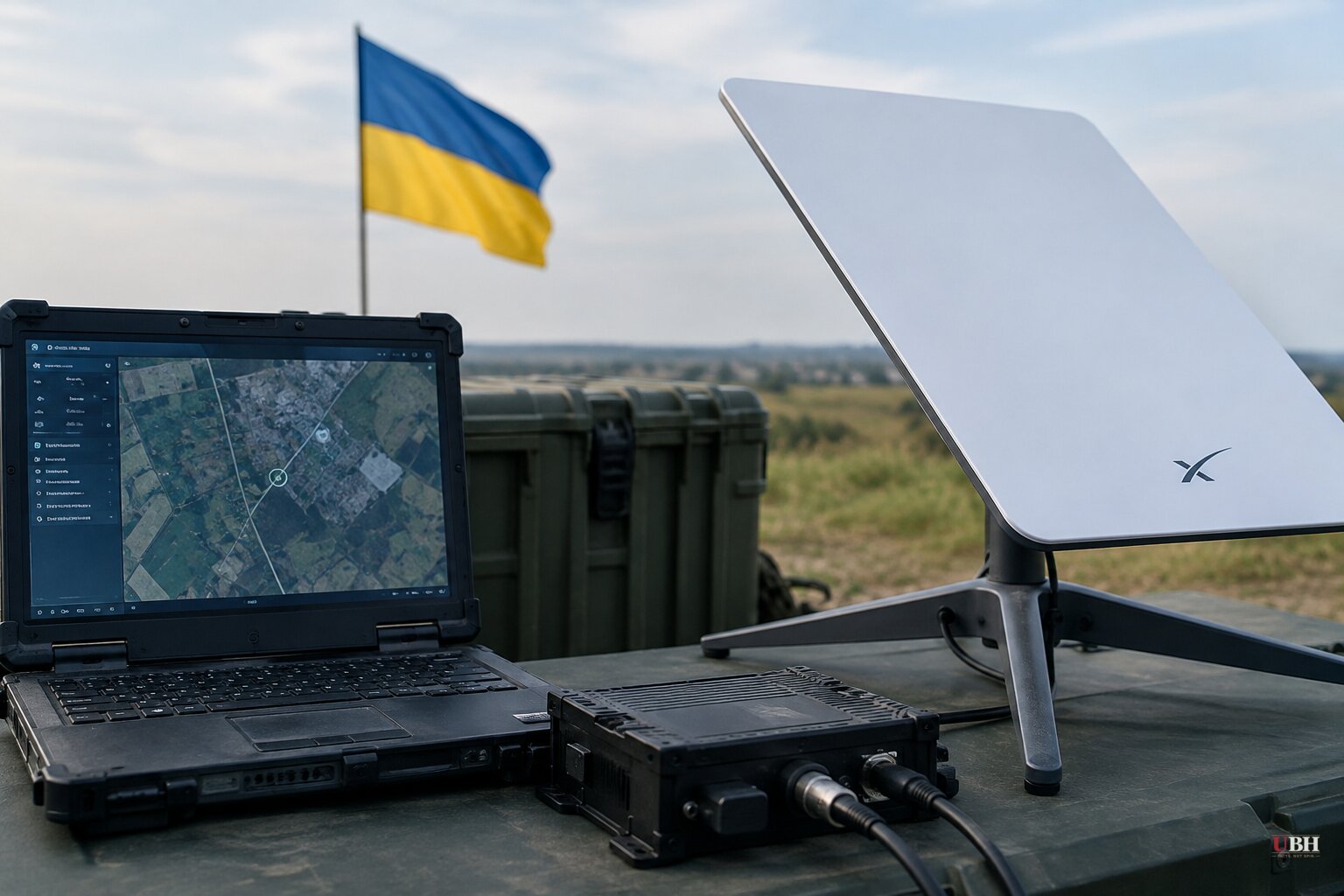
Ukrainian forces lost part of their military satellite connectivity overnight into Wednesday, Oct. 14, when speed limits appeared on Starshield, the military version of SpaceX's Starlink. Two days later, the question of who ordered it is still unanswered.
Serhiy Beskrestnov, an adviser to President Volodymyr Zelenskyy on defense technology, confirmed the change on Telegram. "SpaceX has implemented speed limits for Starlink terminals while in motion," he wrote. "Our defense forces were not notified of this restriction, and it has resulted in the disruption of several missions."
The cap applies to Starshield terminals moving faster than 100 mph, or about 160 km/h. That covers drones, including the interceptor drones Ukraine uses against fast, jet-powered Russian Shaheds. Beskrestnov said those interceptors are among the few effective answers to that threat.
What Ukraine says happened
A source familiar with the situation told Fox News Digital that Ukrainian units noticed connectivity trouble and called SpaceX customer support. They were told Starshield service would be restricted on platforms moving at 100 mph or higher. The same source said Ukraine uses the service under arrangements contracted through the U.S. government until May 15, 2027.
Beskrestnov called the change political but offered no evidence and did not say who might have requested it. Former Ukrainian defense ministry adviser Serhii Sternenko wrote that SpaceX likely acted at the Trump administration's request. He noted that ordinary terminals were working normally.
Zelenskyy, speaking from the U.K. on Piers Morgan Uncensored, first floated a technical glitch. In another interview he said, "It was not a technical problem, it was the will." He said he felt betrayed and warned that "people will die" if the restriction continues.
He also said Russia is trying to exploit the problem. Russia launched 124 drones overnight and another 145 during the day, which he called "one of the largest attacks."
Musk points up the chain
Musk responded on X. "Starshield systems are owned and controlled by the U.S. government. Any limits on speed or usage are decided by the U.S. military and ultimately POTUS," he wrote. He added that commercial Starlink "cannot be used for offensive military action, as doing so would be inappropriate for a commercial company."
Musk did not say whether Trump, War Secretary Pete Hegseth or anyone else authorized the cap, or why. The White House has not confirmed or denied his account.
CNN reported that two U.S. officials said the decision to limit Ukraine's Starshield access was not a high-level U.S. policy decision. That claim rests on anonymous sourcing, and it sits uneasily with Musk's statement that the president ultimately decides these limits.
Trump has said repeatedly that Washington is not abandoning Kyiv. Asked Tuesday whether the U.S. had stopped sharing intelligence with Ukraine, he said, "We are helping them and we are sharing intel. We want the war to end."
The political backdrop
The restriction landed amid a sharp split between Washington and Kyiv. Trump struck a deal with Vladimir Putin last week to import Russian diesel, despite existing sanctions, and announced an "energy cease-fire." Zelenskyy said Moscow violated it, and Ukraine resumed strikes on Russian oil refineries. Trump called those strikes a "disgrace" in an interview.
The Trump administration also warned Ukraine last weekend that the U.S. could suspend intelligence sharing, and European purchases of U.S. weapons for Ukraine, if Kyiv does not halt long-range strikes on Russian energy facilities. Days before the Starshield change, Musk wrote on X that Zelenskyy had "gone too far" with those attacks.
On Tuesday night, Zelenskyy said Ukraine received "no early warning from our partners" before a Russian attack of 39 ballistic missiles and more than 120 drones. At least one person was killed, 26 power stations and substations were damaged, and 600,000 people in and around Kyiv lost electricity. He said it was the second time that week Ukraine got no warning.
Reaction
Poland's foreign minister, Radoslaw Sikorski, posted on X: "Hey, @elonmusk, big man, are you playing politics with your products again? As your European customers, we are watching you." Poland has previously said it pays for Ukraine's Starlink subscription.
Republican Sen. Thom Tillis said on X that "supporting Ukrainian sovereignty, or at the very least, allowing for it, should not be a gray area for the US government or for American corporations." House Foreign Affairs Committee Democrats called the restrictions "unconscionable" and said Trump is "making a choice" that aids Putin.
Musk has a history here. He said in 2025 that Ukraine's "entire front line would collapse" if he turned Starlink off, and later said Starlink would never be used as a bargaining chip. SpaceX did restrict Ukrainian connectivity during a 2022 counteroffensive, and cut Russian forces off from Starlink in February.
What is at stake on the front
The timing is awkward for Kyiv's own battlefield momentum. Ukraine says Operation Vivaldi, a three-month counteroffensive in Donbas that concluded this week, retook 277 sq km and blunted a Russian pincer movement against the Fortress Belt cities. Ukrainian commanders claim 8,000 Russian casualties in the operation. Russia's Defense Ministry has not acknowledged the gains. Starshield is woven into that drone-heavy fight. Ukraine is not wholly dependent on it, but it is central to interceptor and mid-range strike capability.
Hours after the restriction surfaced, Mykhailo Fedorov wrote on X that connectivity at speeds up to 160 km/h was being restored. "Removing Starshield's speed limit entirely is now critical for Ukraine's defense," he said, and thanked Musk.
The open question is whether anyone in the U.S. government will own the decision, and whether the cap on faster platforms comes off. The White House has not said. Ukraine's contract runs through May 15, 2027.
Sources used for this briefing
7 links from 7 independent newsrooms (syndicated copies of the same report count once)
These are the sources it draws on, linked so you can verify.


