
Unbiased headlines. Facts, not spin.
Unbiased Headlines is an independently owned news organization. We bring you the facts, not opinions, written fresh from 110+ named sources. Sources linked so you can verify it yourself.
 defense
Major Story (7/10)
Event date: October 8, 2026 ·
defense
Major Story (7/10)
Event date: October 8, 2026 ·
Latvia Says Masked Intruders From Belarus Sabotaged Border; Group Black Rus Claims It, Security Service Opens Criminal Case
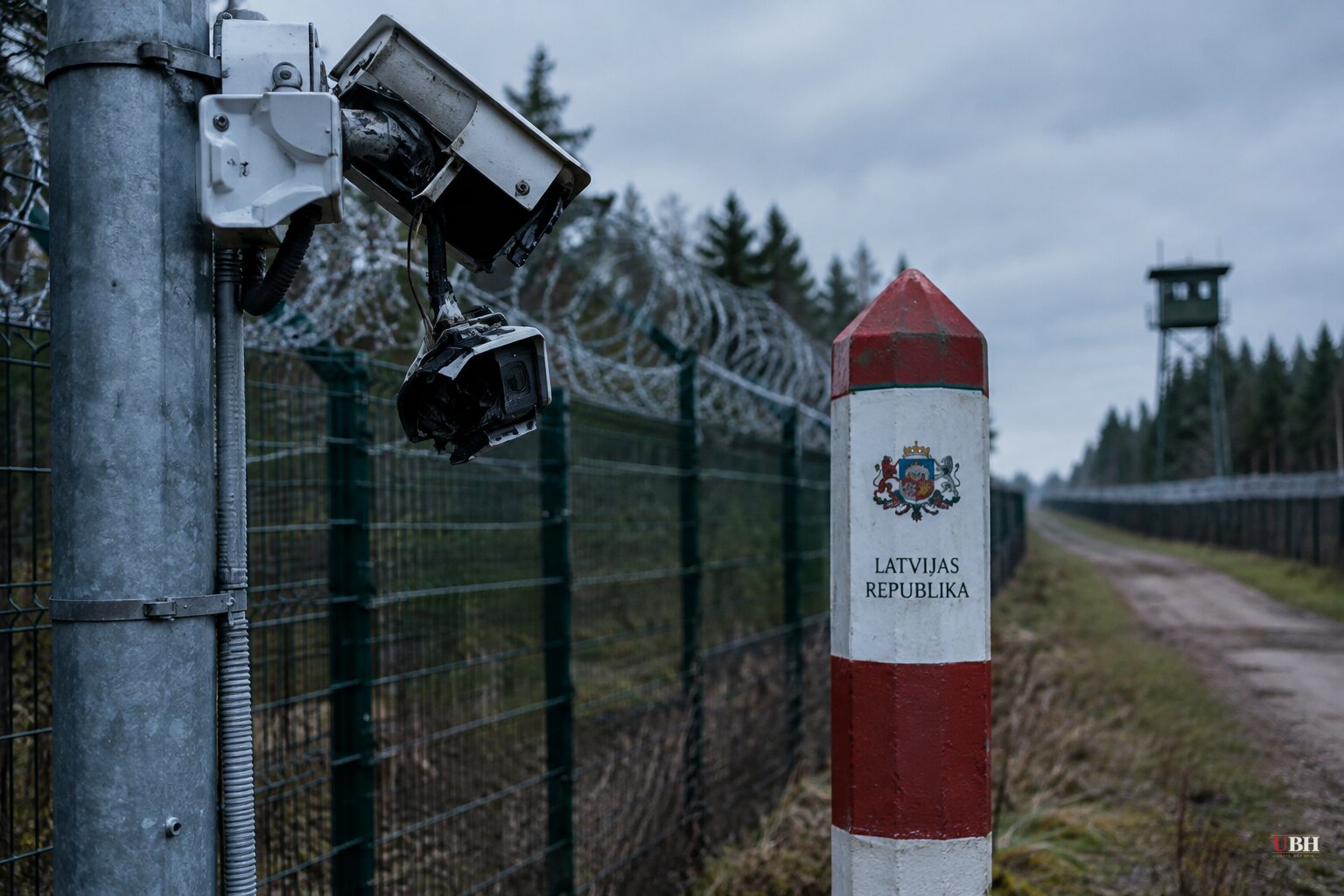
On the night of Oct. 5-6, masked intruders crossed from Belarus into Latvia, disabled an electrical distribution cabinet, stole surveillance cameras and went back across before a Latvian border patrol arrived. Interior Minister Jānis Dombrava described it on X as a targeted attack on border infrastructure.
Hours earlier, armed individuals on the Belarusian side had openly threatened personnel of the Latvian National Armed Forces. They were driving a group of more than 20 illegal migrants toward the border at the time. "Unlike many previous cases, this time the provocation was particularly blatant and aggressive," Dombrava said.
A group claims it
Latvian Public Service Media reported that a group calling itself Black Rus later posted a video on its Telegram channel. In it, a masked man with a distorted voice, identifying himself as "Neman," confirmed the group's role. He said three of its activists took part and warned that similar operations would continue in countries bordering Belarus.
On Oct. 9, the Latvian State Security Service opened criminal proceedings over Black Rus's intentions to commit "serious crimes" against Latvia and Ukraine. The service has declined further comment, citing the investigation.
Jānis Sārts, director of the NATO Strategic Communications Centre of Excellence in Riga, said the border situation is directly linked to Belarusian and Russian authorities. He called it an information operation meant to "influence emotions in people who are concerned about this situation." That is Sārts's assessment. No charges against named individuals have been announced, and the Latvian government has not publicly said who directs Black Rus.
The migration pressure behind it
Latvia shares roughly 276 kilometers (171 miles) of border with Russia and about 161 kilometers (100 miles) with Belarus. Airis Rikveilis, state secretary at the Latvian Ministry of Defense, said at the AUSA conference in Washington that there have been nearly 12,000 illegal attempts to enter Latvian territory. In a small number of cases, he said, the people involved meant to cross through underground tunnels.
Rikveilis put weight on who is coming. "What concerns us is the profile of that intruder... which is mostly young males in the conscription age," he said, adding that in his analysis it has "nothing to do" with a need to seek refuge.
He drew a line between two kinds of threat. A large-scale assault like Russia's 2022 invasion of Ukraine is highly unlikely, he said, because Russia currently lacks the credible forces for it. "What is possible and we think [is] that certainly the Russians would be tempted to test the readiness [of countries] on a smaller-scale," he said.
Moscow has dismissed suggestions that it poses a threat to Europe.
An election under watch
The border incident came against a political backdrop. A May crisis over the handling of stray drones suspected to be Ukrainian brought down Latvia's governing coalition. The Saeima then approved a four-party coalition led by Andris Kulbergs of the centrist United List, previously an opposition party. Kulbergs, 47, went into the parliamentary election seeking his own mandate and said a strong economy is the base for strong defense. He is still identified as prime minister as of Oct. 16.
NATO reinforced Latvian airspace for the election period, with Germany sending four Eurofighter jets for about a week. The State Security Service said the week before the vote that it had not detected significant or systematic Russian or other efforts to influence the election in favor of any party or candidate.
Europe's wider warnings
Latvia is not alone in sounding alarms. Polish Prime Minister Donald Tusk this month cited intelligence assessments suggesting Russia is planning drone and missile strikes on countries that support Ukraine, including Poland and Romania. Germany's Federal Intelligence Service said there is an increased risk of hybrid attacks by Moscow. Belgian Defense Minister Theo Francken said the continent faces a "dark winter" and wants drone defense made a top priority. Denmark's intelligence service has warned of a growing risk of a limited military attack on a NATO country in the coming months.
Romanian Foreign Minister Oana Toiu told NPR that drone incursions into Romanian airspace have become "quite frequent," with more than 100 instances of drones or fragments found or reported, many along the Danube. Polish Foreign Minister Radek Sikorski said: "We've been fighting the Russians since before the United States existed, and if they attack us, we're not going to give up."
Political analyst Kirill Rogov argued on Facebook that Europe is "virtually defenceless" against missile and drone attacks right now, which gives the Kremlin an incentive to use a temporary "window of opportunity" to test Europe.
Latvia's economic counter-move
On Oct. 16, Kulbergs proposed that Europe block the transit of Russian grain through Baltic Sea ports. The idea, as Bloomberg reported his statement, is to pressure Moscow into restoring commercial shipping in the Black Sea, where Russia and Ukraine have been striking each other's ports, terminals and shipping infrastructure. The proposal needs EU backing, and no EU decision has been announced.
It is unclear what comes next on the border. Black Rus has promised more operations, and the State Security Service investigation is still running with no public findings on who organized or funded the group.
Sources used for this briefing
7 links from 7 independent newsrooms (syndicated copies of the same report count once)
These are the sources it draws on, linked so you can verify.


