
Unbiased headlines. Facts, not spin.
Unbiased Headlines is an independently owned news organization. We bring you the facts, not opinions, written fresh from 110+ named sources. Sources linked so you can verify it yourself.
 defense
Major Story (8/10)
Event date: October 13, 2026 ·
defense
Major Story (8/10)
Event date: October 13, 2026 ·
Delta Delays Riyadh Route to March as Houthi Strikes Continue; WSJ Reports Iran Supplied Targeting Help
Since the Oct. 10 missile strike on Riyadh's King Khalid International Airport killed at least 12 people and injured more than 300, the Houthi campaign against Saudi Arabia has kept going, and the commercial fallout is now concrete.
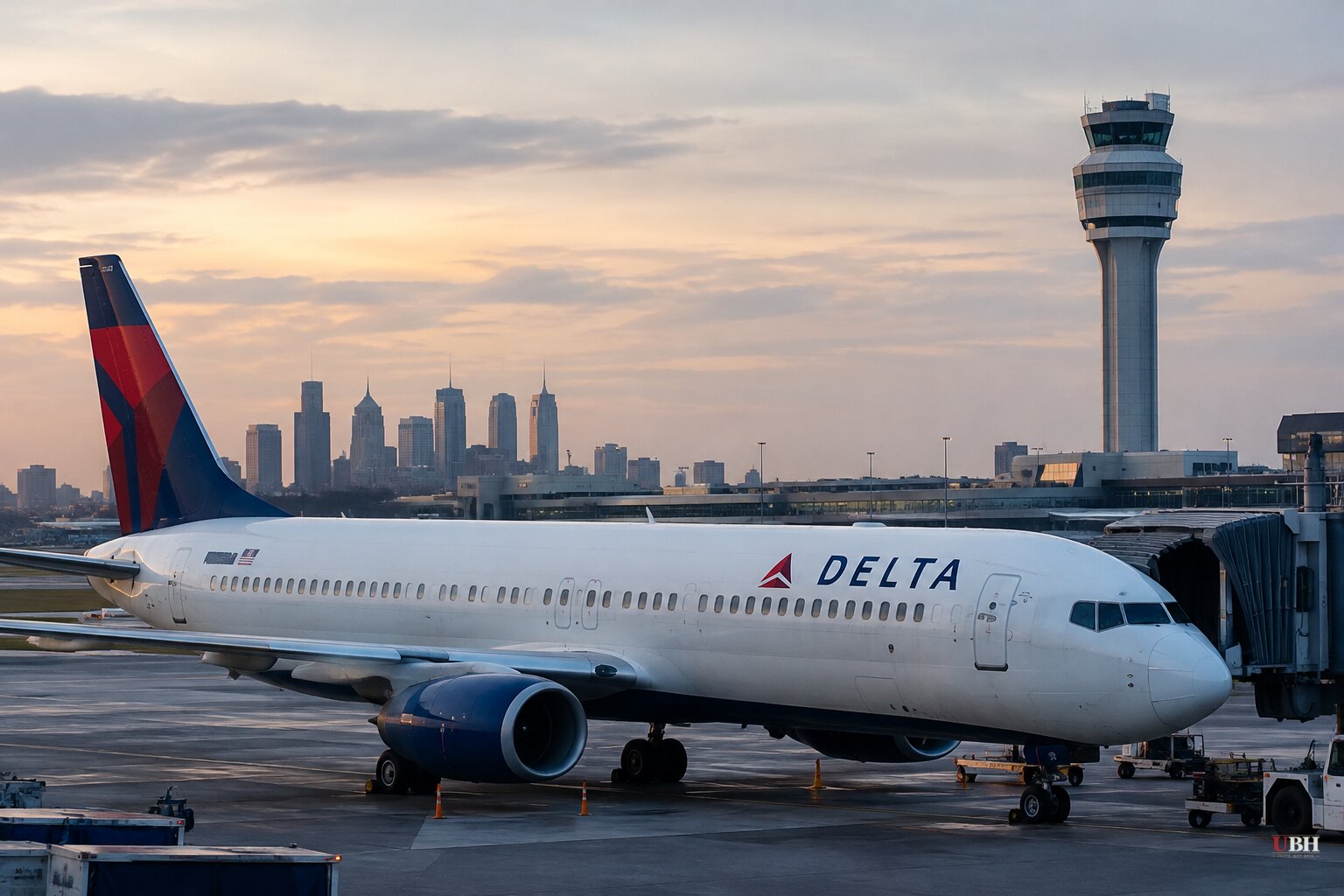
Delta Air Lines on Monday postponed its new Atlanta-to-Riyadh route, which was due to launch Oct. 23, until March 2027. The Federal Aviation Administration had warned U.S. carriers late Sunday of safety-of-flight risks during overflights, takeoffs and landings in Saudi Arabia.
"Saudi Arabia remains an important market for Delta, and we are committed to serving the Kingdom for the long term," the airline said. Delta has issued a waiver for customers traveling to, from or through Riyadh between Oct. 23 and March 26.
Riyadh airport still disrupted
The Oct. 10 strike hit a passenger terminal. Aviation authorities said at least 12 people died, including one American. Later tallies put the dead at 13. A second strike the next day killed one more person and injured about a dozen.
The attacks did not stop there. Saudi Arabia's General Authority of Civil Aviation said three Saudi nationals were killed and several others injured in two attacks on King Khalid on Thursday, Oct. 15. That came after Tuesday and Wednesday strikes on King Khalid and Abha International Airport, near the Yemen border, which left three dead and 36 wounded, according to CNN's account.
Saudi authorities said they intercepted and destroyed two ballistic missiles fired toward Riyadh on Thursday. Falling debris damaged a kindergarten and a medical clinic.
The airport has been shut for much of the week and hundreds of flights have been cancelled or delayed. A reopening is expected Sunday, Oct. 18, but that has not been confirmed. Several carriers suspended operations citing safety concerns, and CEOs of major oil companies pulled out of an energy conference in the kingdom.
Houthis promise a long war
The Houthis say they struck two civilian airports, Riyadh and Najran, along with the Royal Saudi Air Force's King Khalid Air Base, using cruise and ballistic missiles. In a televised speech Thursday, leader Abdul Malik al-Houthi told Riyadh to stop its military campaign in Yemen.
"The Yemeni people today possess all the determination and elements of strength, regardless of how long the war lasts," he said.
Saudi Arabia backs Yemen's internationally recognized government in a civil war that began in 2014. The Saudi-led coalition also said it intercepted several missiles and drones launched at its territory, including a ballistic missile aimed at Yanbu and cruise missiles over the Red Sea. A separate Houthi strike hit the airport in Aden, the interim capital. No casualties were immediately reported, and the Houthis have not claimed that attack.
Iran's reported role
The Wall Street Journal reports that Iran has given the Houthis intelligence to identify targets, training on advanced weapons, tactical guidance and help building drones and missiles locally. The Journal's reporting is the basis for these claims. Iran's Revolutionary Guard Corps and Lebanon's Hezbollah have also helped the Houthis build missile expertise, according to experts cited by Reuters.
Adam Baron, a Yemen expert at New America, told the Journal that support from Iran and its allies "undeniably paved the way for the rapid-fire gains they've made over the past few months."
Andreas Krieg of King's College London said Tehran "has helped create an indigenous military-industrial learning process that becomes progressively harder to dismantle, even if direct Iranian supply routes are disrupted."
Danny Citrinowicz, a former head of the Iran branch of Israeli military intelligence, called the relationship "very, very strong." He said Iran gains because the attacks hurt Saudi Arabia and push up oil prices.
The aviation problem
Mark Zee, founder of the aviation safety group OpsGroup, called it "a new paradigm. Civil aviation is being directly targeted and it has not been the case in the last couple of decades." CNBC reported the Riyadh attacks were the deadliest on a Saudi airport in more than a decade.
Defense is the hard part. Jeff Price of Metropolitan State University of Denver said airport security has historically focused on preventing unauthorized access, not defending airspace. Gulnaz Ukassova of International SOS said there is a costly but established way to handle missiles. "There is still no sort of foolproof way to deal with the threat posed by drones," she said.
Osprey Flight Solutions, an aviation-risk firm, said unannounced missile launches through civilian airspace pose a "latent hazard to flight operations at all altitudes." It said more attacks on Saudi aviation and energy infrastructure are likely in the short term.
Travel warnings tighten
The U.S. State Department lists Saudi Arabia at Level 3, "Reconsider travel," citing missile and drone attacks, armed conflict and terrorism. The U.S. Mission in Saudi Arabia says government employees need special authorization to use the Riyadh airport and remain barred from traveling within 20 miles of the Yemen border.
The UK Foreign Office warns of a heightened threat to airports in Riyadh, Jeddah and Abha. Australia's Smartraveller service now advises against travel to King Khalid itself.
Many flights still cross eastern Saudi airspace on routes to Qatar, Dubai and onward to East Asia. It is unclear whether the Riyadh reopening planned for Sunday, Oct. 18, will hold. Osprey expects further strikes.
Sources used for this briefing
8 links from 7 independent newsrooms (syndicated copies of the same report count once)
These are the sources it draws on, linked so you can verify.


