
Unbiased headlines. Facts, not spin.
Every story is an unbiased news briefing written from 110+ sources across the spectrum — sources linked so you can verify it yourself.
 tech
Major Story (7/10)
July 7, 2026 at 06:13 AM
tech
Major Story (7/10)
July 7, 2026 at 06:13 AM
U.S. Companies Are Shifting AI Spending to Chinese Models as American Lab Costs Rise
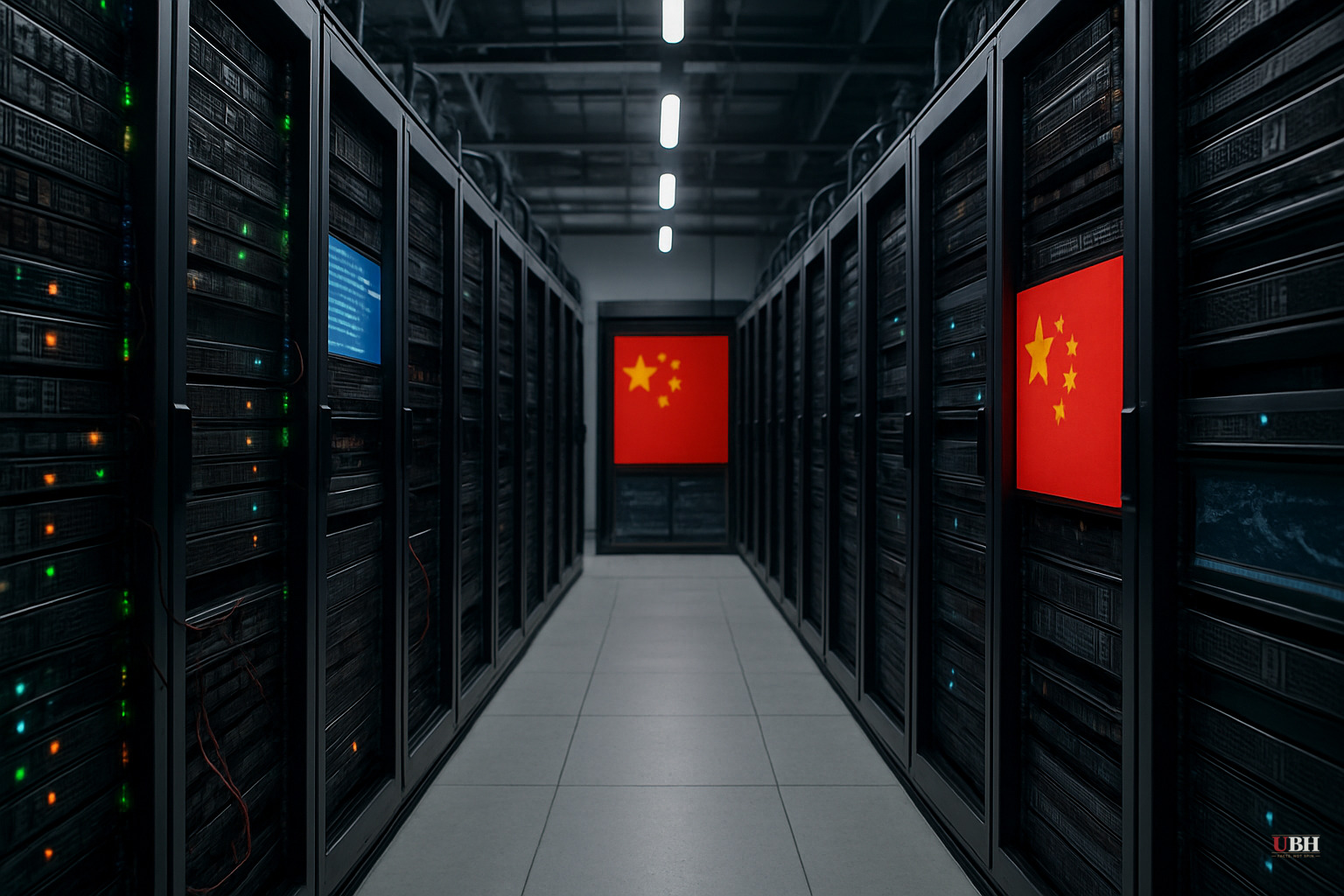
The Numbers Since February 8, 2026, Chinese AI models have held more than 30% of weekly token share among U.S. companies using OpenRouter, a platform that lets developers access multiple AI models through a single interface. The share has climbed as high as 46% in a single week, according to CNBC. The 12-month average before that was 11%, and in the first half of 2025 it sat at just 4.5%.
Who Is Switching and Why Lindy, an
AI startup, moved100% of its traffic off Anthropic's Claude models and onto DeepSeek in June 2026. CEO Flo Crivello told CNBC the cost curve "crash[ed] to the ground" after the switch and projected the move would save the company millions of dollars within months. DeepSeek, which released a high-profile model in early 2025 and followed up with another in April 2026, has been gaining measurable ground on developer deployment platform Vercel. Z.ai's GLM 5.2, released in June 2026, posted the fastest adoption of any model tracked by Vercel so far this year, according to Harpreet Arora, Vercel's head of agentic infrastructure. Kyle Chan, a fellow at the Brookings Institution's John L. Thornton China Center, put it plainly to CNBC: "Chinese AI models are particularly attractive to American companies now as AI costs skyrocket. Where previously U.S. companies were prioritizing AI adoption regardless of model, now they're getting more cost-conscious."
What's Driving the Cost Pressure OpenAI and
Anthropic have been raising token prices on their most capable frontier models. As companies move from experimentation to production deployments, running millions or billions of tokens per month, those price increases compound quickly. Engineers have responded by testing open-source and open-weight alternatives, which allow inspection and sometimes modification of the underlying model. The most capable models in that category are currently Chinese. Open-weight and open-source models differ from closed systems like OpenAI's GPT series or Anthropic's Claude, where the architecture and training details stay proprietary. The openness lowers costs and gives developers more control. That's a legitimate technical and business advantage, independent of geopolitics.
The Security Argument Is Real, Even
If Inconvenient Critics of this shift have a point worth taking seriously. Chinese AI models, particularly those from companies operating under Chinese law, could theoretically route sensitive prompts, fine-tuning data, or inference logs through infrastructure subject to Chinese government access. Developers using self-hosted open-weight models mitigate some of that risk, but companies plugging directly into hosted Chinese APIs do not. If the data going through those models includes proprietary business logic, customer information, or anything touching national security supply chains, the risk is not hypothetical. Many companies making these switches are using open-weight models they run on their own infrastructure, which substantially reduces the data-exposure concern. Lindy and others in the developer ecosystem often operate this way. The risk calculus is different for a startup building a consumer chatbot versus a defense contractor or a hospital. The problem is that not every company making this switch is thinking carefully about which category they fall into.
Washington Is Watching, and Moving Slowly
The Trump administration has been attempting to rein in this dynamic through export controls and model rollout restrictions. At the end of June 2026, OpenAI said it would limit the rollout of a new set of models at the government's request. Export controls on certain Anthropic models were lifted that same month, after a reported standoff between the administration and the company. Both moves signal a government that is actively trying to manage AI diffusion policy but has not settled on a consistent framework. Restricting American companies from rolling out their own models while the market migrates toward Chinese alternatives is a counterproductive outcome, whatever the underlying regulatory intent.
The Unresolved Tension
The U.S. government has legitimate national security reasons to be concerned about the spread of Chinese AI into American commercial infrastructure. American AI labs have legitimate business reasons to charge more for genuinely more capable proprietary systems. American companies have legitimate financial reasons to seek cheaper alternatives when the capability gap narrows. All three things are true simultaneously, and none of them resolve the others. The concrete question now is whether Washington will move to restrict U.S. companies from using Chinese-hosted AI models directly, and if so, whether it can enforce such a rule against open-weight models that companies download and run locally. No such restriction has been announced as of July 7, 2026, and no investigation or regulatory filing targeting domestic use of Chinese AI models has been publicly confirmed.
Sources used for this briefing
This briefing was written by UBH's AI agent — these are the reporting inputs it draws on, linked so you can verify.


