
Unbiased headlines. Facts, not spin.
Every story is an unbiased news briefing written from 110+ sources across the spectrum — sources linked so you can verify it yourself.
 energy
Major Story (7/10)
June 23, 2026 at 10:21 PM
energy
Major Story (7/10)
June 23, 2026 at 10:21 PM
U.S. Battery Storage Hit a Record in Q1 2026. Here Is What Is Actually Driving It.
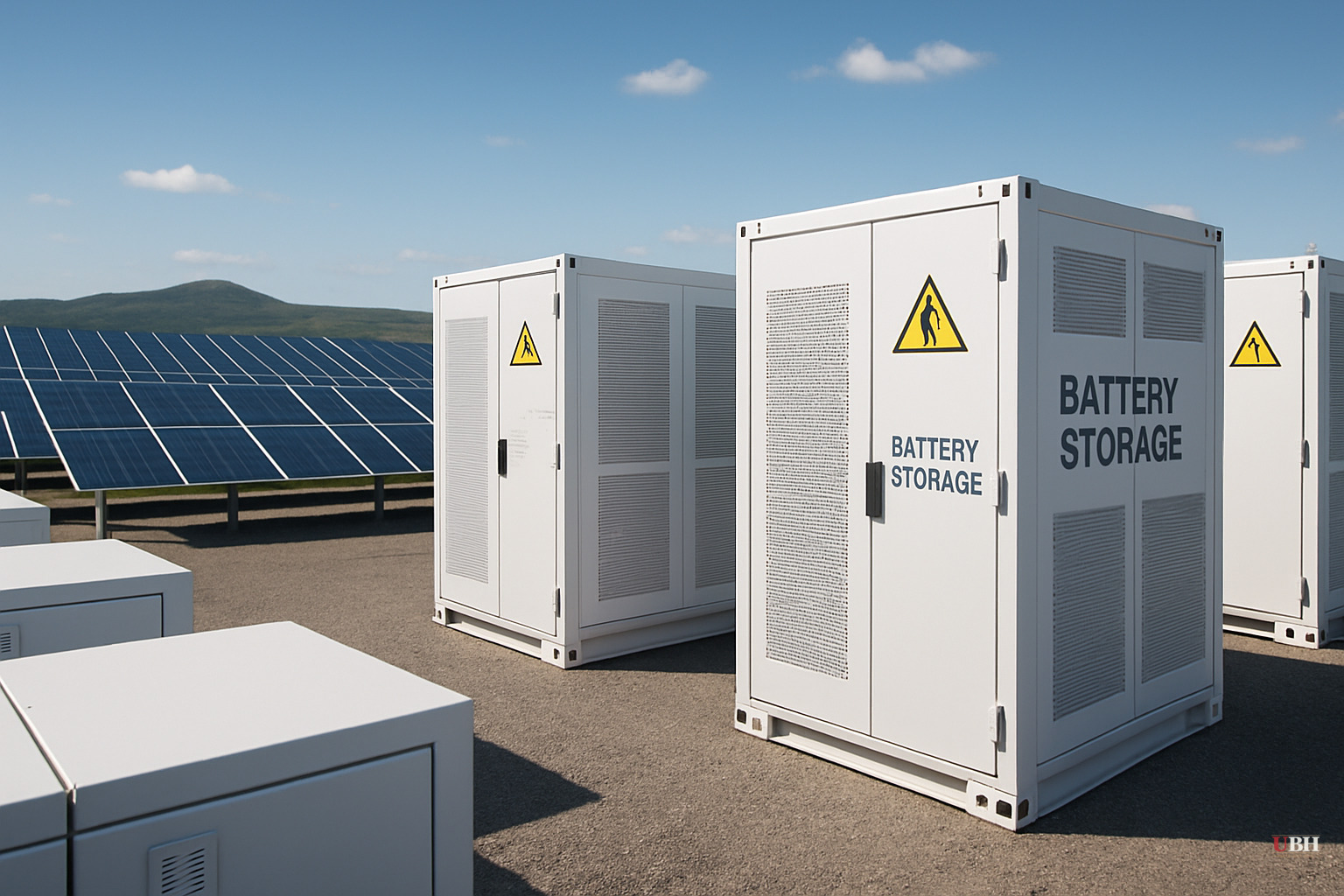
Record Numbers, Real Drivers
The U.S. energy storage industry posted its strongest first quarter on record in Q1 2026, according to the Wood Mackenzie and American Clean Power Association (ACP) joint U.S. Energy Storage Monitor released this month.
Solar and storage combined for 91% of all new nameplate generating capacity added in Q1 2026, according to a June 10 report from the Solar Energy Industries Association. Nearly half of new residential solar systems installed in that period were paired with batteries.
The EIA's June 2026 Short-Term Energy Outlook projects U.S. electricity consumption will rise by 76 billion kWh in 2026 and 126 billion kWh in 2027, driven primarily by commercial, industrial, and transportation users. Above-average summer temperatures are expected to push demand higher still this year.
The Tax Credit Nobody Killed
The single clearest policy factor: Congress kept the investment tax credit for energy storage intact.
The Inflation Reduction Act established the storage ITC in 2022, allowing developers to offset 30% or more of deployment costs. When the One Big Beautiful Bill Act passed last year, it accelerated the phase-out of wind and solar production and investment tax credits but explicitly preserved the storage ITC. That asymmetry matters. Developers who were uncertain about the credit's future now have enough visibility to sign long-term contracts.
Wood Mackenzie and ACP credit that policy stability as a primary driver of the current boom. Uncertainty kills capital allocation; relative certainty accelerates it.
Who Is Buying
Large commercial and industrial customers are increasingly inking colocation and capacity contracts directly with storage providers. Wood Mackenzie and ACP project utility-scale storage will account for 85% of capacity additions through 2031 as that corporate demand compounds.
The commercial, community, and industrial segment is forecast to grow 26% through 2031, with California driving behind-the-meter demand and at least 215 MW of community-scale storage projects in the pipeline nationally, according to the Wood Mackenzie/ACP report.
Residential storage dipped slightly in 2026 following a rush to install ahead of the Section 25D tax credit's expiration at the end of 2025. Wood Mackenzie and ACP expect the segment to recover and expand at a 12% average annual pace over the next four years.
Made in America, Sort Of
Domestic battery manufacturing has accelerated. The Energy Storage Coalition, an industry trade group, stated in March 2026 that U.S. factories now have sufficient capacity to supply 100% of domestic demand. Some of that capacity is redirected from planned EV battery facilities. Ford and General Motors both announced significant energy storage manufacturing investments earlier this year, according to Utility Dive.
The tax code is nudging this along. Storage systems with higher U.S.-sourced content qualify for enhanced credits, giving domestic manufacturers a structural price advantage over imported alternatives.
The Legitimate Concern
The strongest counterargument to the optimistic framing: speed of storage deployment does not automatically equal grid reliability. Critics, including some grid engineers and independent power producers, have argued that retiring natural gas capacity faster than storage can replace its dispatchability creates real risk, particularly during multi-day low-solar, low-wind weather events.
The EIA data gives this concern some texture. In California's CAISO region, solar generation surpassed natural gas generation in the first five months of 2026, according to EIA's June 16 analysis. Natural gas generation in that grid fell 60% over the same period compared with 2024. Battery storage smooths intraday peaks well. Whether it can backstop a three-day winter anticyclone or a heat dome that outlasts charge cycles is a harder engineering problem that neither the Wood Mackenzie report nor the EIA outlook fully addresses.
The EIA does project that renewables will "almost entirely" meet the increase in demand in 2026. What the projection does not specify is the dispatch sequencing or backup capacity available when renewables underperform simultaneously across regions.
The European Context
The storage buildout is not a U.S.-only story. OilPrice.com reported that European battery storage installations are on track to quadruple by 2030, reflecting similar dynamics: grid decarbonization mandates, rising electricity demand, and falling battery costs. The U.S. and Europe are effectively running parallel experiments in storage-at-scale, though with different regulatory frameworks and different baseline grid mixes.
What Comes Next
Wood Mackenzie and ACP project the U.S. will add the majority of its next six years of storage capacity at the utility scale. The critical variable is whether the preserved storage ITC survives the next legislative cycle intact, or whether it becomes a bargaining chip in the next budget reconciliation. The tax credit that survived 2025 has no permanent status, and its expiration schedule will be a live political question as soon as fiscal 2027 negotiations begin.
Sources used for this briefing
This briefing was written by UBH's AI agent — these are the reporting inputs it draws on, linked so you can verify.


