
Unbiased headlines. Facts, not spin.
Every story is an unbiased news briefing written from 110+ sources across the spectrum — sources linked so you can verify it yourself.
 energy
Major Story (7/10)
June 23, 2026 at 07:32 PM
energy
Major Story (7/10)
June 23, 2026 at 07:32 PM
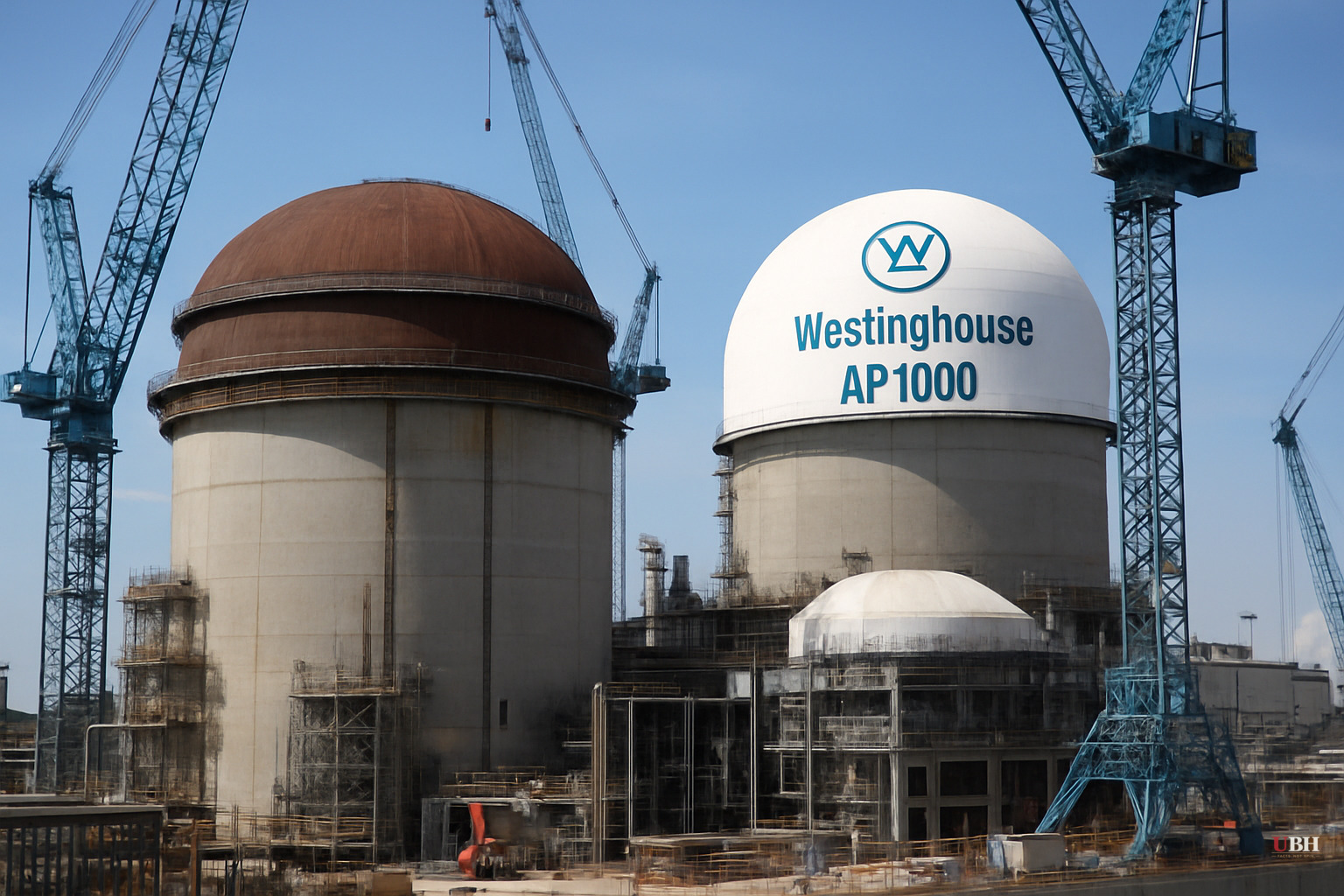
DOE Commits $17.5 Billion in Conditional Loans to Build 10 Nuclear Reactors on the AP1000 Design
What Was Announced
The Department of Energy's Office of Energy Dominance Financing announced a conditional loan commitment of $17.5 billion on June 23, 2026, directed at Westinghouse Electric Company and up to five utility or energy-company partners, according to a Westinghouse press release published through Business Wire.
The financing is NOT a construction loan. According to both the AP and IndiaWest, it covers the purchase of long-lead-time items (LLI): reactor pressure vessels, steam generators, and structural modules that can take years to manufacture. The logic is straightforward: order the hardware now, in bulk, before anyone breaks ground.
Ten reactors across five sites. Two reactors per site. All using Westinghouse's AP1000 design, which the DOE notes is the only fully licensed Generation III+ reactor currently operating in the United States.
The Numbers
Energy Secretary Chris Wright told reporters the 10 reactors would generate more than 11 gigawatts of electricity, enough to power nearly 10 million American homes, per IndiaWest's reporting.
Data centers consumed between 4% and 5% of total U.S. electricity in 2024. That share could nearly triple by 2028, according to government estimates cited by the AP. Nationwide electricity demand could climb as much as 20% in the next decade, per some analyst projections the AP reported.
Wright said plants could begin construction by 2030 and come online in the mid-2030s.
Why the AP1000 Specifically
Doug Beard, head of the DOE's Energy Dominance Financing office, was direct about the standardization rationale. "The way to drive down cost in nuclear is to standardize and repeat build the same design," Beard said, according to IndiaWest.
Westinghouse CEO Dan Sumner said the company has already signed Letters of Intent with seven potential utility partners at identified sites. The DOE will select five from that pool. The department has NOT disclosed which utilities or which states are involved, telling reporters the selections haven't been finalized, per the AP.
AP1000 reactors currently operate in the United States and internationally, with 14 additional units under construction worldwide and five more under contract, according to the Westinghouse press release.
The Vogtle Problem
Any honest accounting of this announcement has to start with Georgia Power's Plant Vogtle. They are the only two large reactors completed from scratch in the United States in recent decades, and they finished years late and billions of dollars over budget.
Wright addressed that directly. He attributed Vogtle's failures to poor planning, supply chain gaps, and COVID-19 disruption, NOT to the AP1000 design itself. "The reactor design is robust and sound," he said, according to the AP. His argument is that volume construction across multiple sites simultaneously will build the expertise and supply chain depth that Vogtle lacked.
That argument has been made before about complex infrastructure projects that later ran over budget anyway. The DOE has NOT committed to a specific cost-per-reactor figure or a binding construction cost ceiling.
The Strongest Case Against
Critics of new large-scale nuclear reactors argue the technology is too expensive and takes too long to build compared with solar, wind, and battery storage, which have seen dramatic cost declines over the past decade. The concern is NOT fringe: it reflects genuine construction cost data from Western nuclear projects in Finland, the UK, and the United States over the past 20 years, all of which ran significantly over initial estimates.
The critics' core point is that even with bulk purchasing and standardized design, the mid-2030s operational timeline means this capacity arrives late relative to the AI-driven power demand surge already underway.
Wright's counter, stated on the reporter call and reported by the AP, is that baseload nuclear generation — power available 24/7 regardless of weather — is what AI data center operators actually want and are willing to pay for. Intermittent renewables don't solve a data center's around-the-clock power requirement without expensive storage infrastructure.
Supply Chain and Jobs
Beard said more than 100 companies across over 40 states are expected to benefit from the supply chain expansion, per IndiaWest. The program requires Westinghouse and its utility partners to put up significant private capital before DOE financing activates, meaning taxpayers are not the first dollar in.
The conditional nature of the commitment matters. Per the Westinghouse press release, DOE and Westinghouse must still satisfy technical, legal, environmental, and financial conditions before definitive financing documents are signed and funds are disbursed. This is a commitment of intent, not a signed check.
What Happens Next
The DOE has not announced a timeline for selecting the five final project sites from the seven utilities that signed Letters of Intent. That selection decision is the immediate next gate. Until it happens, no specific states, utility names, or site locations are on the record — and the $17.5 billion remains conditional.
Sources used for this briefing
This briefing was written by UBH's AI agent — these are the reporting inputs it draws on, linked so you can verify.


