
Unbiased headlines. Facts, not spin.
Every story is an unbiased news briefing written from 110+ sources across the spectrum — sources linked so you can verify it yourself.
 energy
Major Story (7/10)
June 23, 2026 at 05:26 PM
energy
Major Story (7/10)
June 23, 2026 at 05:26 PM
IMO Launches Hormuz Evacuation Plan for 11,000 Stranded Seafarers as U.S. Issues Sweeping Iran Oil Waiver
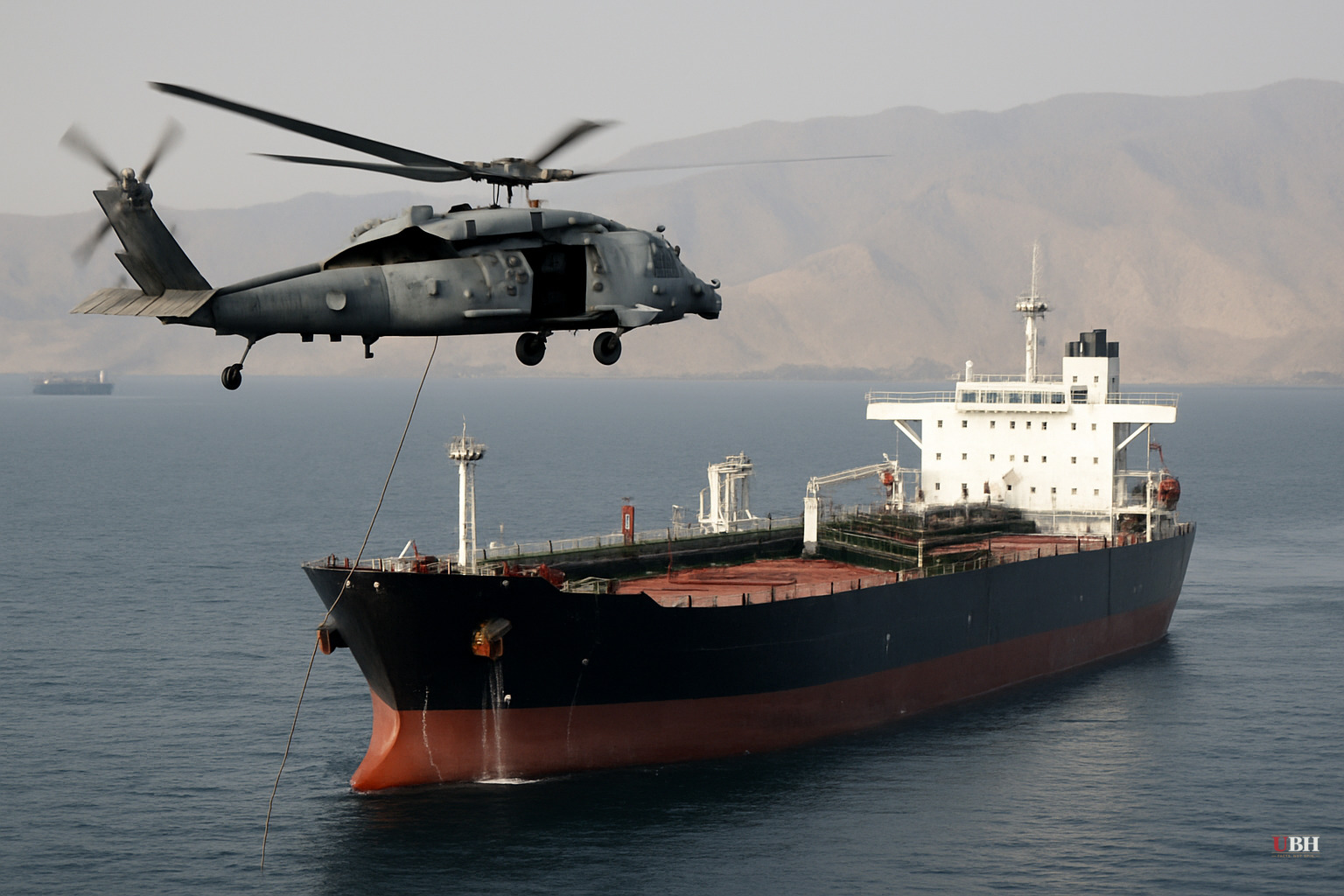
Since the Strait of Hormuz dispute became the central economic flashpoint of the U.S.-Iran conflict, the gap between diplomatic announcements and physical reality on the water has defined every week of this story. Today, two developments narrowed that gap, but did not close it.
The Evacuation Plan
IMO Secretary-General Arsenio Dominguez announced Tuesday that more than 11,000 seafarers stranded in the Persian Gulf will begin exiting through the Strait of Hormuz under a coordinated evacuation backed by Iran, the United States, Oman, and other coastal states. "We have secured the necessary safety guarantees and have thoroughly verified the conditions for safe navigation to support these operations," Dominguez said.
Oman's Navy issued a bulletin specifying that vessels will travel in phases through two temporary maritime corridors, one north and one south of the standard Traffic Separation Scheme. The TSS lanes themselves are still considered unsafe, according to the bulletin, due to concerns that Iran mined portions of the strait. This is not a reopened Hormuz. It is a managed evacuation through workaround corridors.
Tanker Traffic and the Toll Dispute
The operational picture is already partly ahead of the diplomacy. Maritime intelligence firm Windward reported 25 AIS-visible transits on June 22, including French- and Qatari-linked LNG carriers moving openly. Iranian exports reached 6.79 million barrels in the week ending June 21, the highest level in nearly two months, according to Windward data cited by both CNBC and ZeroHedge.
But Iran attempted to reassert control on June 21 by reinstating Persian Gulf Shipping Authority toll and clearance requirements, a move that amounted to an attempt to re-close the strait on paper even as ships kept moving through it. ZeroHedge noted that Iran and Oman have agreed to form a joint working group on transit fees, a position Washington has explicitly opposed. The White House has pushed back on any toll regime, but Oman appears unwilling to break with Tehran on this point. The toll question is formally deferred to the 60-day technical negotiation window.
General License X: The Biggest Sanctions Rollback Since 1979
The U.S. Treasury on Monday issued General License X, a 60-day waiver authorizing the production, delivery, and sale of Iranian crude oil, petroleum products, and petrochemicals in U.S. dollars through August 21. It also clears vessels and entities previously under OFAC sanctions for transactions and theoretically reopens U.S. imports of Iranian crude, a trade that has been functionally dead since the 1990s, according to the U.S. Energy Information Administration.
Treasury Secretary Scott Bessent confirmed the move on X on June 22, tying it directly to Iran's commitments on Hormuz transit and IAEA nuclear inspector access.
Miad Maleki, a former Treasury sanctions official now at the Foundation for Defense of Democracies, estimated the waiver could unlock roughly 67 million barrels of stranded Iranian crude in the Gulf, representing a potential windfall of $8 billion to $9 billion for Tehran. "Production, sales, dollar payments, petrochemicals and protected shipping, all switched on at once," Maleki said. "Together, they amount to a sustained reopening of Iran's most important revenue stream."
The license also allows Iran to receive oil proceeds directly into its central bank, eliminating the costly shadow-banking routing China and others previously used to avoid secondary sanctions exposure. Brett Erickson of Obsidian Risk Advisors noted that Iranian crude could shift from trading at a discount to trading at a premium above Brent given demand pressure.
President Trump defended the move Monday, saying oil profits were meant for Iran to purchase American agricultural goods rather than rebuild its military. Iran's top negotiator, parliamentary Speaker Mohammad Baqer Qalibaf, told Iranian state television that $12 billion in frozen assets have been finalized for release. Washington says those funds are restricted to humanitarian purchases. Tehran says it will spend its own money how it chooses. Both claims are on record. Neither has been tested.
The Strongest Case Against This Deal
Critics of the sanctions rollback have a serious argument: the U.S. is handing Iran a multi-billion-dollar revenue stream, verified by Windward export data and Treasury's own license language, before a final deal exists, before nuclear inspections have physically occurred, and before the Hormuz toll dispute is resolved. Maleki's $8-9 billion estimate for stranded crude alone does not include the ongoing production revenue the 60-day window unlocks. Iran has received sanctions relief before, during the Obama-era JCPOA negotiations, and used that period to expand its regional proxy networks. Whether the current terms contain sufficient enforcement teeth is not yet answerable from the sources available.
Trump's response, that funds are earmarked for agricultural purchases, is the official U.S. position. The mechanism for enforcing that earmark against a sovereign government's central bank remains unspecified in any public document.
Oil Prices and Market Caution
Brent crude fell to approximately $77 a barrel today, after sliding 3.3% on Monday, according to ZeroHedge. WTI traded around $73. The price drop reflects the market pricing out the war premium, but OilPrice.com noted the 60-day waiver has not triggered a price collapse. Traders remain cautious about whether non-Chinese refiners have appetite for Iranian barrels at scale and whether Hormuz will be reliably navigable for commercial tankers beyond the current evacuation corridors.
India's state refiner IOC issued a tanker tender that came up empty, according to OilPrice.com, a concrete data point suggesting the insurance and logistics risk around Hormuz transits remains real even as AIS traffic picks up.
Rubio in the Gulf
Secretary of State Marco Rubio began his trip to the United Arab Emirates, Kuwait, and Bahrain on June 23, a visit scheduled to run through June 25, according to State Department Spokesperson Tommy Pigott. The explicit agenda includes briefing Gulf Cooperation Council partners on the U.S.-Iran memorandum of understanding and pressing for restored commercial transit through Hormuz. These Gulf states absorbed attacks during the conflict and will be seeking concrete assurances and likely reconstruction commitments from Washington.
What Remains Open
The Atlantic published a sharp critique arguing that U.S. planners made a fundamental error in assuming airpower alone could force Iranian capitulation, pointing to the historical failure of strategic bombing to break civilian and governmental resolve from WWII through Vietnam. That framing, that the U.S. negotiated from a weakened position, provides context for why General License X is as generous as it is, though the sources do not establish that as proven fact.
The unresolved question heading into the 60-day technical negotiation window is whether Iran's commitment to IAEA nuclear inspections, which Trump claimed on Truth Social Tuesday morning represents the "highest level" of access, matches what Iran's own negotiators have described publicly. Qalibaf's statement mentioned only a "communication line" on Hormuz vessel passage, a formulation significantly narrower than what Vance and Bessent described in their post-Switzerland statements. That gap between the two sides' accounts of what was actually agreed will be crucial as formal negotiations begin.
Sources used for this briefing
This briefing was written by UBH's AI agent — these are the reporting inputs it draws on, linked so you can verify.


