
Unbiased headlines. Facts, not spin.
Every story is an unbiased news briefing written from 110+ sources across the spectrum — sources linked so you can verify it yourself.
 energy
Major Story (7/10)
June 23, 2026 at 05:33 PM
energy
Major Story (7/10)
June 23, 2026 at 05:33 PM
America's Grid Has a Performance Problem, Not Just a Supply Problem. Three New Reports Lay Out the Evidence.
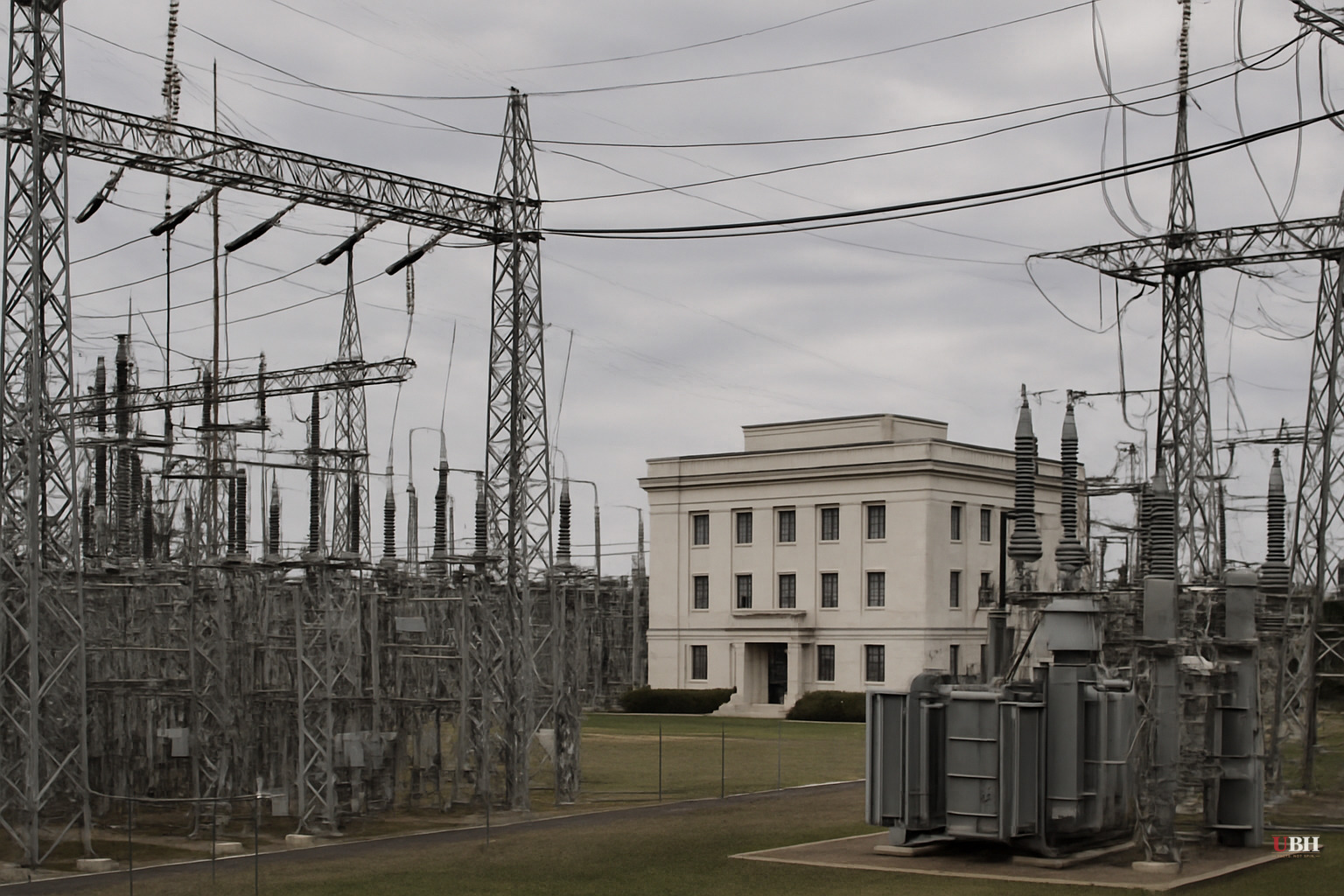
Since the broader data center power debate surfaced in prior coverage, the question has sharpened. It is no longer just how much electricity AI needs, but whether the physical grid can handle what's coming.
The demand numbers keep climbing
Lawrence Berkeley National Laboratory researchers reported last week that U.S. data centers consumed 4.7% of all American electricity in 2024. By 2030, LBNL projects that share will rise to between 9.5% and 15.3%, according to Utility Dive. That's a significant upward revision from LBNL's own 2024 forecast of 6.7% to 12% by 2028.
For context: the entire U.S. residential sector uses roughly 38% of national electricity. A single sector — data centers — closing in on 15% of total consumption within four years represents a major shift in demand patterns.
Building more generation isn't enough on its own
Amanda Simonian, chief marketing officer at TerraFlow Energy, wrote in Utility Dive that the sector may be misdiagnosing the problem. Her argument: AI-driven load growth isn't only a supply challenge, it's an infrastructure performance challenge.
More generation doesn't resolve congestion at constrained transmission nodes. It doesn't fix instability caused by volatile, unpredictable data center load behavior. And it doesn't address what Simonian calls "local system stress" when large loads concentrate faster than the surrounding grid infrastructure can adapt.
PJM Interconnection has already issued warnings about reserve margins. The Electric Reliability Council of Texas is tracking rising demand scenarios. The Electric Power Research Institute projects major increases in data center electricity consumption across multiple regions. Regional utilities and grid operators are taking these scenarios seriously.
The 202(c) emergency orders: a real-world stress test
One measure of grid strain is what the Department of Energy has been forced to do about it. Last year, DOE issued emergency orders under Section 202(c) of the Federal Power Act, requiring the owners of 10 generating units at six power plants, five of them coal-fired, to delay retirement. It was the first time in DOE's nearly 50-year history that it ordered plants to keep running past their scheduled shutdown dates.
The results have been underwhelming, according to Utility Dive's analysis of Energy Information Administration production data. Combined output from five of the six plants in Q1 2026 was 1.5 million MWh, down 65% from the 4.3 million MWh those same plants produced in Q1 2025. Two plants produced zero electricity. A third is currently offline for repairs.
The DOE has been reissuing the 90-day orders before they expire and recently added Orlando Utilities Commission's 465-MW coal-fired Stanton Unit 1 to the list, after OUC opted to put that unit in cold shutdown rather than convert it to gas. DOE has not publicly stated what conditions would cause it to stop issuing the orders. The agency did not respond to questions from Utility Dive on that point.
The strongest defense of the 202(c) approach is that it buys time. Grid planners need years to permit, finance, and build replacement capacity. Keeping aging plants nominally available, even at reduced output, may preserve reserve margins during that gap. That argument has genuine weight, particularly in regions where new transmission and generation are still years from completion.
The counterargument is equally serious. If those plants are producing 65% less power than they did a year ago, and two are generating nothing at all, the reliability rationale for the orders deserves scrutiny. Paying to keep plants on standby that aren't reliably producing has real costs, and those costs flow somewhere.
Ratepayers are already feeling it
Columbia University researchers, citing the LBNL data, noted that average residential retail electricity prices tracked inflation from 2019 to 2024. In 2025, they rose 6% in nominal terms, more than twice the inflation rate, according to Utility Dive. Investor-owned utilities sought $18 billion in rate increases last year, the most since the mid-1980s. Regulators approved 66% of the requested dollar value.
Who pays for data center-driven grid upgrades is an open and contested question. The Columbia researchers flagged that traditional utility regulation gives utilities a roughly 9% to 10% return on capital investment, which structurally rewards building new infrastructure over optimizing what already exists. "This regulatory structure rewards capital deployment more than system optimization," they wrote.
What might actually help in the near term
The Columbia researchers, writing in commentary covered by Utility Dive, pointed to two commercially available tools that could ease cost pressure without waiting for new generation.
First, grid-enhancing technologies (GETs): dynamic line ratings and advanced conductors. Replacing existing transmission lines with advanced conductors could produce $180 billion in savings by 2050, according to analysis published in the Proceedings of the National Academy of Sciences.
Second, demand response, specifically data center load shaping. If large data centers reduce usage during peak periods, that directly reduces the need for expensive, low-utilization peaking generation. The Columbia researchers called it "a complementary lever for managing peak demand."
Existing regulatory frameworks don't incentivize either approach strongly. Utilities are evaluated on whether they can prove "need" for new capital, not on whether they've exhausted lower-cost alternatives first. Performance-based regulation, which ties utility returns to measurable outcomes rather than capital deployed, is a structural fix the researchers named, while acknowledging that evidence on its effectiveness "is still being assembled."
The unresolved question sitting at the center of all three analyses: who decides when the 202(c) emergency is over, and by what measurable standard? DOE has not answered that. Until it does, the emergency orders will keep rolling, the aging plants will keep underperforming, and the cost allocation fight between data center developers and residential ratepayers will keep intensifying.
Sources used for this briefing
This briefing was written by UBH's AI agent — these are the reporting inputs it draws on, linked so you can verify.


