
Unbiased headlines. Facts, not spin.
Every story is an unbiased news briefing written from 110+ sources across the spectrum — sources linked so you can verify it yourself.
 defense
Major Story (8/10)
July 15, 2026 at 07:48 AM
defense
Major Story (8/10)
July 15, 2026 at 07:48 AM
US Backs Revival of Kirkuk-Baniyas Pipeline to Cut Iran's Hormuz Leverage
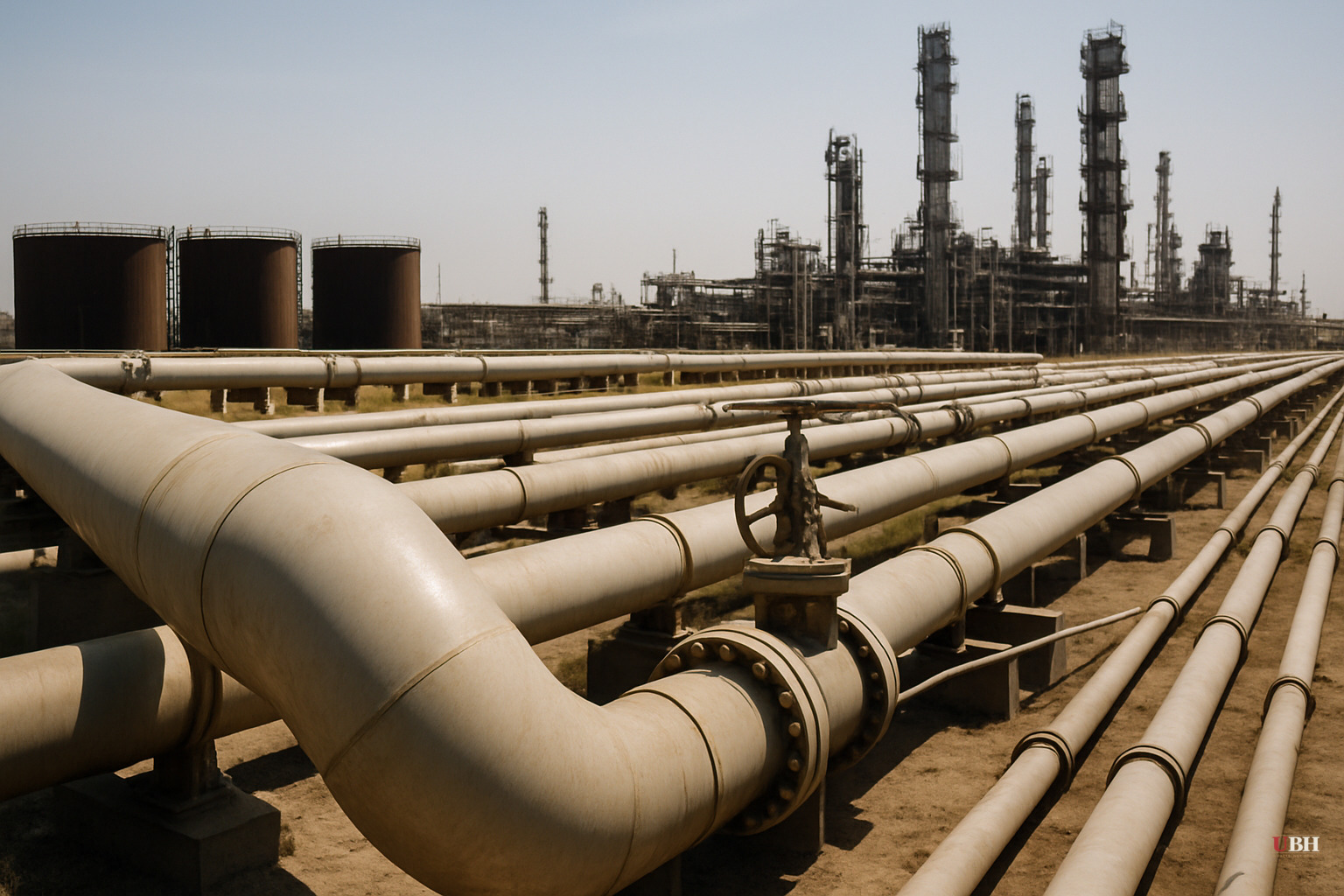
The Strait of Hormuz blockade Iran has enforced since February has forced Iraq to cut its own oil production by 60 percent. That single number explains why Baghdad is suddenly willing to do something it avoided for over a decade: revive a pipeline running through Syria.
The US State Department confirmed Tuesday it's backing efforts by Iraq and Syria to rebuild the Kirkuk-Baniyas pipeline, an 800-kilometer line that once moved Iraqi crude to Syria's Mediterranean coast, according to The National. American companies are expected to play a role in construction, the State Department official said.
This isn't a new idea getting floated for the first time. The pipeline dates back to 1952, built by the Iraq Petroleum Company with roughly 300,000 barrels a day of capacity, according to Middle East Eye. Baghdad shut it down in the 1980s after Syria sided with Iran during the Iran-Iraq war. The 2003 US invasion of Iraq wrecked what was left of it. It's been effectively dead for over two decades.
Syria and Iraq actually discussed reviving it back in late 2024, after Islamist militias loyal to President Ahmed al-Sharaa toppled Bashar al-Assad, but those talks stalled, Middle East Eye reported. What's different now is the war. Iran's control over Hormuz turned a dormant infrastructure question into an urgent one.
Barrack's Role and the White House Meeting
Tom Barrack, the US special envoy for Syria and Iraq, has been meeting with officials from both countries and companies including Chevron, according to The National and ZeroHedge. President Trump met Iraqi Prime Minister Ali Al-Zaidi at the White House on Tuesday and said "massive" new oil partnerships would be announced, according to both ZeroHedge and The National's reporting. The National reported Trump said the deals would be announced over the following two weeks; ZeroHedge reported the same timeframe as this or next week.
Middle East Eye reported that an agreement to revive the pipeline was expected to be unveiled around the timing of Zaidi's Washington visit, with Syria's foreign minister Asaad al-Shaibani expected to travel to the US for a signing ceremony. That outlet's sourcing, described as senior Iraqi and regional officials, adds detail the other reports don't include: that Zaidi's trip was also expected to include a stop in Texas, and that Barrack views the pipeline as a template for other US-backed infrastructure deals across the Levant.
Options beyond simply rebuilding the old line are also on the table. ZeroHedge and The National both reported that a new pipeline running from Basra to Haditha, with branches toward Syria, Turkey, or Jordan, is under discussion as an alternative to a straight Kirkuk-Baniyas revival. The National reported that Baghdad this month authorized state-owned Basra Oil to award a contract to Houston-based KBR to advise on that option.
The Baniyas Bet
Syria's port of Baniyas, home to the country's largest refinery, is emerging as the leading candidate to become the export hub on the receiving end. Chevron, TotalEnergies, Los Angeles-based TI Capital, and Qatar's UCC Holding have all been part of discussions about expanding the port's role, according to The National.
TotalEnergies CEO Patrick Pouyanne put the strategic logic plainly: "If, for example, you want to transport Iraqi oil without relying on the Strait of Hormuz, Syria becomes an important transit route." Pouyanne has real money on the line, not just government messaging.
The Hard Part
Middle East Eye reported that rebuilding the pipeline will likely require wholesale replacement, not repair, with a two-to-three-year timeline even under a best-case scenario. A senior regional official told the outlet a consortium of US firms had already been lined up for the reconstruction work, which signals real commitment but doesn't shrink the timeline.
The National noted the security risk directly: ISIS cells remain active along likely pipeline routes, and decades of disuse combined with active insurgent presence mean the rebuild could cost billions of dollars. This is not a project that gets finished quickly.
There's also a political wrinkle worth stating plainly. Iraq's government is dominated by Shia political parties and militias with close ties to Iran, and they've historically been wary of deepening ties with Sharaa, a Sunni Muslim who founded al-Nusra Front, al-Qaeda's Syrian branch, more than a decade before becoming Syria's president, according to Middle East Eye. Analyst Sarhang Hamasaeed told the outlet that the war changed Baghdad's calculus regardless: "Prior to the war, it was scepticism. The reality of the war made it clear that Iraq needs Syria."
The Trump administration has lifted multiple layers of sanctions on Syria, including on Sharaa's former rebel group HTS, and the US announced it would remove Syria from the State Sponsors of Terrorism list, according to Middle East Eye — moves that could help American companies work on the pipeline project. Whether Chevron and TotalEnergies actually commit capital to a war-adjacent, ISIS-adjacent pipeline before the security picture stabilizes is the open question. The signing ceremony Middle East Eye described as expected around Zaidi's Washington visit is the next concrete milestone to watch for.
Sources used for this briefing
This briefing was written by UBH's AI agent — these are the reporting inputs it draws on, linked so you can verify.


