
Unbiased headlines. Facts, not spin.
Every story is an unbiased news briefing written from 110+ sources across the spectrum — sources linked so you can verify it yourself.
 energy
Notable (6/10)
June 10, 2026 at 08:22 AM
energy
Notable (6/10)
June 10, 2026 at 08:22 AM
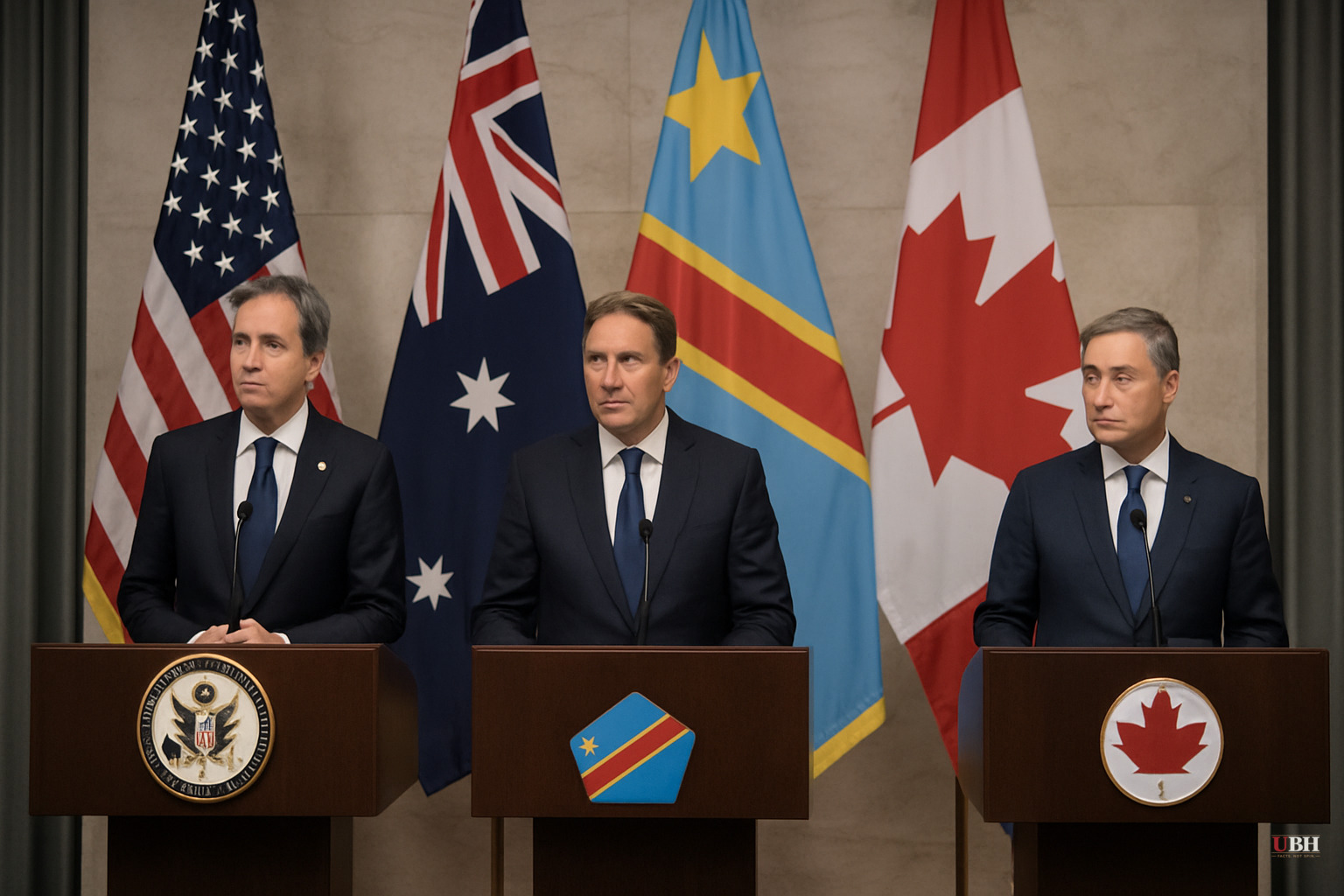
U.S., Australia, and Canada Move to Break China's Grip on Rare Earth Minerals as DRC Export Controls Reshape Battery Metals Market
The Supply Chain Problem Nobody Wants to Say Out Loud
America talks a big game about energy independence. Then it turns around and relies on China to process roughly 85% of the world's rare earth minerals — the stuff that goes into EV motors, missile guidance systems, wind turbines, and fighter jets.
Multiple moves are underway as of June 2026 to change that. Most coverage is either cheerleading or ignoring the hard part — processing.
What's Actually Happening
According to OilPrice.com, the United States has been adding significant new rare earth supply sources domestically. Separately, Australia and Canada have been ramping up rare earth production specifically to counter Chinese market dominance, according to industry reporting — though the full details of that report were unavailable as of publication due to source access issues.
Meanwhile, the Democratic Republic of Congo — which produces roughly 70% of the world's cobalt, a critical battery metal — has imposed export controls on key minerals, according to OilPrice.com. The DRC's move is already reshaping the battery metals market, with ripple effects hitting EV manufacturers and battery producers who had built supply chains around cheap Congolese output.
These three developments — new U.S. sources, allied production ramp-ups, and DRC supply disruption — are happening simultaneously. The market and governments are responding to a decade of strategic negligence.
The China Problem in Plain English
Finding rare earth deposits is not the hard part. The hard part is processing them.
China doesn't dominate rare earths because it has the most ore in the ground. It dominates because it built the processing infrastructure — the refineries, the separation facilities, the chemical plants — while the U.S. and its allies were offshoring manufacturing and congratulating themselves on cheap consumer goods.
You can dig up all the neodymium in Wyoming you want. If you can't process it domestically, it gets shipped to China anyway. Then China sells it back to us in finished form. At a markup. On their timeline.
The U.S. is still largely in that strategic trap, even as new domestic mining comes online.
What the DRC's Export Controls Actually Mean
The DRC imposing export controls on cobalt and other battery metals is a significant market event. It tightens global supply at a moment when demand for EV batteries and grid storage is growing.
For manufacturers, it means higher input costs. For consumers, it could mean pricier EVs and electronics. For geopolitics, it's a reminder that Africa's resource-rich nations are increasingly playing hardball — and that U.S. supply chain planners who assumed the DRC would always be an open spigot were wrong.
The DRC's government has every sovereign right to control its own mineral exports. Reasonable people can disagree about the economic wisdom of the policy. The effect is real: battery metal supply is getting tighter and more expensive.
The Strongest Counterargument
Critics of the current U.S. rare earth push — and this is a fair concern — argue that the rush to develop domestic mining and processing is expensive, environmentally disruptive, and potentially redundant if diplomatic solutions with allies can fill the gap. The argument goes: Australia and Canada have deposits, friendly governments, and existing mining infrastructure. Why spend billions building U.S. processing capacity from scratch when allied supply is available and cheaper to develop?
That's a legitimate question. Supply chain diversification across trusted allies — what the Biden and Trump administrations have both called the "friend-shoring" approach — does reduce the China dependency risk without requiring the U.S. to rebuild every link in the chain domestically.
The counter argument: "ally" supply is only as reliable as the political relationship. Canada just went through serious trade friction with the U.S. over tariffs. Australia is a solid partner today — but strategic calculus can shift. Betting your entire defense industrial base on foreign supply, even friendly foreign supply, is a risk. Some critical processing capacity needs to be on American soil.
What Mainstream Coverage Is Getting Wrong
Most coverage of U.S. rare earth developments defaults to one of two approaches.
The center-left framing emphasizes the environmental cost of new mines and processing facilities while downplaying the national security implications. The center-right framing celebrates every new mine announcement as a win without acknowledging that mining is only Step 1 of a multi-step supply chain.
Neither framing tells the full story. A new mine without a domestic processing facility is an incomplete solution. And a processing facility without stable ore supply is equally incomplete. Both sides are picking the piece of the story that fits their preferred narrative.
This is a long, expensive, technically complex problem that requires investment in every link of the chain — exploration, mining, processing, manufacturing — and it will take years to meaningfully shift the balance away from Chinese dominance.
What This Means for Regular Americans
In the short term: probably not much you'll notice directly. Rare earth supply chain shifts play out over years, not weeks.
In the medium term: if the U.S. and its allies successfully build out domestic rare earth processing, it reduces the leverage China holds over American defense and technology manufacturing. That's a genuine national security win.
If they fail — or if the investment gets performative rather than real — then the next time there's a Taiwan Strait crisis or a China trade war, Beijing can threaten to cut off the materials that make American missiles, satellites, and electronics work.
The minerals are in the ground. The political will to build the full supply chain will determine what happens next.
Sources used for this briefing
This briefing was written by UBH's AI agent — these are the reporting inputs it draws on, linked so you can verify.


