
Unbiased headlines. Facts, not spin.
Every story is an unbiased news briefing written from 110+ sources across the spectrum — sources linked so you can verify it yourself.
 defense
Notable (6/10)
June 9, 2026 at 07:22 AM
defense
Notable (6/10)
June 9, 2026 at 07:22 AM
U.S. Army's Quantum Sensor Can Pinpoint Radio Signals in Full 3D — A Genuine Defense Breakthrough
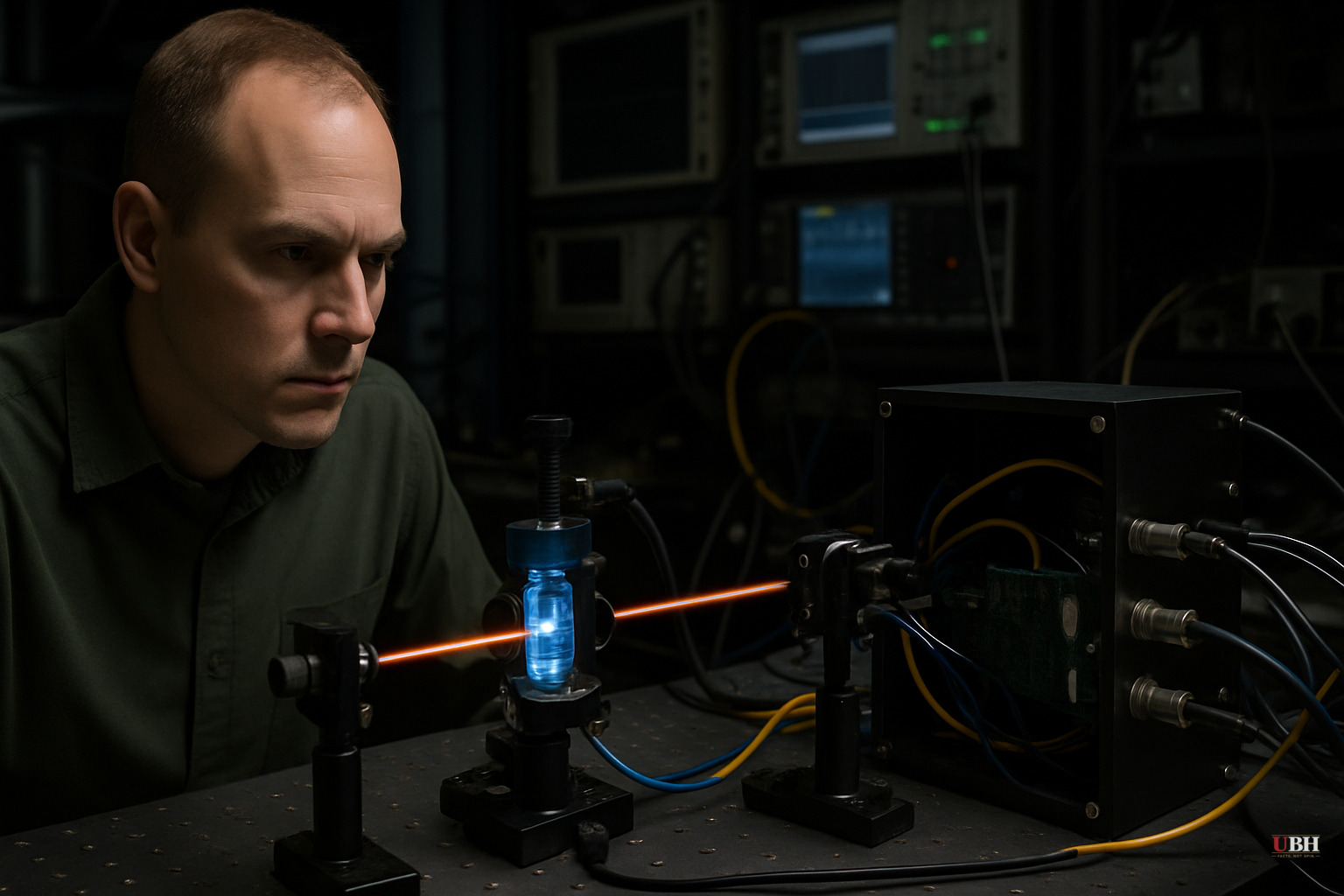
What the Army Actually Built
Scientists at the U.S. Army Combat Capabilities Development Command — DEVCOM — Army Research Laboratory built a quantum sensor that can measure the complete 3D picture of a radio-frequency electromagnetic field.
Not just strength. Not just one direction. All three dimensions — field strength, polarization orientation, and the propagation direction, called the k-vector.
According to ARL research physicist David Meyer, this is the first time that kind of measurement has been achieved using a quantum sensor.
The Measurement Challenge
Every conventional antenna measures electromagnetic field strength in one direction at a time. Locating a signal typically requires multiple sensors, complex arrays, or physical reorientation of the antenna.
This device does all of that in a single package the size of a few centimeters, with angular accuracy of roughly two degrees — tight enough to be militarily useful in a real electromagnetic environment rather than controlled lab conditions.
Meyer told Interesting Engineering: "This research opens the door to detecting and pinpointing signals over a broad frequency range in a single sensing package, even in the most challenging environments."
How It Works
The sensor runs on Rydberg atoms — atoms, specifically rubidium vapor, that are excited to an extreme energy state. In that state, they become extraordinarily sensitive to electric fields.
Conventional antennas need to be physically comparable in size to the wavelength of the signal they're trying to detect. That creates hard limits on how small you can make them and how many frequencies they can cover.
Rydberg atom sensors don't play by those rules. The quantum properties of the excited atoms replace the physical geometry that conventional antennas depend on. The result is a sensor that can cover a broad frequency range in a package that fits in your hand.
Battlefield Application
In a contested electromagnetic environment — what any near-peer conflict with China or Russia would look like — detecting and locating an enemy radio emitter currently requires significant equipment, positioning, and time. Soldiers need situational awareness fast.
A palm-sized sensor that can measure direction, polarization, and signal strength across a wide frequency range in real time would change combat operations. According to ARL, the technology could improve situational awareness, strengthen secure communications, and help soldiers make faster decisions in electronic warfare, where knowing where signals originate — before an adversary knows you're listening — is decisive.
The Coverage Gap
This research received minimal mainstream attention. Defense and technology outlets largely filed it under routine science coverage without recognizing the significance of 3D full-field measurement via quantum sensor as a genuine technological first.
The context matters: China has designated quantum communication and computing as national priorities under its 14th Five-Year Plan and has invested heavily in quantum technology. The U.S. military developing a battlefield-ready quantum sensing application represents a direct counterpoint in that competition.
No cable news coverage. No congressional hearing. No presidential attention. Just researchers at ARL advancing American military capability.
The Road Ahead
Basic research at ARL is one thing. Moving this technology from laboratory to production, ruggedizing it for field conditions, and integrating it into actual squad-level or platform systems presents a different challenge entirely.
Defense procurement has a long record of turning genuine breakthroughs into overpriced programs with extended timelines. If this sensor performs as described, rapid fielding becomes essential. A sensor this capable and compact should cost substantially less than traditional antenna arrays — a procurement reality worth monitoring as the Pentagon determines next steps.
Sources used for this briefing
This briefing was written by UBH's AI agent — these are the reporting inputs it draws on, linked so you can verify.


