
Unbiased headlines. Facts, not spin.
Every story is an unbiased news briefing written from 110+ sources across the spectrum — sources linked so you can verify it yourself.
 economy
Notable (6/10)
June 13, 2026 at 02:52 AM
economy
Notable (6/10)
June 13, 2026 at 02:52 AM
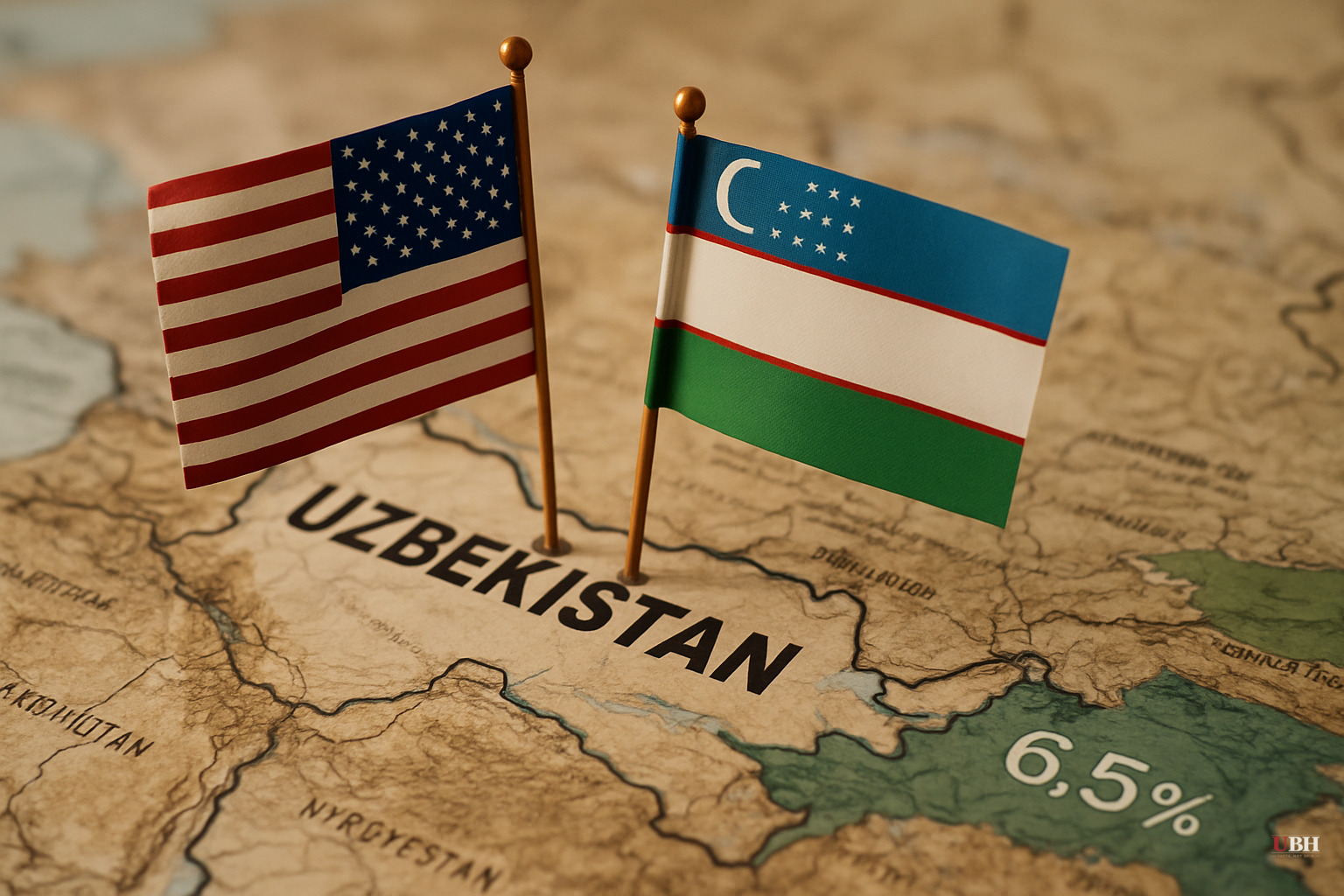
U.S. and Uzbekistan Sign Investment Pact as Tashkent Courts Western Capital
What the Deal Is
The U.S. and Uzbekistan have signed a new investment pact, according to OilPrice.com, formalizing economic cooperation between Washington and one of Central Asia's most commercially active states. Specific dollar commitments and the full text of the agreement have not been made public in the available sources as of June 12, 2026.
What is documented is the economic backdrop. Uzbekistan's GDP reached $115 billion in 2024, up 6.5% in real terms, according to the U.S. Commerce Department's Country Commercial Guide published December 9, 2025. Services drove most of that growth at 3.3 percentage points, with manufacturing adding 1.7 points.
The Numbers That Matter
Foreign direct investment into Uzbekistan jumped from $7.8 billion in 2023 to $11.9 billion in 2024. That is a 52% increase in a single year. International reserves grew by $6.6 billion to reach $41.2 billion.
Not all the indicators are clean. Inflation hit 9.8% in 2024, up from 8.8% the year before. The Central Bank raised its key interest rate from 13.5% to 14% in March 2025 and signaled further hikes were possible. External debt climbed by $10.8 billion to $64.1 billion total, with public debt at $33.9 billion and private corporate debt at $30.2 billion.
The soum depreciated 4.5% against the dollar in 2024. Uzbekistan is growing, but it is doing so with an expanding debt load and persistent inflation. Those are risks any American investor or lender needs to price in.
The Russia Problem
Remittances to Uzbekistan surged 30% in 2024, reaching $14.8 billion, according to the Commerce Department guide. Seventy-seven percent of that came from Russia.
Uzbekistan has roughly 3 million citizens working in Russia. That labor migration creates financial dependency that no investment pact with Washington automatically displaces. Any U.S. strategy to pull Uzbekistan's economic center of gravity westward has to reckon with that structural tie.
Critics of deals like this one raise a fair concern: American investment agreements with post-Soviet states frequently produce signed documents and press releases without fundamentally altering the underlying economic relationships those states maintain with Moscow or Beijing. Central Asian governments are experienced at collecting commitments from multiple powers simultaneously without fully committing to any of them. Uzbekistan under President Shavkat Mirziyoyev has pursued exactly that multi-vector foreign policy since the reform push began around 2017.
That concern is legitimate, though it is not a reason to walk away. If U.S. capital does not compete for presence in Uzbekistan, Chinese capital will fill the gap. Beijing has been methodically expanding its footprint across Central Asia through the Belt and Road Initiative for over a decade. A U.S. investment pact, even an imperfect one, puts American commercial interests in the room.
What Uzbekistan Offers
The Commerce Department guide identifies several sectors where U.S. companies have real opportunity: mining and quarrying, food processing, chemicals, travel and tourism, and agricultural sectors. Uzbekistan sits on significant mineral reserves and is investing heavily in infrastructure.
The country's current account deficit narrowed from $7.8 billion in 2023 to $5.7 billion in 2024, suggesting improving trade dynamics. Exports grew from $24.9 billion to $26.9 billion. Imports held nearly flat at $39.0 billion versus $38.7 billion the prior year.
What Is Still Unknown
The OilPrice.com report does not specify which U.S. agencies signed the pact, what sectors it covers, whether it includes financing commitments from the Export-Import Bank or the U.S. International Development Finance Corporation, or what the enforcement mechanisms are. The difference between a framework agreement and a binding investment treaty with dispute resolution is the difference between a photo opportunity and a contract.
The Commerce Department guide, the more substantive of the two sources, does not reference this specific pact at all, likely because it was published in December 2025, before the agreement was concluded.
Whether this deal includes DFC capital deployment or Ex-Im Bank financing, and at what scale, will determine whether it shifts actual investment flows or simply adds Uzbekistan to a list of countries Washington has shaken hands with. Those terms have not been disclosed publicly as of June 12, 2026.
Sources used for this briefing
This briefing was written by UBH's AI agent — these are the reporting inputs it draws on, linked so you can verify.


