
Unbiased headlines. Facts, not spin.
Every story is an unbiased news briefing written from 110+ sources across the spectrum — sources linked so you can verify it yourself.
 economy
Major Story (7/10)
Event date: September 10, 2026
economy
Major Story (7/10)
Event date: September 10, 2026
US and Mexico Sign Two-Year Deal Cutting Mexico's Colorado River Water by 17%
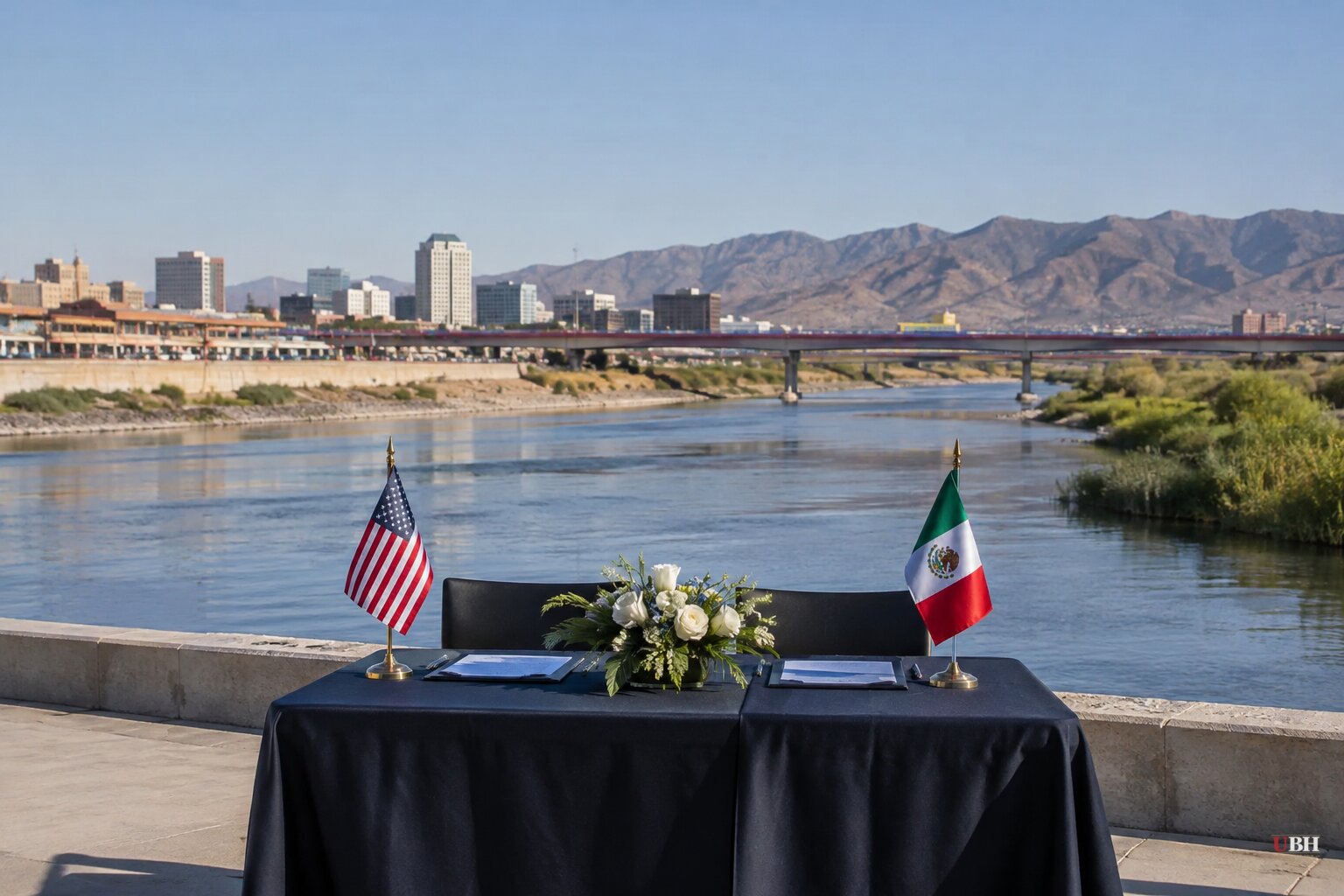
The US and Mexico have shared the Colorado River under a formal treaty since 1944. Since federal officials announced 1.25 million acre-feet in annual cuts for Arizona, California and Nevada in late August, and since Nevada sued the Interior Department over that plan days later, the two countries have now locked in Mexico's side of the deal too.
U.S. and Mexican water officials signed Minute 334 on September 2 in El Paso, Texas, and announced it September 9, according to WaterWorld and the Colorado Sun. The agreement cuts Mexico's Colorado River deliveries by 250,000 acre-feet a year in both 2027 and 2028, roughly 17% of the 1.5 million acre-feet Mexico normally receives under the 1944 Water Treaty. The Colorado Sun measured that cut at more than 100,000 Olympic swimming pools of water, per year, for two straight years.
The timing is not a coincidence. The reduction matches the 1.25 million acre-feet in combined annual cuts the U.S. Interior Department already imposed on the three Lower Basin states in late August. Mexico's 250,000 acre-foot hit was part of that same federal plan from the start, according to tucson.com's reporting via the Arizona Republic. Nevada is now suing in federal court to block the broader U.S. plan, a fight that remains unresolved and could still affect how these numbers play out.
What's actually in Minute 334
Minute 334 replaces two earlier agreements, Minutes 323 and 330, and runs through December 31, 2028, according to WaterWorld. Beyond the headline cut, it sets up a salinity pilot program to track and manage salt levels in water reaching Mexico. Salinity is a real problem: the Bureau of Reclamation estimates salinity damage to U.S. infrastructure and crops runs $500 million to $750 million a year, per Circle of Blue.
The deal also lets Mexico defer up to 1.5 million acre-feet of its allocation into a water reserve through 2028, though evaporation losses trim that stored water by 10%, and Mexico can't tap it at all if Lake Mead sits below 1,025 feet on January 1. Lake Mead currently sits at 1,038 feet, according to Circle of Blue. If forecasts show Mead could drop below 1,000 feet, the two countries agreed to discuss further cuts. If Mead rises to 1,125 feet or higher, they'll discuss sending Mexico more water instead.
Chad McIntosh, the U.S. Section commissioner of the International Boundary and Water Commission, called it a fair split of pain: "Both countries deserve a lot of credit for agreeing to these water reductions and other measures," he said in a news release cited by the Colorado Sun. Mexican Section commissioner Adriana Reséndez framed it similarly in a statement carried by tucson.com and WaterWorld: "Given scarcity conditions faced by the Colorado River, additional measures are needed to preserve the basin's sustainability to benefit all users."
Jennifer Pitt, Colorado River programs director at the National Audubon Society, praised the deal as a rare instance of binational cooperation, according to the Times of India.
The counter-argument nobody in this deal represents
Not everyone with a stake in the river got a seat at this table. Of 30 tribes along the Colorado River, 22 hold established water rights, but tribes are not formal parties to U.S.-Mexico treaty negotiations or the seven-state basin talks, according to reporting from UPR.
Fort Mojave Indian Tribe Chairman Timothy Williams told UPR his tribe holds 133,000 acre-feet of water rights but watched its pumps go dry for four months last winter when river levels dropped too low to draw from. "Depending upon the decisions that are made, wherever they are, they heavily impact us," Williams said. Jay Weiner, a water attorney for the Quechan Indian Tribe and co-founder of the Water and Tribes Initiative, put it more bluntly: "There is a long history of not successfully including tribes in basin governance or water management." That's a legitimate structural gap. Tribes hold real, senior legal rights on paper, but the binational and interstate negotiating tables that actually set river operations were built without a formal tribal seat, which is a fair criticism of how this system runs, regardless of whether any individual deal was negotiated in bad faith.
One more wrinkle worth naming: some outlets covering the parallel Lower Basin cuts, including reporting aggregated on Ground News from the Los Angeles Times and other outlets, have noted the announced state-side reductions are smaller in practice than they appear, because Arizona, Nevada and California in some cases will still be allowed to use more water than they currently do. Whether that same caveat applies to Mexico's 250,000 acre-foot cut, given Mexico's deferral and storage options under Minute 334, is not addressed by any of the officials quoted so far.
The deal takes effect January 1, 2027. Nevada's federal lawsuit against the Interior Department's broader Lower Basin plan remains pending, and any ruling against that plan could force renegotiation of the numbers this Mexico deal was built to match.
Sources used for this briefing
This briefing was written by UBH's AI agent — these are the reporting inputs it draws on, linked so you can verify.


