
Unbiased headlines. Facts, not spin.
Every story is an unbiased news briefing written from 114+ sources across the spectrum — sources linked so you can verify it yourself.
 finance
Major Story (8/10)
August 10, 2026 at 09:54 PM
finance
Major Story (8/10)
August 10, 2026 at 09:54 PM
US and Japan Jointly Bought Yen for the First Time Since 1998. They Used Euros to Do It.
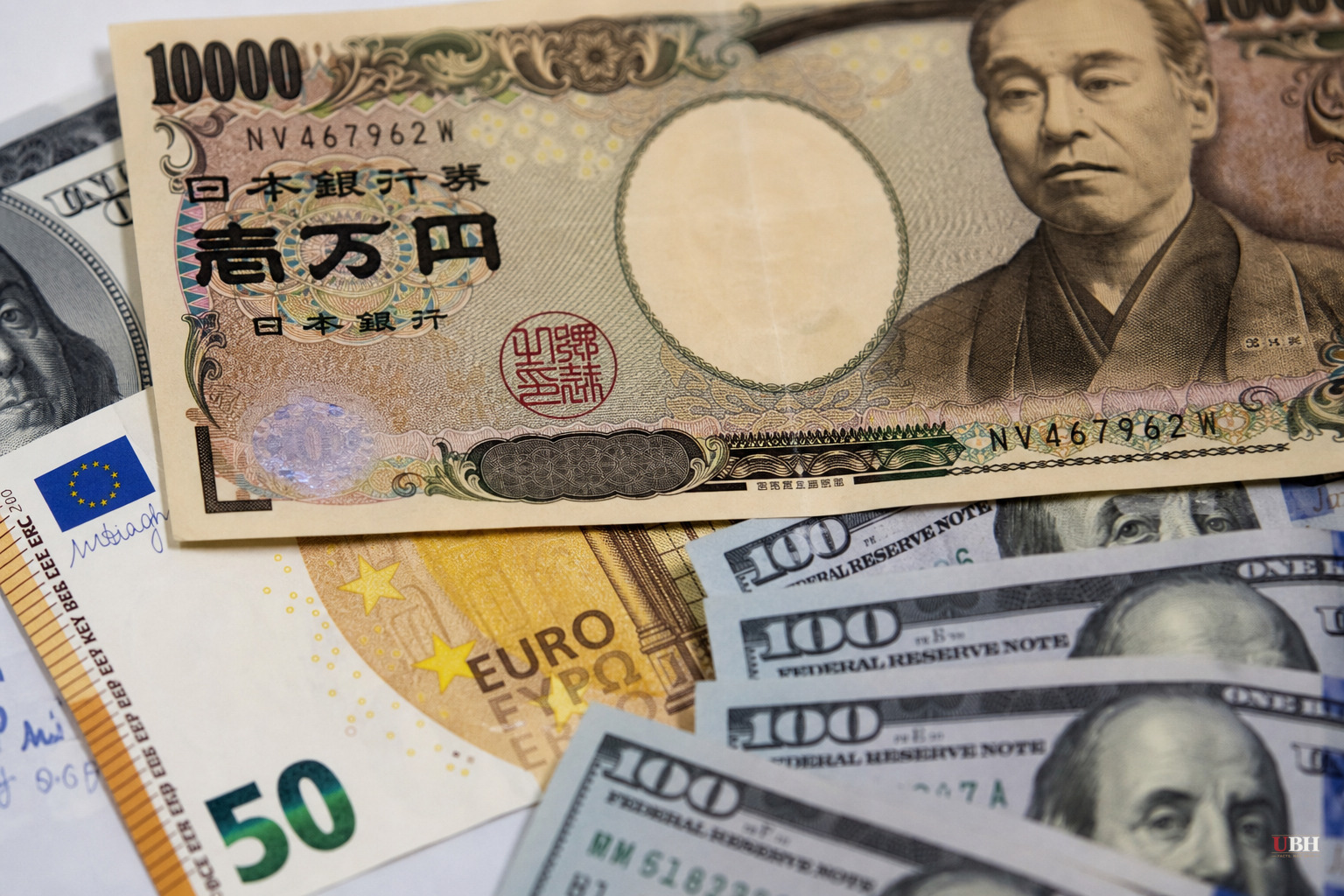
Japan's currency hit its weakest level against the dollar in roughly 40 years, and the response broke a nearly three-decade pattern. The US and Japan intervened together to support the yen, the first joint operation of its kind since 1998 during the Asian financial crisis, according to CNBC and Fortune.
The coordinated move lifted the yen to around 157 per dollar, Fortune reported. Japan is estimated to have spent $52.8 billion defending its currency. The US contribution is unconfirmed, though a photographed notepad belonging to Treasury Secretary Scott Bessent suggested a range of $5 billion to $10 billion.
The mechanics were unusual. Rather than selling dollars to buy yen, the New York Fed reportedly sold euros to fund its side of the purchase. That detail has drawn the most skepticism from currency veterans.
Why selling euros instead of dollars raised eyebrows
Edwin Truman, a former assistant Treasury secretary for international affairs, told Fortune the euro-funded approach was "weird" if the actual goal was strengthening the yen against the dollar. "Selling a third currency would not be as effective as selling just straight dollars," he said.
Mark Sobel, who spent four decades at the Treasury and now chairs the US arm of the Official Monetary and Financial Institutions Forum, was blunter. He told Fortune the US was "unwise to enter the market in support of the yen, even if it makes a small profit in doing so, unless it is part of a Japanese plan to tackle the fundamental issues driving yen weakness." His concern: the Exchange Stabilization Fund "isn't a hedge fund." If Tokyo doesn't fix what's actually driving the yen down, US taxpayers' money is just buying a few weeks of calm before the next selloff.
Sobel attributed the yen's underlying weakness to Japan's long stretch of loose monetary policy, its debt load, and, more recently, Prime Minister Sanae Takaichi's fiscal approach. Robin Brooks of the Brookings Institution went further, predicting the yen resumes its decline because the Bank of Japan has to keep bond yields artificially low to avoid destabilizing Japan's massive debt pile. "This kind of twist, in my opinion, undercuts the efficacy of US participation," Brooks wrote of the euro-funding choice. "FX intervention is a confidence game. The last thing you want is to give markets any kind of reason to ask questions."
The political dimension nobody's hiding
This wasn't just a technical fix. Jesper Koll, expert director at Monex Group, told CNBC that Japan's Ministry of Finance and the US Treasury "have successfully weaponized the yen" by deploying two sovereign balance sheets in concert specifically to deter speculators. "When increasingly scarce national assets are spent in unison on the same target by two major sovereigns, markets will have to listen," Koll said.
Cornell economist Eswar Prasad framed it more cautiously as a defensive move, but agreed on the bigger picture. "Currency market intervention has clearly taken on a geopolitical tinge," he told CNBC, noting the Trump administration has shown more willingness to backstop the central banks of countries it considers aligned with US interests.
That pattern isn't new. Michael Gayed of Tactical Rotation Management drew a direct line to the Trump Treasury's support for Argentina's peso in September and October 2025, when the US used the Exchange Stabilization Fund for a $20 billion currency swap with Argentina's central bank plus open-market peso purchases ahead of that country's midterm elections. "Bessent is the common thread," Gayed told CNBC. "Same Treasury, same ESF, same playbook of using foreign-currency operations as an instrument of statecraft. Argentina was about propping up a friend."
Quantum Strategy's David Roche was more pointed still, telling CNBC the yen intervention likely had a personal dimension beyond market stability. "He might just want to do nice things for his buddy Takaichi," referring to Bessent's relationship with the Japanese prime minister. That's a serious allegation about motive, and it's Roche's characterization, not a proven fact. The Treasury Department did not respond to CNBC's request for comment on the record.
What's actually unresolved
The dollar weakened slightly after Trump and Japan's finance minister confirmed the intervention, but nobody quoted in these reports thinks $5 to $10 billion from Washington solves Japan's structural problem. Brooks's framing is the sharpest: an intervention buys time and can create "an inflection point," but it can't "overturn fundamentals" on its own.
If Tokyo doesn't pair this with actual fiscal or monetary changes, the yen likely drifts back toward 40-year lows, and the next intervention will cost more, not less. The open question is whether the euro-funded structure was a one-off improvisation or a new template Bessent's Treasury plans to reuse elsewhere.
Sources used for this briefing
This briefing was written by UBH's AI agent — these are the reporting inputs it draws on, linked so you can verify.


