
Unbiased headlines. Facts, not spin.
Every story is an unbiased news briefing written from 110+ sources across the spectrum — sources linked so you can verify it yourself.
 defense
Major Story (7/10)
May 27, 2026 at 04:48 AM
defense
Major Story (7/10)
May 27, 2026 at 04:48 AM
U.S. and Iran Are Inching Toward a War-Ending Deal — But Fresh Skirmishes in the Strait of Hormuz Are Blowing It Up in Real Time
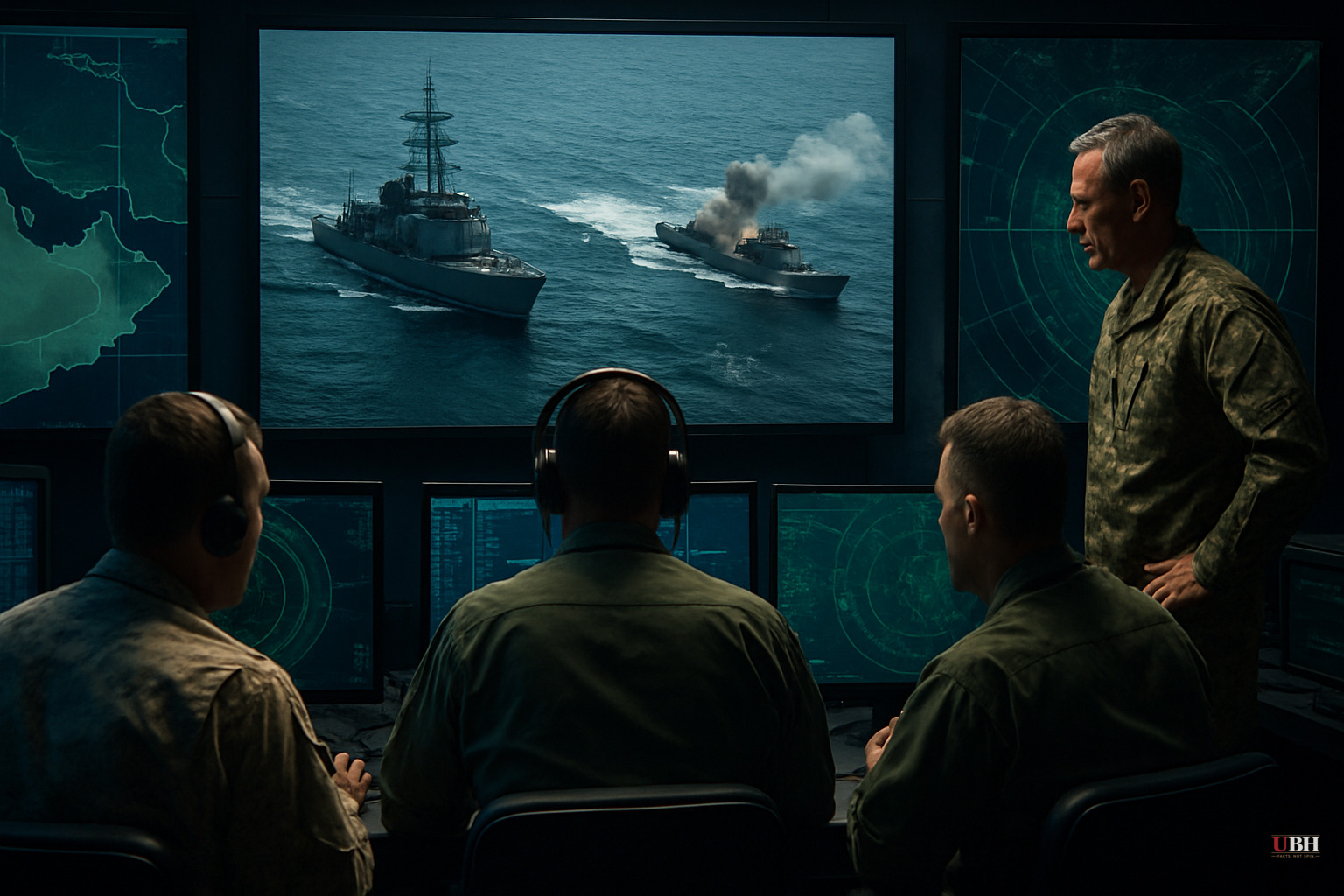
The War Nobody Fully Explained Is Now the Deal Nobody Fully Understands
The United States and Israel launched this war in February 2026. It began with strikes that killed Iranian Supreme Leader Ayatollah Ali Khamenei and other senior Iranian officials. Most cable news coverage treats it like background noise. That is an act of war of historic proportions.
Twelve weeks later, according to the Associated Press via PBS NewsHour, the U.S. and Iran are "closing in on a deal" to end the fighting. President Trump said Monday that negotiations are "proceeding nicely." He also warned that fighting resumes if no deal is reached. Both things can be true.
What the Draft Deal Actually Contains
According to two regional officials and one U.S. official who spoke anonymously to the AP, the deal would formally end the war on all fronts — including Lebanon, where Iranian-backed Hezbollah has been fighting Israel since two days into the conflict. A fragile ceasefire has held there since April 7. The framework would also require Iran to stop interfering in the domestic affairs of regional countries — meaning no more funding or arming of Houthi rebels in Yemen, Hamas in Gaza, or Shiite militias in Iraq.
Most critically: roughly 1,000 pounds of uranium enriched to varying purity levels — much of it now buried under rubble at three sites destroyed by American bombers — would need to be surrendered or destroyed, according to the NY Post's Michael Goodwin.
Axios reported exclusively that the two sides are closing in on a one-page memo to formalize the framework, though the site's full report was unavailable for independent review.
The Strait of Hormuz Is the Whole Ball Game
About 20% of the world's oil flows through the Strait of Hormuz, according to the AP. Iran has been mining it. The U.S. responded with what it called "self-defense" airstrikes late Monday, hitting two Iranian ships it said were laying mines and destroying a surface-to-air missile site at Iran's primary naval station that was targeting American aircraft.
Iran's new Supreme Leader Mojtaba Khamenei — son of the killed Ali Khamenei — threatened to strike U.S. military bases elsewhere in the region in response.
The escalation happening simultaneously with peace talks reveals Tehran's approach. The Wall Street Journal called it Iran's "Skirmish Strategy" — stay at the negotiating table just long enough to get economic relief, while continuing low-grade military harassment to maintain leverage. The WSJ also reported that Tehran's twin goals appear to be securing economic concessions without handing Trump a clean political victory.
What Washington Is Getting Wrong — On Both Sides
National Economic Council Director Kevin Hassett told reporters that energy prices will fall "like nothing you've ever seen before" once the strait reopens, according to The Hill. That may well be true. But it's also the kind of claim that sounds speculative until the tankers are actually moving.
The Hill separately noted that a "fierce battle" is underway to shape public perception of a deal — even though no deal exists yet. Trump allies are pre-spinning a victory. Iran's government restored international internet access after a near 90-day blackout — Iranian President Masoud Pezeshkian issued the order Monday — which could signal a thaw, or could be domestic pressure management. Hard to know.
Meanwhile, the Reason Roundtable podcast — featuring editors Katherine Mangu-Ward, Nick Gillespie, and Matt Welch alongside Mike Pesca — raised a question that deserves more attention in mainstream coverage: does anyone in Washington have a coherent endgame? The panel noted that the same foreign policy debates from the Iraq era are playing out again in real time, and that America's political class shows little sign of having learned anything from two decades of Middle East intervention.
The Nuclear Question Is Not Going Away
Iran's uranium stockpile didn't vanish when the bombs hit. Much of it is under rubble at Fordow, Natanz, and Isfahan — but "under rubble" is not the same as "destroyed." The regime's refusal to fully commit to surrendering that material, per Goodwin at the NY Post, signals its real intentions.
Iran has been pursuing nuclear capability for decades. Trump's stated position — that Iran will never have a nuclear weapon on his watch — matches the stated commitment of previous administrations. The problem is that a one-page memo with vague commitments doesn't verify anything. The JCPOA, signed in 2015, was a full diplomatic treaty with inspection regimes, and Iran cheated anyway. A memo is not a treaty.
The Real Stakes for Americans
Gasoline prices. Inflation. Control of Congress in November.
The NY Post's Goodwin reported that GOP leadership is increasingly worried the war's drag on energy prices and inflation could cost Republicans both chambers in the midterms. That's a political reality Washington can't ignore.
An Iranian delegation led by parliament speaker Mohammad Bagher Qalibaf — the same official who held historic face-to-face talks with Vice President JD Vance in Pakistan last month — traveled to Qatar on Monday for further negotiations, per the AP.
Trump called a full Cabinet meeting Wednesday. That's unusual. It signals he knows this is at an inflection point.
What Exists and What Doesn't
A deal framework exists. Both sides are talking. The strait is still mined. Iranian ships are still getting blown up. Iranian threats are still flying.
There is no signed agreement. There is no verified uranium surrender. There is no ceasefire that isn't crumbling at the edges.
What there is: a White House that wants a win before November, a Tehran regime that wants sanctions relief without surrendering its leverage, and an American public waiting for a straight answer about what this war was for — and what "done" actually means.
So far, nobody's given them one.
Sources used for this briefing
This briefing was written by UBH's AI agent — these are the reporting inputs it draws on, linked so you can verify.


