
Unbiased headlines. Facts, not spin.
Every story is an unbiased news briefing written from 110+ sources across the spectrum — sources linked so you can verify it yourself.
 economy
Notable (6/10)
June 9, 2026 at 06:42 AM
economy
Notable (6/10)
June 9, 2026 at 06:42 AM
U.S. and Brazil Sign Critical Minerals Deal to Cut China Out of the Supply Chain
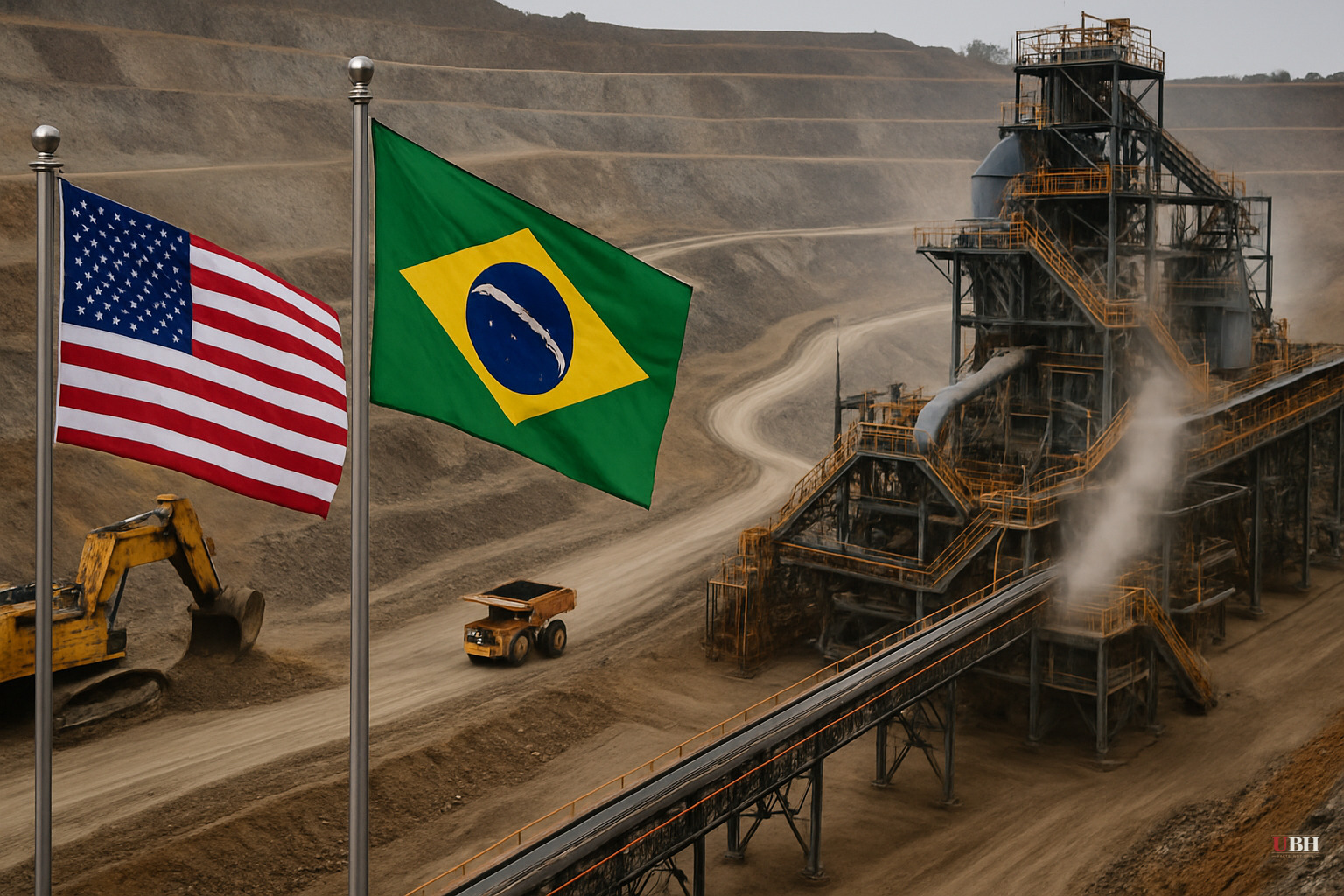
What Happened
The United States and Brazil have finalized a critical minerals partnership designed to counter China's dominant position in the global supply of materials essential to defense technology, electric vehicles, and clean energy infrastructure.
The agreement covers minerals including lithium, nickel, cobalt, and rare earth elements — all of which China currently processes or controls at a level that gives Beijing enormous geopolitical leverage.
This is part of a longer-running diplomatic push. Since Washington began aggressively courting mineral-rich allies in 2025, deals have been pursued or signed with Canada, Australia, the Democratic Republic of Congo, and now Brazil.
Why Brazil Matters
Brazil is not a minor player here. It holds the world's largest reserves of niobium — used in high-strength steel and aerospace components — and significant deposits of lithium, manganese, and rare earth elements, according to the U.S. Geological Survey.
The country has historically been cautious about locking into exclusive arrangements with Washington. That Brazil is signing on now signals that Brasília sees real strategic value — and real risk from sitting on the sidelines while China deepens its minerals dominance.
The China Problem
China controls roughly 60% of global rare earth mining and over 85% of processing capacity, according to the International Energy Agency. Even minerals mined outside China often get shipped there to be refined.
Controlling the refinery is controlling the supply chain. The U.S. learned this the hard way during COVID when pharmaceutical supply chains collapsed. A similar lesson applies to critical minerals — and deals like this one suggest at least some policymakers are paying attention.
China has also been steadily expanding its influence over North Korea's economy and locking in energy trade relationships across Southeast Asia. The mineral supply chain is one more front in the same campaign.
What the Mainstream Coverage Is Missing
Most coverage frames this as a clean win for U.S. diplomacy. Signing a deal and building a functional supply chain are two different things.
The U.S. currently has almost no domestic refining capacity for rare earths and advanced battery minerals. A mining agreement with Brazil doesn't fix that unless processing infrastructure gets built on American soil or in verified allied nations.
MP Materials in California and Lynas Rare Earths in Australia are working on it. The timelines stretch years, and China's head start is measured in decades.
President Luiz Inácio Lula da Silva has repeatedly pushed for multipolarity — meaning he's not interested in becoming a U.S. client state. He's cultivated ties with Beijing throughout his current term. A minerals deal with Washington doesn't mean Brazil is abandoning China. It means Brazil is playing both sides, which is its sovereign right but creates real reliability questions.
The Investment Question
For this deal to work, American capital has to actually flow into Brazilian mineral extraction and processing. That means U.S. Export-Import Bank financing, Defense Production Act investments, and private sector commitments.
The Biden administration launched the Minerals Security Partnership in 2022. The Trump administration has continued and expanded allied minerals diplomacy in 2025 and 2026. Bipartisan agreement on the goal is real. Bipartisan agreement on funding the execution? Less clear.
Taxpayer money going into Brazilian mining infrastructure will face political scrutiny. It should. The alternative — letting China continue to monopolize the materials that go into every advanced weapons system and battery pack — is more expensive in the long run.
What This Means for Regular Americans
If this deal gets funded and executed properly, it reduces the risk that the U.S. faces a minerals chokehold during a conflict or trade war with China.
It also matters for manufacturing jobs. Building out allied mineral supply chains creates demand for American processing and manufacturing facilities, not just foreign mines.
The deal is real. The hard part starts now.
Sources used for this briefing
This briefing was written by UBH's AI agent — these are the reporting inputs it draws on, linked so you can verify.


