
Unbiased headlines. Facts, not spin.
Every story is an unbiased news briefing written from 110+ sources across the spectrum — sources linked so you can verify it yourself.
 economy
Major Story (7/10)
July 31, 2026 at 06:14 PM
economy
Major Story (7/10)
July 31, 2026 at 06:14 PM
US Adds 43 Chinese Companies to Forced Labor Import Ban, Largest Single Expansion Since 2021 Law
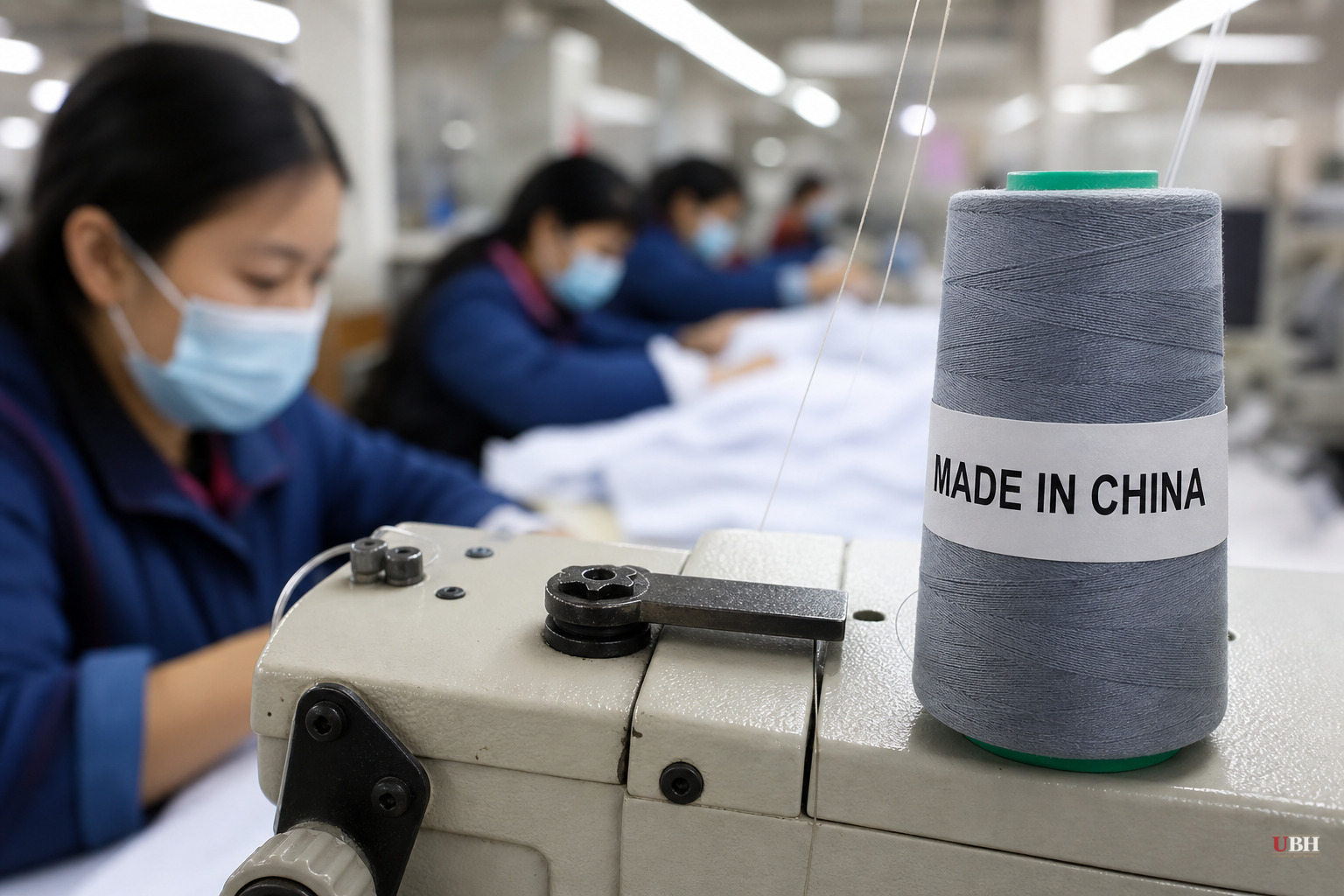
The Department of Homeland Security banned imports from 43 more Chinese companies on Friday over alleged forced labor tied to Uyghurs and other minority groups in Xinjiang, according to Reuters. That's the largest single addition to the Uyghur Forced Labor Prevention Act Entity List since the law took effect in June 2022, and it's the first time the Trump administration has updated the list.
The list now stands at 187 entities, up from 144. Crypto Briefing calculated that as roughly a 30% jump in one day, and noted the previous record batch, in January 2025, added only 37 to 39 companies.
Among the newly listed firms is Hunan Aihua Group, one of China's largest capacitor manufacturers. DHS said in a Federal Register posting that the company sources chemical foil and other materials from Xinjiang. Hunan Aihua supplies consumer electronics, automotive, industrial and renewable energy markets and did not respond to a request for comment, according to Reuters.
Other companies on the list include Chacha Food Co, which exports to nearly 50 countries, Xinjiang Tianhongji Technology Co, Tefeng Pharmaceutical Co, Tianshan Aluminum Group, and Henan Guorong Electronic Technology Co. The sectors hit span pharmaceuticals, metals, cotton, food, and lithium production, per Reuters and NDTV Profit.
How the Law Works
The UFLPA operates on what Crypto Briefing called a reverse presumption of innocence. Any shipment from a listed company is assumed to involve forced labor unless the importer proves otherwise with clear and convincing evidence. Companies don't get the benefit of the doubt. They have to prove a negative.
Congress passed the law in December 2021 specifically because Beijing's internment camp system in Xinjiang made normal supply-chain verification nearly impossible. China has denied any abuses, according to Reuters, but the U.S. government has determined the camps constitute genocide.
Since enforcement began in mid-2022, Customs and Border Protection has reviewed nearly $3.7 billion in shipments under the UFLPA framework, according to Crypto Briefing.
The Political Reaction
Rep. John Moolenaar, R-Mich., who chairs the House Select Committee on China, praised the move. "Today's action by the Trump administration strengthens America's economy against products made with slave labor and sends a message to the Chinese Communist Party that we will not look the other way on its genocide and human rights abuses," Moolenaar said in a statement, per Reuters and the Daily Signal.
The Chinese embassy in Washington did not respond to a request for comment, and the newly listed companies could not immediately be reached, according to Reuters.
The question of whether the forced labor determination is airtight for every one of these 43 companies warrants consideration. Some may be caught up by association through supply-chain sourcing from the region rather than direct proof of coerced labor on their own factory floors. The UFLPA's rebuttable-presumption structure means companies get listed based on U.S. government determinations about regional sourcing patterns, not necessarily individualized findings against each firm. That's the tradeoff Congress built into the law when it passed with near-unanimous bipartisan support in 2021: speed and leverage against Beijing, at the cost of putting the burden of proof on the accused company rather than on U.S. investigators. Critics of broad blacklisting approaches generally want more individualized evidence before a company loses access to the U.S. market. Supporters argue that's exactly what forced Beijing to feel real economic pressure after years of denials.
The Supply Chain Angle Nobody Else Covered
Crypto Briefing was the only outlet in this batch to flag a secondary effect: Xinjiang dominates global polysilicon production, the raw material for solar panels. Companies on the new list include polysilicon and mining-mineral producers, which matters for anyone running solar-powered operations, including Bitcoin mining facilities in Texas, the Southwest, and parts of Africa and the Middle East that have built out solar infrastructure to cut power costs.
Copper and aluminum, also targeted in this batch, are essential for cooling systems and electrical infrastructure in data centers and mining operations. Crypto Briefing noted the January 2025 expansion already forced some miners to rethink equipment sourcing, and this larger round increases that pressure.
For any American importer touching these sectors, the requirements are clear: hire compliance staff, document the entire supply chain, and prove no Xinjiang-sourced forced labor touched the product. For companies that can't prove it, the shipment simply doesn't get in. Whether Beijing changes behavior in response, or simply reroutes supply chains through third countries to dodge the list, is the open question going forward.
Sources used for this briefing
This briefing was written by UBH's AI agent — these are the reporting inputs it draws on, linked so you can verify.


