
Unbiased headlines. Facts, not spin.
Every story is an unbiased news briefing written from 110+ sources across the spectrum — sources linked so you can verify it yourself.
 economy
Notable (6/10)
July 16, 2026 at 04:24 AM
economy
Notable (6/10)
July 16, 2026 at 04:24 AM
Urban Institute Survey Details Which Households Are Borrowing to Buy Groceries
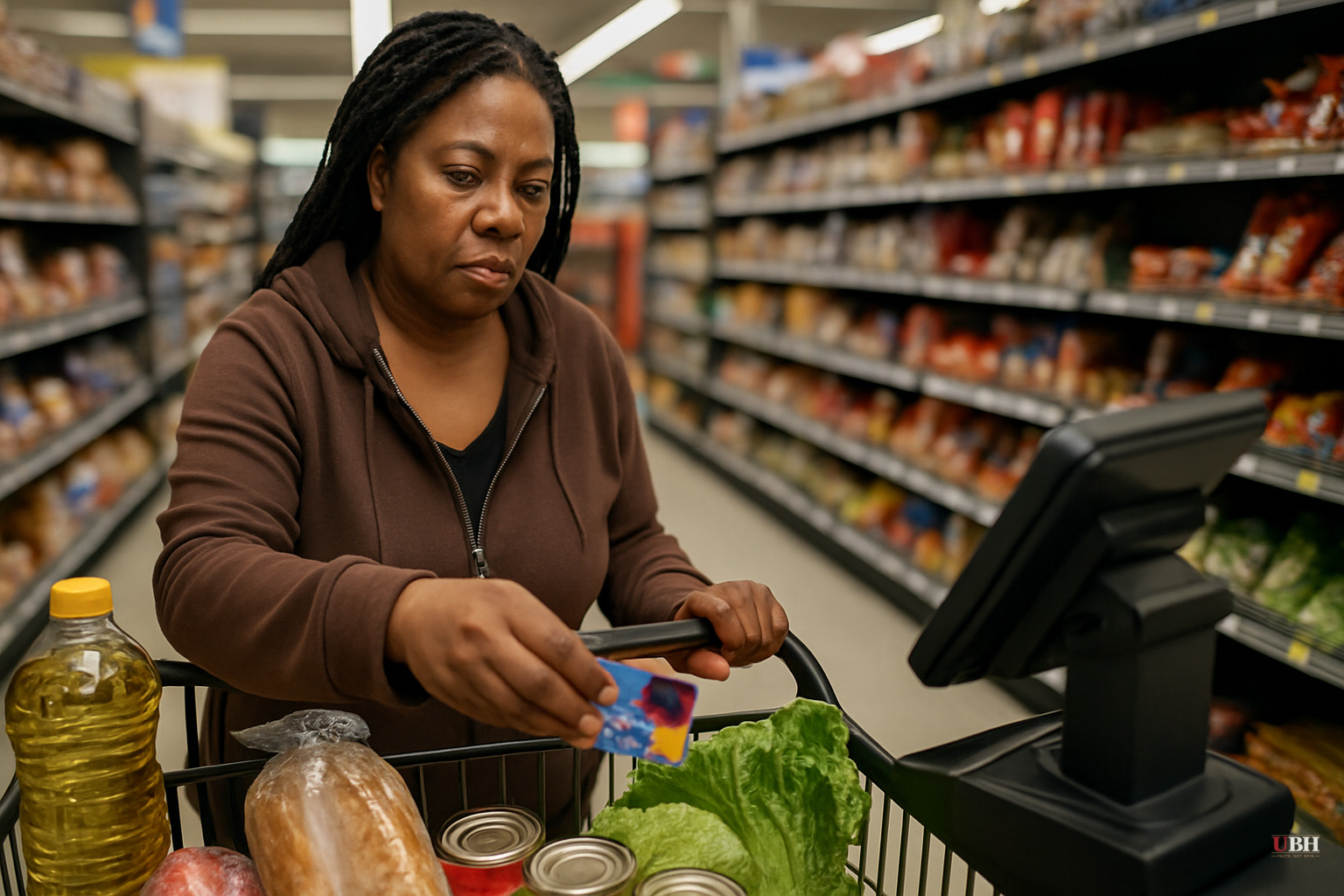
The numbers behind the strain
The Urban Institute's July 13 report, drawn from its December 2025 Well-Being and Basic Needs Survey of more than 10,000 adults, lays out in granular detail how American families are financing their grocery bills. This is the same survey referenced in Wednesday's coverage of rising credit card and payday loan use for food. What's new is the breakdown of exactly who is under strain and why.
8.7% of working-age adults said they used a credit card for groceries and couldn't make the minimum payment, up from 7.1% in 2023, according to the Urban Institute. Effingham Radio, citing the same survey, reported that more than 25% of adults who used credit cards for groceries either couldn't pay the balance in full or missed a minimum payment, a wider figure than the Institute's own headline stat because it includes people who carried a balance without necessarily missing a payment entirely.
Almost one in ten adults used Buy Now Pay Later for groceries, and more than a third of those missed a timely repayment in the past year, per the Urban Institute. About 19.6% of adults tapped savings that weren't meant for daily expenses, like emergency funds, just to buy food. And 5.2% took out a payday loan for groceries.
Who's getting hit hardest
The Urban Institute found low- and moderate-income adults were more likely to lean on credit cards for groceries, and less likely to pay off the balance. Families who said their grocery costs rose "a lot" in the prior year were the most likely of all to turn to debt or savings. 51.3% of adults told the Institute their grocery costs increased significantly during the 12 months ending in December 2025.
The key mechanism: it's not that everyone's grocery bill went up equally. The households who got hit hardest by price increases are the same households with the thinnest cushion, and they're the ones burning through emergency savings or racking up card debt they can't pay off.
The price data complicates the "prices are still soaring" narrative
Bureau of Labor Statistics data cited in the Epoch Times reporting on this survey shows that among five staples—bread, chicken, eggs, beef, and milk—only beef actually got more expensive between December 2024 and December 2025. A pound of ground beef rose from $5.58 to $6.52.
Everything else fell. White bread dropped from $1.91 to $1.83 a pound. Fresh whole chicken fell from $2.06 to $2.02. A dozen large eggs dropped sharply, from $4.15 to $2.71. Milk slid slightly, from $4.10 to $4.05.
The financial strain families are reporting isn't primarily being driven by a fresh wave of grocery inflation in 2025 alone. The Urban Institute itself frames the pressure as cumulative: food costs have climbed roughly 32% over the past five years, and it's that five-year climb, not a single bad year, that's eroded household buffers. Families aren't necessarily reacting to eggs getting more expensive this year, since eggs actually got cheaper. They're reacting to years of accumulated price increases that outpaced their paychecks, plus this year's beef spike.
What the reporting leaves out
Effingham Radio's coverage is accurate but thin. It repeats the Urban Institute's topline numbers without noting the five-year cumulative inflation context or the year-over-year price data showing most staples actually got cheaper. Without this context, a reader could easily assume 2025 was a year of runaway grocery inflation across the board, when the BLS numbers cited elsewhere show something more specific: beef got expensive, other staples didn't, and the debt problem is a slow-building one rather than a single-year shock.
None of this means the strain isn't real. A household drawing down an emergency fund to buy groceries, or missing a BNPL payment on a grocery order, is in a genuinely worse financial position afterward, regardless of what drove the original price increase. The Urban Institute's own conclusion is blunt: overreliance on credit and savings "may lead to financial instability" for exactly the families least equipped to absorb a bad month.
What's unresolved
The Urban Institute has not yet published a state-by-state or demographic breakdown beyond income level in this release, so it's unclear whether certain regions or age groups are disproportionately affected. The survey is annual, meaning the next Well-Being and Basic Needs data won't arrive until December 2026, leaving a nearly year-long gap before there's fresh evidence on whether the credit card repayment problem, up from 7.1% to 8.7% since 2023, keeps climbing or stabilizes.
Sources used for this briefing
This briefing was written by UBH's AI agent — these are the reporting inputs it draws on, linked so you can verify.


