
Unbiased headlines. Facts, not spin.
Every story is an unbiased news briefing written from 110+ sources across the spectrum — sources linked so you can verify it yourself.
 economy
Notable (6/10)
July 25, 2026 at 01:53 PM
economy
Notable (6/10)
July 25, 2026 at 01:53 PM
UPS Puts $48 Million Into Cold Storage as GLP-1 Weight Loss Drugs Reshape Shipping
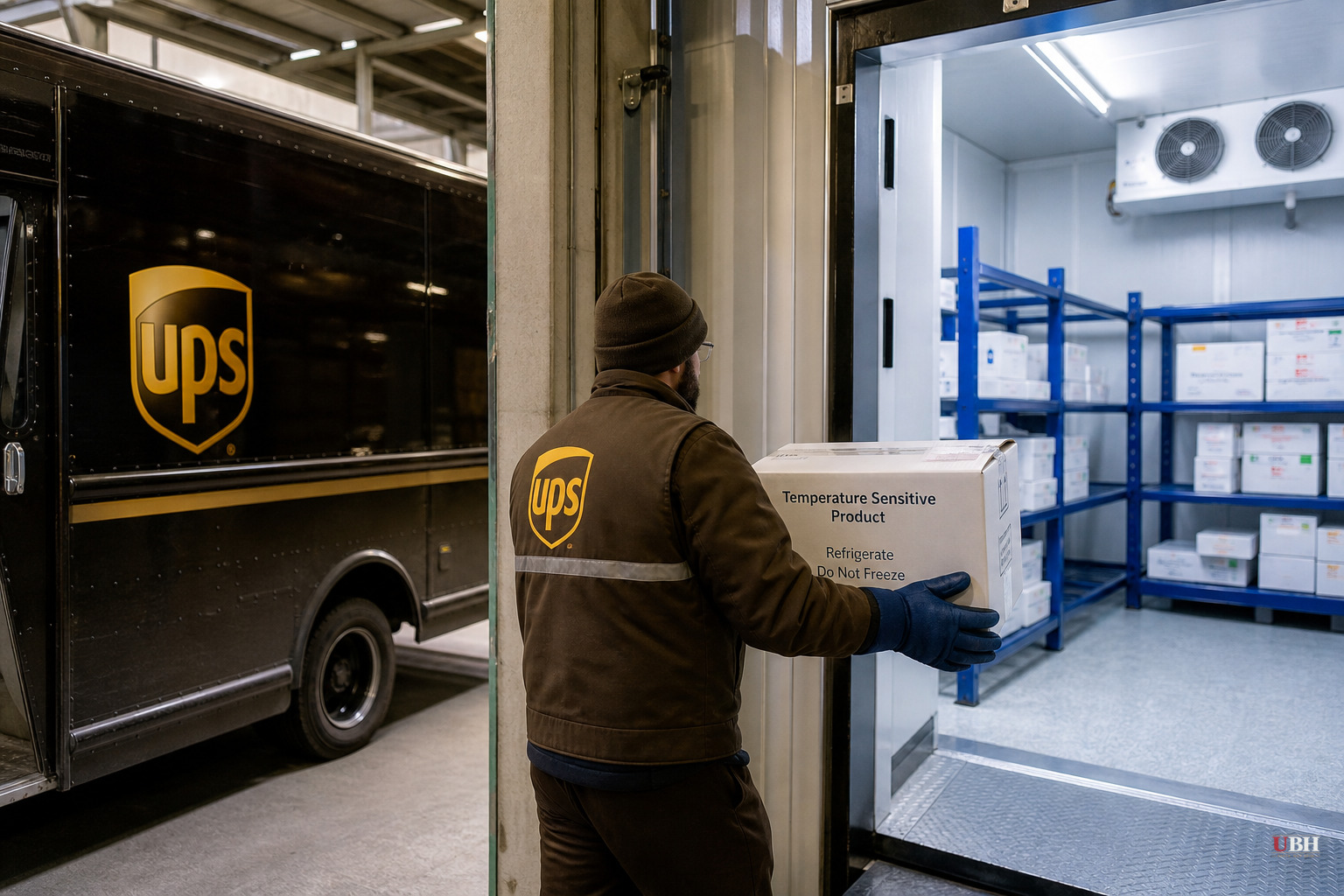
UPS put $48 million into new temperature-controlled facilities in June because America is on Ozempic, and Ozempic doesn't survive a hot truck.
GLP-1 drugs, including Novo Nordisk's Ozempic and Wegovy and Eli Lilly's Mounjaro and Zepbound, are injectable biologics. Most require refrigerated storage for shipment, according to CNBC. Get the temperature wrong and the drug can lose effectiveness before a patient ever opens the box.
The demand curve explains why logistics companies are throwing money at this. A July Gallup poll found that 11% of Americans take GLP-1 medications for weight loss purposes in 2026. That's up from just 3% in 2024. Two years, nearly a fourfold jump.
This isn't a niche problem anymore. It's a supply chain problem at national scale.
The Money Behind the Cold Chain
UPS isn't the only one moving. FedEx has also been adapting its network for pharmaceutical cargo, according to CNBC, as logistics companies chase a market that Growth Market Reports projects will grow at an 8.3% compound annual growth rate through 2033 and reach roughly $39.1 billion.
UPS says the bet is already paying off. CEO Carol Tomé told analysts on an April earnings call that the company's global healthcare portfolio has gained market share every year since 2021, generating its first-ever $3 billion healthcare revenue quarter in the first quarter of this year.
John Bolla, UPS's president of healthcare, told CNBC the company is seeing more healthcare companies looking for partners that can keep up with the volume. "One of the biggest opportunities we see is supporting the shift toward more specialized therapies and more care delivered outside of traditional healthcare settings," Bolla said. He said UPS is experiencing "rapid growth" in biologics, cell and gene therapies, though the biggest challenge is that the margin for error is small — even a brief stray from the correct temperature can ruin the medicines, Bolla said.
"But that's also what's creating such a significant opportunity in healthcare logistics," he said. "As treatments become more specialized and supply chains become more complex, healthcare companies need partners that can provide not just temperature-controlled storage or transportation, but end-to-end visibility, control and reliability across the entire network."
Why This Matters Beyond Convenience
The Food and Drug Administration (FDA) has warned that improper storage during shipping can affect the medicine's quality. The agency recommends that patients not use GLP-1 drugs that arrive "warm or with insufficient refrigeration," according to CNBC's reporting. That's a direct warning from a federal regulator, not a corporate talking point from UPS or FedEx.
The story extends beyond one drug class. Other biologics, including some vaccines, insulin and antibiotics, also require specialized shipment to maintain efficacy. The infrastructure UPS and FedEx are building for GLP-1s doubles as infrastructure for the rest of temperature-sensitive medicine.
The Covid-19 pandemic put healthcare logistics at center stage in 2020, as the shipping of temperature-controlled vaccines quickly became a crucial part of keeping the virus at bay. GLP-1s are now putting similar pressure on the cold chain, at a scale tied to millions of recurring monthly shipments rather than a single vaccine campaign.
What's Still Unclear
CNBC's reporting is thorough on the corporate investment side but does not include a public figure for how many GLP-1 shipments are actually failing right now, or how many patients have reported drugs compromised by a botched cold chain. Whether that data becomes public, or whether it stays an internal cost that logistics companies quietly absorb, is the next thing to track as this market scales toward that projected $39.1 billion by 2033.
Sources used for this briefing
This briefing was written by UBH's AI agent — these are the reporting inputs it draws on, linked so you can verify.


