
Unbiased headlines. Facts, not spin.
Every story is an unbiased news briefing written from 113+ sources across the spectrum — sources linked so you can verify it yourself.
 health
Notable (6/10)
Event date: September 14, 2026
health
Notable (6/10)
Event date: September 14, 2026
University of Oregon Scientists Revive 160-Million-Year-Old Proteins to Fight Drug-Resistant Bacteria
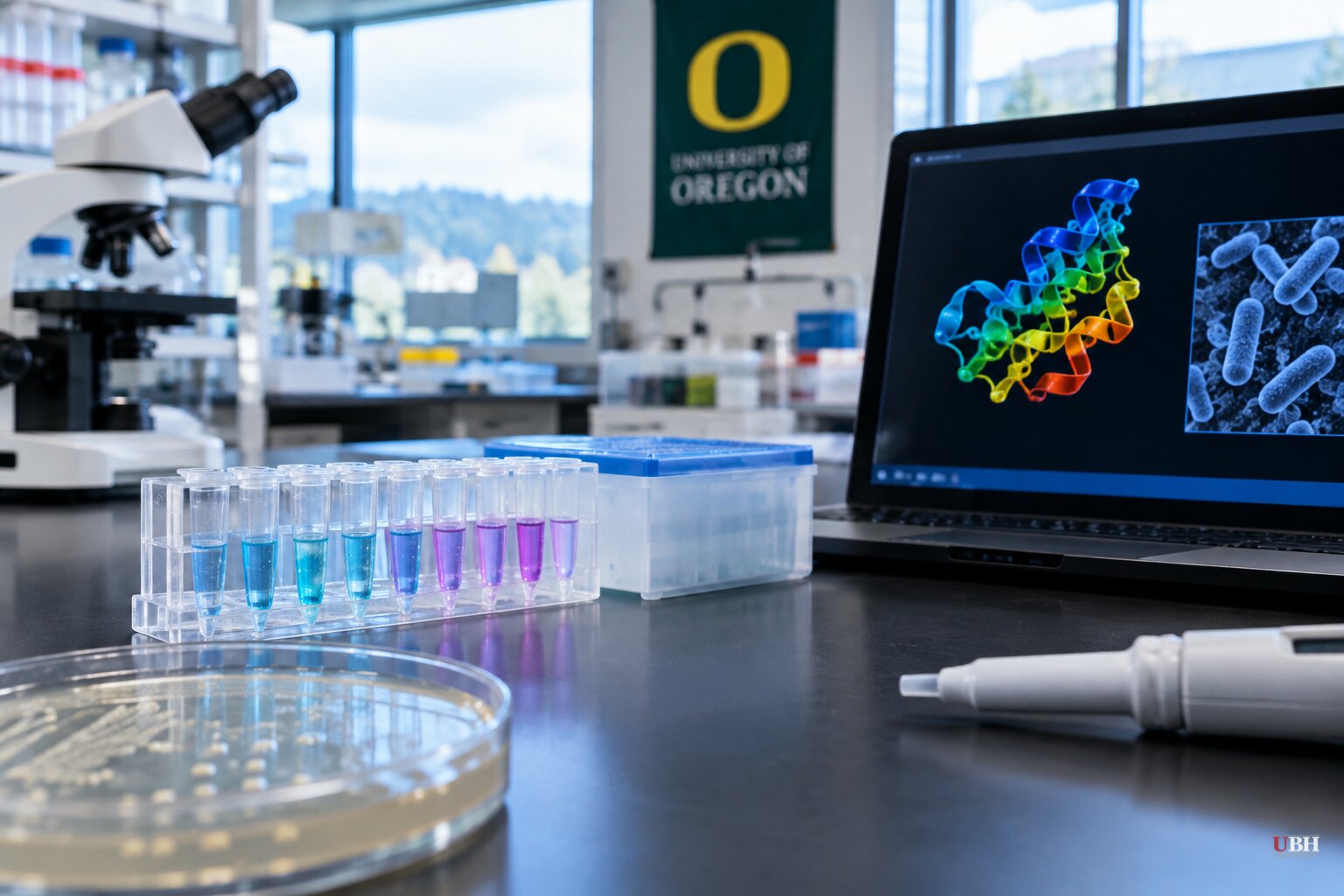
Ancient DNA, Modern Problem
Antibiotic resistance is one of the few things nearly every public health expert agrees is a genuine crisis. Bacteria keep evolving faster than drug companies can keep up. So a team at the University of Oregon tried something different: instead of designing a new molecule from scratch, they went back 160 million years to find one evolution already built.
The study, led by evolutionary biologist Matt Barber and doctoral student Titas Sil, was published August 25 in PLOS Biology. It focused on lactoferrin, an immune protein found in nearly every bodily fluid except blood, including breast milk, tears, saliva and intestinal mucus.
Lactoferrin does two jobs. It binds iron tightly enough to starve bacteria of a nutrient they need to multiply. Buried inside it is a short antimicrobial peptide that can punch holes in bacterial membranes and kill the cell outright.
How You Resurrect a Dead Protein
You can't dig up 160-million-year-old soft tissue. So the researchers used a technique called ancestral sequence reconstruction. They compared lactoferrin gene sequences from living mammals, including humans and cows, and used statistical modeling to estimate what the gene looked like in the common ancestor of all placental mammals, a lineage that emerged near the end of the Jurassic Period.
They synthesized those predicted ancient genes, produced the corresponding proteins in lab cells, and tested the resulting peptides against bacteria that cause real human disease today: Pseudomonas aeruginosa, Staphylococcus aureus, E. coli and Streptococcus species, according to reporting on the study.
The Oldest Peptides Lost, The Newer Ones Won
The earliest reconstructed peptides could damage bacterial membranes, but the bacteria were often able to repair the damage and survive. As the researchers moved forward through evolutionary time, reconstructing peptides from progressively younger mammalian ancestors, the molecules got more effective.
Some of those later ancestral versions showed greater antimicrobial activity against drug-resistant bacteria than the modern human peptide does today, according to the study's findings. Barber's team also traced the gain in potency to a single amino-acid mutation that occurred somewhere along that evolutionary path and significantly boosted the peptide's killing power.
"Antibiotics are one of the most important breakthroughs in medicine in the 20th century," Barber said. "But bacteria are, and have been for a long time, evolving resistance to them." He said the goal now is figuring out whether resurrecting or engineering these enhanced peptides could lead to actual therapeutics.
Sil, the lead author, described antimicrobial peptides as a core part of the body's first line of defense, capable of targeting a broad range of pathogens because of how directly they attack cell membranes rather than relying on the more specific mechanisms conventional antibiotics use.
What This Is Not
None of this means a new antibiotic is coming anytime soon. The reconstructed peptides are lab findings, not approved drugs, and researchers covering the study were explicit that these molecules are not ready for clinical use. Turning a promising peptide into a safe, effective, mass-producible medicine typically takes years of additional testing, including safety and dosing studies that haven't started.
The skeptical read here is fair. Biology papers showing a molecule "outperforms" something in a petri dish are common, and most never make it to a pharmacy shelf. That's a legitimate caution, not a dismissal of the science. What's different about this approach is that it isn't trying to invent a new weapon against bacteria. It's trying to copy one evolution already tested across 160 million years of mammalian history, which is a track record no drug company lab can replicate on its own.
The immediate next step, based on the published research, is further work to understand exactly how that single mutation reshapes the peptide's structure and whether similar modifications could be engineered into other antimicrobial peptides being developed for human use. No clinical trial has been announced, and none of the reporting on the study indicates a timeline for one.
Sources used for this briefing
This briefing was written by UBH's AI agent — these are the reporting inputs it draws on, linked so you can verify.


