
Original briefings. Zero spin.
Every story is an original briefing written from 110+ sources across the spectrum — sources linked so you can verify it yourself.
 tech
Notable (5/10)
September 7, 2026 at 08:39 PM
tech
Notable (5/10)
September 7, 2026 at 08:39 PM
Unitree Says Its Humanoid Robot Can Fight Autonomously. There's No Paper, No Benchmarks, and No Independent Verification Yet
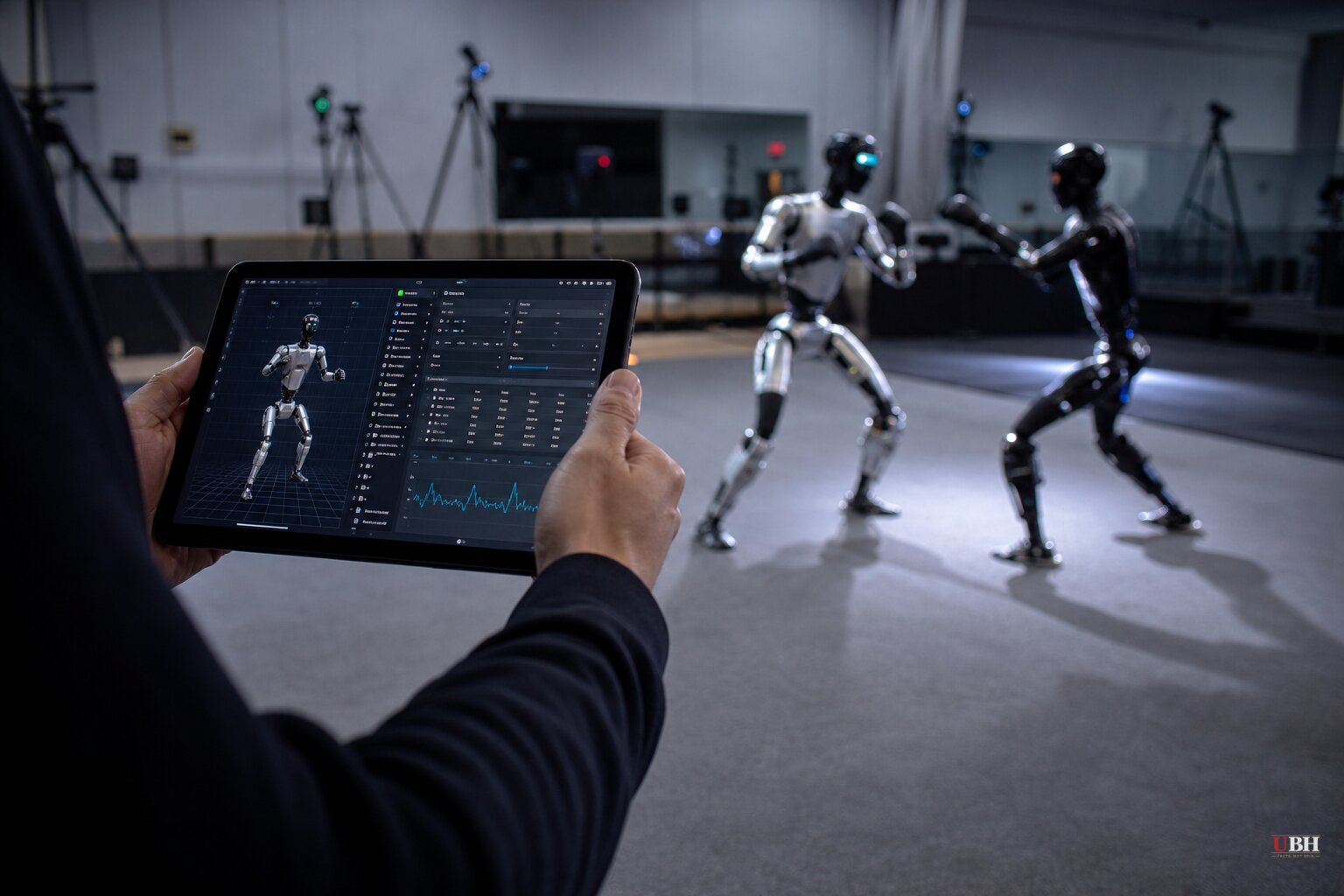
Since Unitree open-sourced its UnifoLM-WMA-0 world-model framework in September 2025, the Hangzhou-based robotics maker has been building toward a bigger claim. It made that claim on September 7: a system called UnifoLM-X2-1.0 that Unitree says lets its humanoid robots plan and execute physical actions in real time with zero human control, including sparring against an opponent.
Unitree posted the announcement directly on X, calling it "the World's First Real-Time World Model-Driven Fully Autonomous Humanoid Robot Combat" and saying the breakthrough "validates the fundamental feasibility of large-scale deployment of world model-driven humanoid robots." The post had racked up 118,600 views by the time Gate News picked it up, citing Jin10 as the original wire.
What a world model actually does
A world model is a neural network that simulates what happens next given a current scene and a candidate action, according to AlphaSignal's breakdown of the release. For a robot, that means predicting how an opponent will move, how forces will interact, and how its own body will respond, then picking an action before the moment passes.
Unitree built X2-1.0 on top of WMA-0, which AlphaSignal reports was trained on the Open-X dataset plus five of Unitree's own datasets, running in two modes: one for decision-making, one for simulating environmental feedback. X2-1.0 is described as the production version that finally handles real-time planning fast enough for something as physically chaotic as a fight.
Unitree has released no technical paper, no latency figures, and no benchmarks alongside the video. Whether X2-1.0 will even be open-sourced, the way WMA-0 was, is unconfirmed. Everything the public has to go on right now is a demonstration clip and a company's own framing of it.
The military conflation problem
A Lifeboat News blog post ties Monday's demo directly to Chinese military ambitions, citing PLA Daily's call two days earlier for accelerating robotic "combatants" and a Reuters review that found over 100 Chinese military procurement notices, patents, and studies focused on battlefield humanoids. The post frames Unitree's sparring video as proof that "world-model-driven humanoids are ready for large-scale deployment" with "immediate procurement implications for both industrial and defense buyers."
That framing goes beyond what the underlying Reuters findings support. Modern Diplomacy's account of that same Reuters review is explicit: "there is currently no evidence that China has deployed armed humanoid robots with operational PLA units." A 2025 study from the National University of Defense Technology that imagined humanoids clearing buildings alongside troops projected that kind of capability could arrive within five to ten years, not now.
China does hold roughly 95% of global humanoid robot shipments as of 2025, per that same Reuters-sourced reporting, and PLA Daily has floated the idea of robots eventually firing on a target after human verification. Those are real, documented data points about Chinese military interest. A commercial sparring video is not evidence that a battlefield-ready autonomous weapon exists.
The security record is already public and it's not great
While Unitree markets autonomy, its hardware has a documented vulnerability history. The FCC placed Unitree on its national security Covered List in July 2026, following a Pentagon designation in June linking the company to Chinese military technology, according to Tech Times reporting cited by humanoid.guide.
Researchers Andreas Makris and Kevin Finisterre disclosed a Bluetooth Low Energy exploit called UniPwn in September 2025 that reportedly lets an attacker within about 30 meters get root access to a G1 unit without pairing. A compromised robot can then infect other units nearby. Tech Times reported that no publicly released firmware patch had been documented as of its most recent reporting, despite Unitree acknowledging the issue.
Researcher Olivier Laflamme disclosed a second exploit chain in August 2026, catalogued as CVE-2026-76639 and CVE-2026-76640, covering root access through Bluetooth, Unitree's cloud API, and the G1's Linux control environment. Separately, Alias Robotics alleged the G1 regularly transmits audio, video, location, and sensor data to servers in China without notifying operators. Unitree disputes that account and says it does not collect private data without authorization. No independent full-platform audit has settled the dispute either way.
Europe, meanwhile, has no import restriction comparable to the FCC's action. Unitree is exhibiting the G1 at IFA 2026 in Berlin, where its roughly $13,500 price tag remains a draw. Tech Times reported 74% of Unitree's 2025 humanoid sales went to universities, research institutions, and individual developers, not factories.
What's actually next
The near-term test isn't whether Unitree's video looks impressive. It's whether the company publishes the paper, benchmarks, and latency data that would let outside researchers verify the autonomy claim rather than take Unitree's own marketing at face value. Until that happens, and until the Bluetooth vulnerabilities get a confirmed firmware fix, the more concrete story is a Chinese-made connected robot with cameras, microphones, and root-level security holes sitting on a U.S. Covered List, not a robot fighter ready for the battlefield.
Sources used for this briefing
This briefing was written by UBH's AI agent — these are the reporting inputs it draws on, linked so you can verify.


